NYC DOB Construction Equipment Requirements 2026: Updated Parts & Modifications
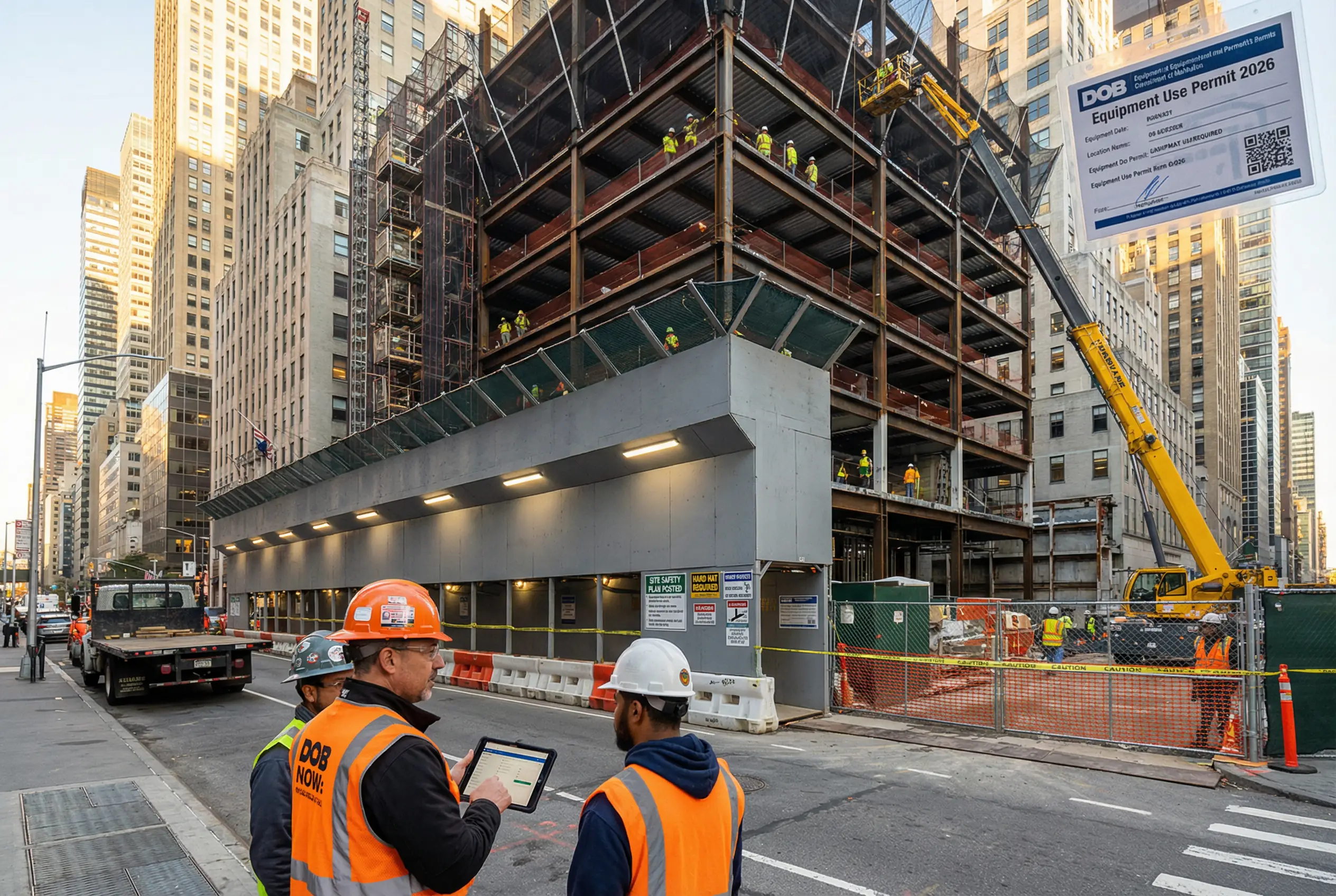
The New York City construction landscape has entered a transformative period as sweeping safety regulations took effect in January 2026. For contractors, equipment operators, and construction managers working across the five boroughs, understanding these new NYC DOB compliance 2026 standards isn't just about avoiding violations - it's about fundamentally reshaping how construction projects operate.
From the groundbreaking one-job superintendent rule to enhanced equipment registration protocols, these changes represent the most significant overhaul to construction permits NYC has seen in decades. Whether you're managing a major building project in Manhattan or overseeing renovations in Brooklyn, staying ahead of these equipment regulations could mean the difference between smooth project execution and costly work stoppages.
Major Equipment Regulation Changes Effective January 2026
The NYC Department of Buildings has implemented comprehensive updates to construction equipment standards that directly impact how contractors source, maintain, and operate machinery on job sites. These changes reflect the city's commitment to enhancing worker safety while modernizing oversight processes.
One-Job Rule for Construction Superintendents
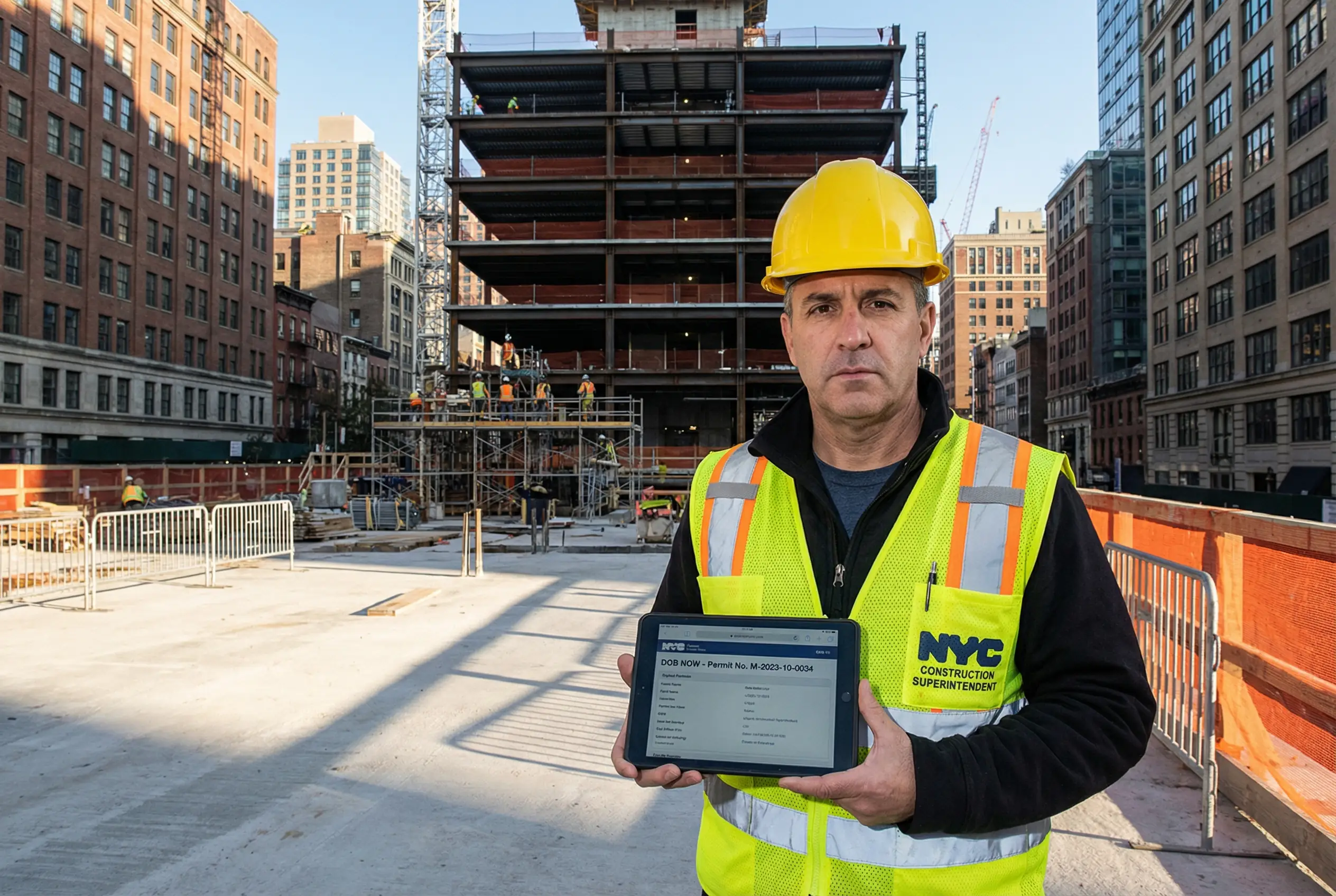
Starting January 1, 2026, construction superintendents face the most restrictive supervision limits in NYC history. Under Local Law 149 of 2021, each primary Construction Superintendent can now oversee only one active job at a time, whether it's a major building or non-major building project. This dramatic reduction from the previous three-job limit fundamentally changes staffing requirements across the construction industry.
The transition period provides some flexibility for existing projects. Superintendents who held multiple non-major building jobs as of December 31, 2025, can continue managing those projects into 2026, but cannot accept new assignments while holding multiple positions. By January 1, 2027, all superintendents must comply fully with the one-job restriction. For contractors, this means significantly increased demand for licensed superintendents and careful project planning to ensure adequate supervision.
Enhanced Equipment Use Permit Requirements
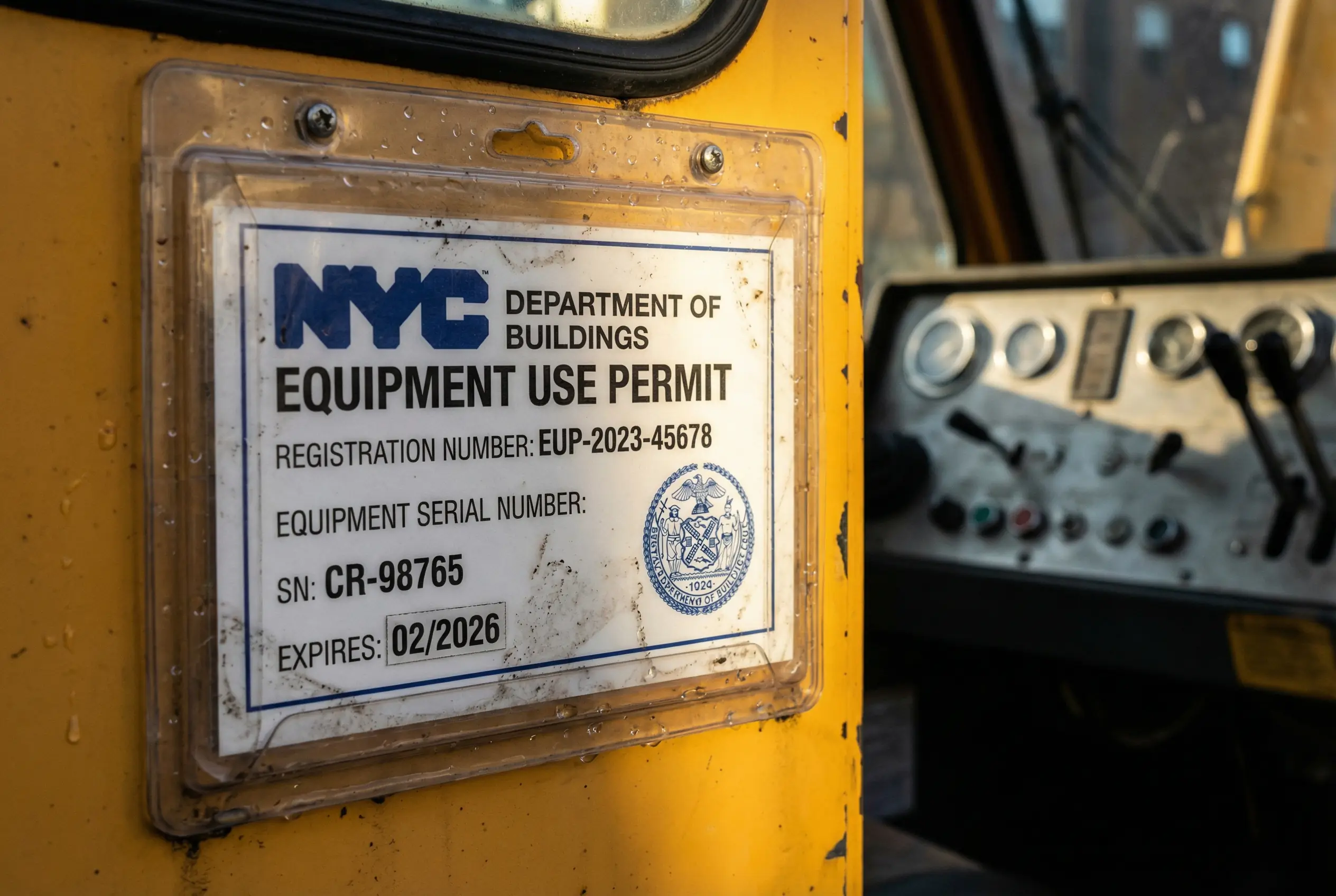
Equipment Use Permits (EUPs) now require more stringent documentation and faster renewal cycles. All mechanical construction equipment - including cranes, derricks, hoists, and material handling systems - must display current EUP cards on-site during operation. The NYC Fire Department has strengthened enforcement, conducting periodic inspections and issuing Notices of Violation for missing or expired permits.
Critical updates to EUP protocols include annual inspections for all vertical transport devices, Category 1 testing for elevators with required ELV3 reports, and full-load Category 5 inspections every five years for lifting equipment. Building owners working with suppliers like MCH Parts NYC must ensure all replacement components meet current NYC Building Code specifications and maintain proper documentation for DOB inspections.
Major Building Definition Expansion
As of December 2025, the definition of a major building changed from 10 stories to seven stories or 75 feet, incorporating thousands of additional projects under stricter safety requirements. Any new build, full demolition, or interior demolition with mechanical equipment meeting these thresholds now requires a Site Safety Coordinator and approved Site Safety Plan.
This expansion significantly impacts mid-rise construction projects that previously operated under less stringent oversight. Contractors who historically focused on buildings up to nine stories must now implement full-time safety professionals and navigate more complex approval processes for Site Safety Plans and Tenant Protection Plans.
Updated Parts Specifications and Compliance Standards
Equipment modifications and replacement parts must now meet enhanced technical standards that align with the 2025 NYC Construction Codes, which took full effect on December 21, 2025. These specifications affect everything from mechanical systems to safety equipment.
Mechanical Systems Filing Requirements
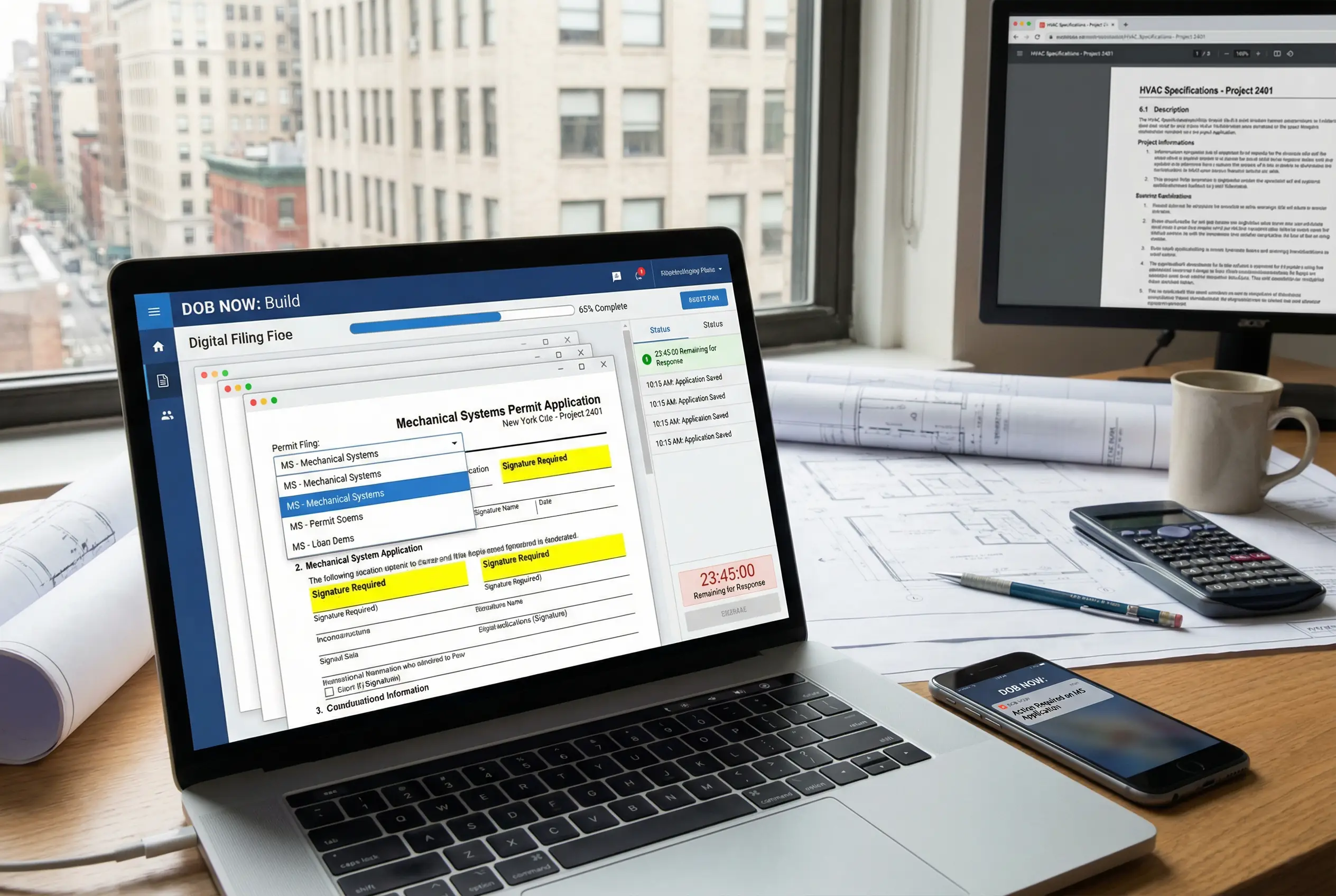
The DOB NOW: Build platform mandates that all mechanical system work - including HVAC, refrigeration, cooling towers, and associated components - be filed under the Mechanical Systems (MS) work type. This requirement covers heating, ventilation, air conditioning systems, along with ducts, piping, generators, and structural supports.
For equipment requiring a Certificate of Compliance, applications must be submitted through DOB NOW: Build for proper registration and monitoring. Mechanical systems not requiring this certificate should be filed under General Construction (GC) category. Residential properties face additional requirements, as whole-house ventilation systems became mandatory for all one- and two-family homes following NYC Energy Conservation Code standards.
Equipment Registration and Operator Licensing
New regulations require operators of articulating boom cranes, mini cranes, and rotating telehandlers to possess NYC HMO licenses. Site Safety Managers, Site Safety Coordinators, and Construction Superintendents must report any unlicensed operation of this equipment immediately. Additionally, anyone acting as a Lift Director must now be registered with the DOB or licensed as a Master Rigger.
Equipment registration extends beyond operator credentials. All non-handheld mechanical construction equipment must be registered with proper documentation of manufacturer specifications, maintenance records, and compliance certifications. Contractors bear responsibility for ensuring only qualified operators use registered equipment, with violations resulting in immediate stop work orders and substantial fines.
Safety Equipment Modifications
Temporary construction equipment installations - including sidewalk sheds, fences, scaffolds, material chutes, and hoists - face updated specifications under Local Law 47 of 2025. New color options now apply to sidewalk sheds and solid construction/demolition fences, with increased ceiling height requirements for sidewalk sheds to improve pedestrian safety.
All sidewalk shed permits issued or renewed after February 2, 2026, expire every 90 days and no longer auto-renew, requiring contractors to maintain active permit tracking systems. Corner and angle scaffolds require specific inspection protocols, with requests submitted via the Corner/Angle Scaffold Inspection Request Form to the DOB's Construction Safety Compliance Unit.
Digital Filing and Permit Processing Changes
The DOB's digital transformation eliminates paper submissions entirely, requiring all stakeholders to adapt to new electronic workflows and real-time compliance monitoring.
DOB NOW Exclusive Filing System
DOB NOW has become the exclusive filing system for all construction-related permits and compliance documentation. The platform requires digital signatures from all parties - including owners, contractors, and expediters - with 24-hour response windows for status updates. This transition affects Equipment Use Permits, Site Safety Plans, Tenant Protection Plans, and all construction permit applications.
The automated system implements risk assessment algorithms that rank every building in NYC, with properties showing violation histories receiving enhanced scrutiny. This interconnected enforcement means one violation can trigger cascading actions across multiple agencies. For contractors working with equipment suppliers like MCH Parts NYC, maintaining digital records of all parts specifications, installation dates, and compliance certifications becomes essential for streamlined permit approvals.
Real-Time Compliance Monitoring
DOB NOW's automated violation generation system creates immediate accountability for equipment-related infractions. The platform shares violation data between the DOB, FDNY, and Department of Environmental Protection, creating a comprehensive compliance profile for each project. Properties with existing violations receive priority inspection scheduling, while escalating daily fines compound until issues are resolved.
Construction superintendents must document all equipment inspections, safety meetings, and compliance checks through the digital platform. Weekly safety meetings with general contractors, construction managers, and subcontractor representatives must be logged with verification of building code compliance, site safety plan adherence, and tenant protection plan implementation.
Enhanced Fee Structure and Payment Processing
Beginning February 2, 2026, DOB NOW: Safety implemented new and increased fees for parking structure compliance reports and façade inspection reports. All Benchmarking and Retro-Commissioning violation civil penalty payments must now be submitted through DOB NOW: Safety, with eFiling and mail submissions no longer accepted for these violations.
Fee structures for Alteration jobs filed in conjunction with Alt-CO jobs now calculate based on the Alt-CO filing, streamlining cost projections for complex projects. The platform also allows applicants to report estimated job costs for entire projects on initial filings, including work types planned for subsequent submissions.
Critical Safety Standards and Enforcement Protocols
The 2026 safety standards represent the most comprehensive enforcement overhaul in NYC construction history, with penalties designed to ensure immediate compliance.
Site Safety Plan Requirements
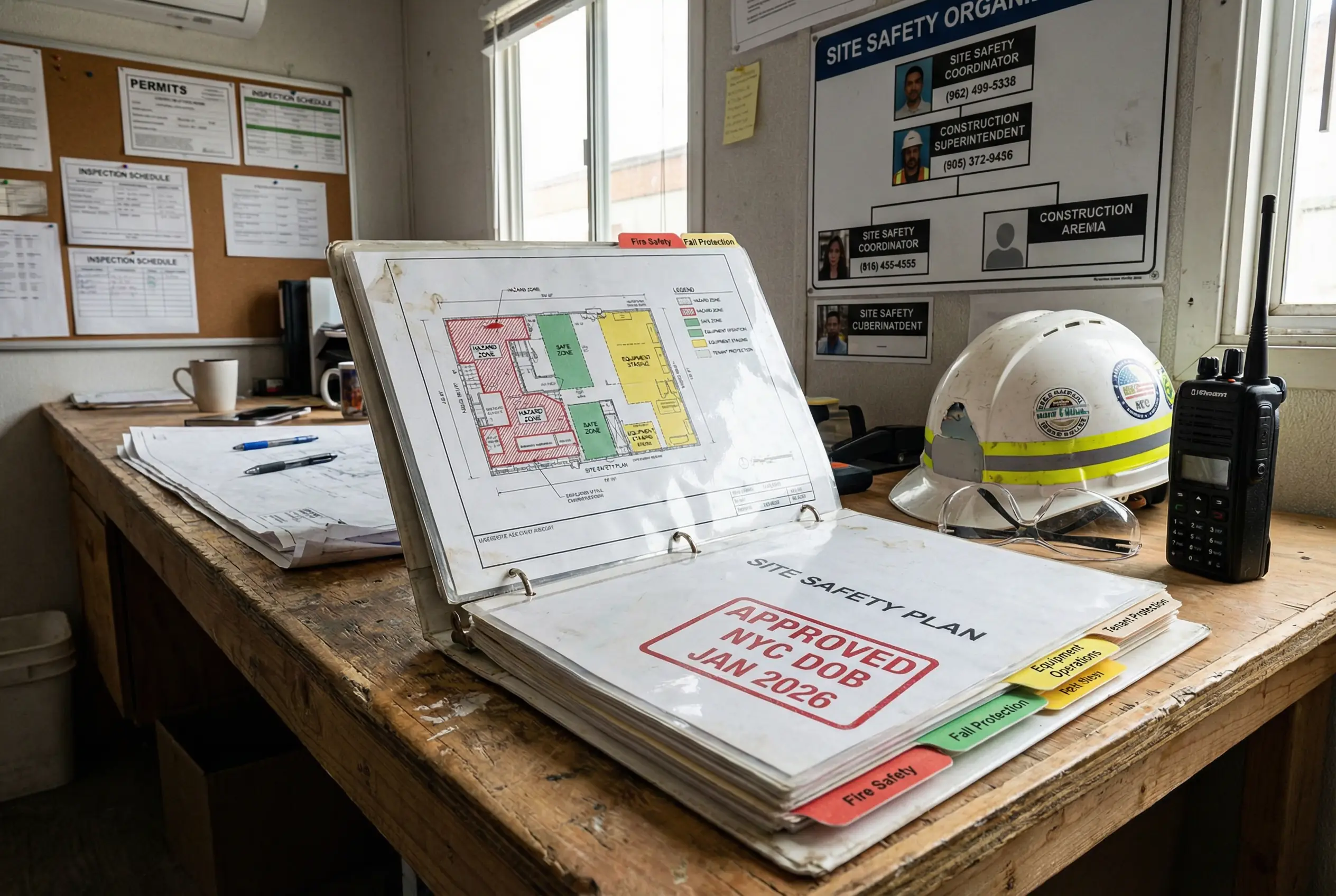
Site Safety Plans remain mandatory for all major building projects and any construction impacting public spaces. The plans must detail protective measures including fencing, scaffolding, signage, and specific protocols for safeguarding workers and the public during construction operations. SSPs must be submitted before job approval and are no longer required for subsequent filings in DOB NOW.
Projects mandating Site Safety Managers, Coordinators, or Construction Superintendents require comprehensive SSPs outlining safety protocols tailored to specific hazards. Failure to submit an SSP results in Stop Work Orders, substantial fines starting at five figures, and potential legal liability for on-site accidents. The DOB enforces these requirements aggressively, with automated flagging for projects lacking proper safety documentation.
Tenant Protection Plans for Occupied Buildings
Construction in buildings with occupied dwelling units requires detailed Tenant Protection Plans that contain specific provisions for egress, fire safety, structural safety, health requirements, and maintenance of essential services. TPPs must demonstrate compliance with housing standards and noise restrictions, including details on temporary fire-rated assemblies, opening protectives, and dust containment procedures.
Contractors often underestimate TPP requirements, leading to unexpected Stop Work Orders when DOB inspections reveal inadequate planning. The plans must identify specific occupied units during construction and outline means and methods to safeguard occupant safety and health throughout the project timeline.
Fire Safety and Equipment Specifications
All construction equipment must comply with NYC Fire Code requirements, with approved portable fire extinguishers available on floors storing combustible materials or generating combustible waste, and at entrances to storage and construction sheds. Temporary heating equipment must meet Fire Code specifications, with preference for hardwired electric heaters or portable units with auto shut-off features.
When work involves relocation or modification of sprinklers, standpipes, or fire protection systems, contractors must notify FDNY and obtain necessary approvals. Construction sites must meet requirements from the 2007 edition of NFPA 14, as modified by NYC Building Code. Smoking remains illegal on construction sites, with tobacco lighters and matches prohibited, and open fires banned entirely.
Frequently Asked Questions
Q: What happens if my construction superintendent is currently managing three jobs when the one-job rule takes effect in January 2026?
A: Superintendents holding multiple non-major building jobs as of December 31, 2025, can continue managing those existing projects into 2026. However, they cannot accept new jobs while holding multiple positions. As each project completes, they can maintain remaining jobs but must reduce to one job only by January 1, 2027. The transition period provides flexibility, but planning for additional licensed superintendents should begin immediately.
Q: Do all mechanical equipment parts need special certification for NYC DOB compliance in 2026?
A: Yes, all mechanical equipment components must meet NYC Building Code specifications and be documented properly for DOB inspections. Replacement parts for HVAC systems, refrigeration equipment, cooling towers, and associated components must comply with current standards. Working with certified suppliers like MCH Parts NYC ensures parts meet specifications and proper documentation supports Equipment Use Permit renewals and compliance verification.
Q: How often do Equipment Use Permits need to be renewed under the new 2026 regulations?
A: EUP renewal intervals depend on equipment type. Vertical transport devices including elevators require annual inspections and permit renewals. Lifting equipment faces Category 5 full-load inspections every five years. Sidewalk shed permits issued or renewed after February 2, 2026, expire every 90 days and no longer auto-renew, requiring active permit tracking and timely renewal submissions through DOB NOW.
Q: What are the penalties for operating construction equipment without proper NYC DOB permits in 2026?
A: Penalties for non-compliance include immediate Stop Work Orders halting all construction activities, substantial fines starting at five figures that escalate daily until resolved, and potential legal liability if accidents occur due to improper permitting. The DOB's automated violation system shares infractions across FDNY and DEP, creating cascading enforcement actions. Properties with violation histories receive enhanced scrutiny and priority inspection scheduling, making compliance essential for uninterrupted project timelines.
For reliable construction equipment parts that meet NYC DOB compliance standards, visit MCH Parts NYC for certified components and expert guidance on 2026 equipment regulations.
Read More

Engine Air Filter vs. Cabin Filter 2026: EPA Guide

Radiator and Cooling System Parts: NYC Summer 2026
Bucket Teeth Selection 2026: Right Teeth for NYC Soil

Construction Equipment Filters 2026: Complete Replacement Schedule Updated
Track Replacement Guide 2026: How Long Do Undercarriage Parts Really Last?
Final Drive Troubleshooting 2026: 7 Warning Signs Before Complete Failure
Excavator Hydraulic Pump Replacement 2026: OEM vs Aftermarket Complete Guide

Weekend Equipment Breakdown: NYC After-Hours Parts Sourcing Guide 2026

Equipment Down in 2026? Get These 15 Critical Parts in NYC Within 2 Hours

NYC Port Modernization 2026: Heavy Equipment Parts for Hudson River Terminal Upgrades
Queens Is Being Built Right Now - Is Your Equipment Ready?

NYC High-Rise Construction Boom 2026: Parts for Record Number of Tower Projects
Brooklyn Navy Yard Construction: Specialized Parts for Historic Site Work
NYC DOB Construction Equipment Requirements 2026: Updated Parts & Modifications
Equipment Down in 2026? Get These 15 Critical Parts in NYC Within 2 Hours
NYC Winter 2026 Construction: Critical Parts That Fail Below 20°F : Prevention Guide

Prevent Crane Downtime with a Proactive Parts Roadmap
How to Prevent Downtime in Multi-Brand Earthmoving Fleets

How to Source OEM Undercarriage Parts Without Project Delays
Motor Grader Predictive Diagnostics: Prevent Hydraulic Failures & Reduce Downtime
Pesticide Sprayer Calibration: Essential Safety Compliance Guide & Protection

Seeder Bearing Parts Sourcing Guide: Critical Components & Strategy
Downtime Prevention Through Smart Inventory for Grain Dryers
Combine Harvester Breakdown Prevention Guide: Predictive Analytics for Zero Downtime
Master Global Agricultural Parts Delivery | Mid-Season MRO Guide

Fixing Haul Truck Downtime Issues: Remote Parts Strategy Guide 2025
Blasting Equipment Safety Compliance: Must-Know Audit Requirements for 2025

The Step-by-Step Guide to Global Drill Rig Consumables Sourcing
Mining Conveyor Maintenance Guide: Detecting Hidden Risks in Underground Systems

Best Practices for Certified Pipeline Valve Selection: From Specs to Installation

Optimizing Oil Rig PPE Delivery: Proven Strategies That Saved $2M Annually

FPSO Smart Parts Planning: Proven Methods to Cut Downtime

How FPSO Inspection Prevents Million-Dollar Shutdown Losses

Fix It Before It Breaks: A Farmer's Guide to Combine and Harvester Maintenance

Why Fast Tractor Parts Delivery is Changing Modern Farming [2025 Guide]

The Critical Farm Equipment Replacement Parts You Need Before Harvest 2025
.webp)
How to Double Your Farm Efficiency: Expert Guide to Smart Scaling

Cut Costs by 30%: Pre-Season Spare Parts Audit Checklist

Proven Success Factors for Agricultural Equipment Manufacturers in 2025

13 Overlooked Farm Spare Parts That Halt Operations — Pt. 2

13 Overlooked Farm Spare Parts That Halt Operations — Pt. 1

Top Hydraulic Components for Agricultural Equipment in 2025: Complete Guide
The Essential Farm Equipment Parts You Can't Afford to Run Out Of

How to Service Farm Equipment: A Farmer's Guide to Zero Harvest Downtime

Construction Machinery Parts Suppliers: Expert Selection Guide

How to Apply Machine Safety Rules: From Selection to Installation

Smart Diagnostics Cut Heavy Equipment Failures by 73%

5 Ways to Assess the Environmental Impact of Heavy Construction Machinery

10 Smart Ways to Pick Construction Machinery for 2025 Projects

Rent vs Purchase Equipment: What Heavy Industry Experts Hide

How to Implement a Construction Inventory Management System for Equipment Efficiency
How to Extend Equipment Life Expectancy with Regular Maintenance

Advanced Heavy Equipment Diagnostic Tools: Ensuring Construction Machinery Quality

Essential Features Your Construction Equipment Inventory System Needs
29 Quick Tips for Choosing Construction Equipment for Remote Locations

How to Select Construction Machinery with Optimal Equipment Maintenance in Mind
Top 25 Tips for Selecting Bulldozers for Construction Sites
Which Construction Loader is Best for Your Project Needs?

4 Key Steps to Form a Construction Machinery QC Team

15 Essential Tips for Selecting the Perfect Crane for Construction

Maximize Savings: Multi-Purpose Construction Machinery for Lower Costs

Affordable Heavy Equipment Parts: A Sourcing Guide
Choosing the Right Road Construction Equipment: A Complete Guide

Motor Graders: Key Elements to Consider for Optimal Selection

A Detailed Guide to Choosing Excavators for Construction Work
Top Tips for Choosing Cranes for Construction Projects
5 Top-Rated Demolition Machines for Construction Professionals

Expert Tips on Choosing Earthmoving Equipment for Large Projects
Top Functional Criteria for Selecting Heavy Construction Equipment

Construction Machinery: Detailed Guide to Equipment Specifications
Heavy Machinery Prices: Key Factors in Cost and Quality Balance

Best Construction Heavy Equipment Brands: Pros and Cons

Construction Site Equipment: How to Determine Your Requirements
Maximizing Safety: Risk Management for Construction Projects

Innovations in Construction: Transforming Machinery and Equipment
Heavy Equipment Safety: Beyond the Basics in Construction Compliance

The Essential Handbook for Construction Equipment Repair and Maintenance

How to Efficiently Source Oil and Gas Machinery Parts in NYC

Essential Guide to Sourcing Agriculture Equipment Parts

How to Source Mining Machinery Parts: Tips and Strategies