Motor Grader Predictive Diagnostics: Prevent Hydraulic Failures & Reduce Downtime
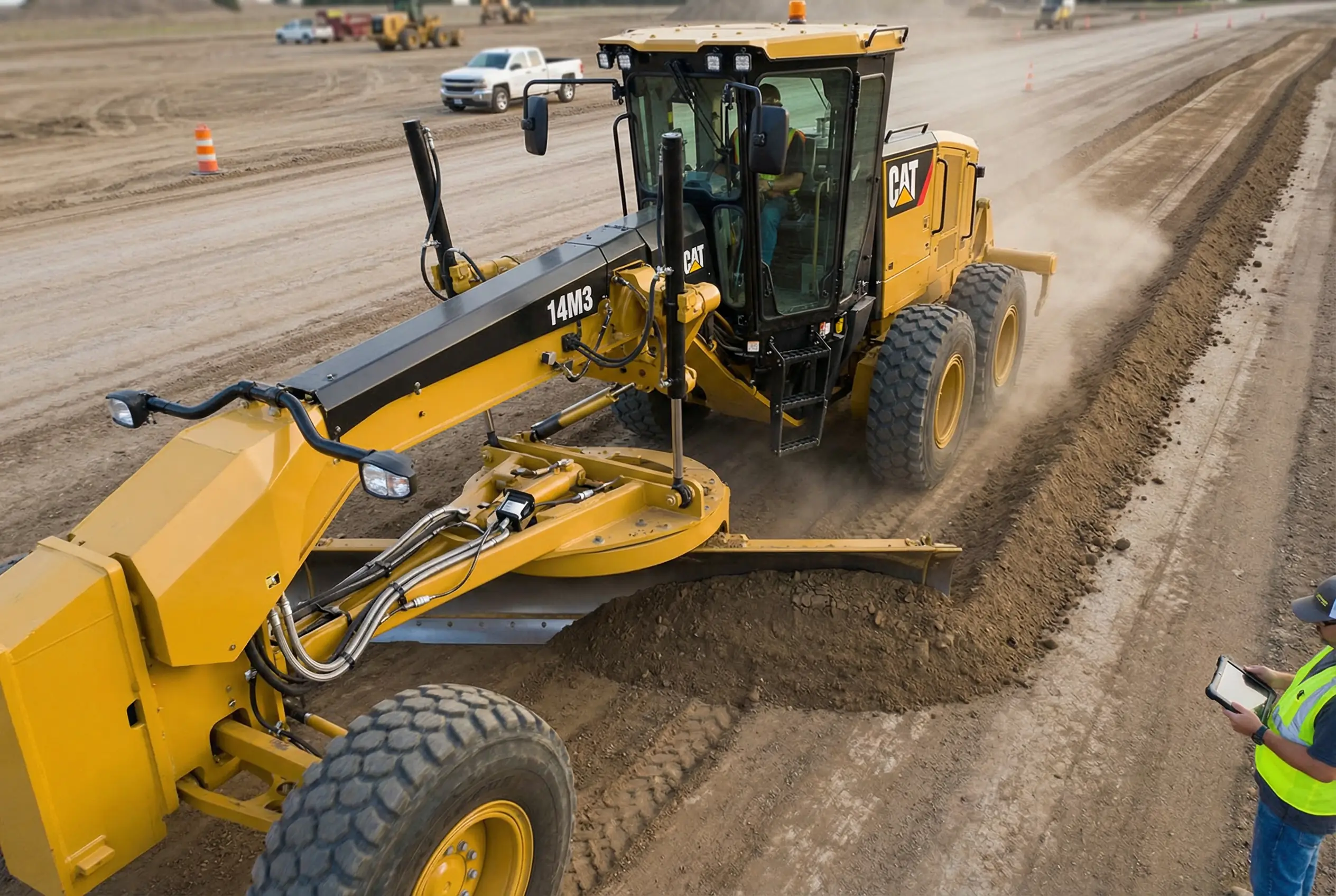
Hydraulic system failures in motor graders don't just stop work - they cascade into expensive repairs, project delays, and safety hazards that can devastate your bottom line. For fleet managers and equipment operators, the difference between reactive maintenance and predictive diagnostics can mean savings of hundreds of thousands of dollars annually. Modern motor grader predictive diagnostics transform how we approach hydraulic system maintenance, shifting from costly emergency repairs to strategic, data-driven interventions that keep your equipment running at peak performance.
The hydraulic systems powering your motor grader's blade control, articulation, and scarifier functions operate under extreme pressures and demanding conditions. When these systems fail unexpectedly, you're facing not just the immediate repair costs but also lost productivity, delayed project timelines, and potential contractual penalties. However, by implementing comprehensive predictive maintenance strategies, you can identify potential hydraulic failures before they occur, schedule maintenance during planned downtime, and extend the operational life of your critical equipment.
This guide explores the essential components of effective motor grader predictive diagnostics, from sensor technology and failure mode analysis to data collection strategies and return on investment calculations. Whether you're managing a single machine or an entire fleet, understanding these predictive maintenance principles will help you make informed decisions that protect your equipment investment and maintain operational efficiency.

Understanding Motor Grader Hydraulic Systems and Common Failure Modes
Critical Hydraulic Components in Motor Graders
Motor grader hydraulic systems represent some of the most complex and demanding applications in heavy equipment. The hydraulic circuit powers multiple functions simultaneously - blade lift and tilt, circle drive and rotation, articulation steering, and scarifier operation - all requiring precise pressure control and reliable fluid delivery. The main hydraulic pump, typically a variable displacement piston pump, generates pressures ranging from 3,000 to 5,000 PSI to operate these systems effectively.
Your motor grader's hydraulic architecture includes essential components that must work in perfect harmony: the hydraulic reservoir and filtration system, directional control valves that route pressurized fluid to specific functions, hydraulic cylinders that convert fluid pressure into mechanical force, and the intricate network of hoses, tubes, and fittings connecting everything together. Each component represents a potential failure point that can compromise your entire operation.
Understanding component relationships is crucial for effective motor grader predictive diagnostics. When one element begins degrading - whether it's a worn pump seal, contaminated hydraulic fluid, or a deteriorating hose - the effects ripple throughout the entire system, often accelerating wear on other components and creating cascading failure scenarios that result in complete system shutdown.
Primary Hydraulic Failure Modes and Their Warning Signs
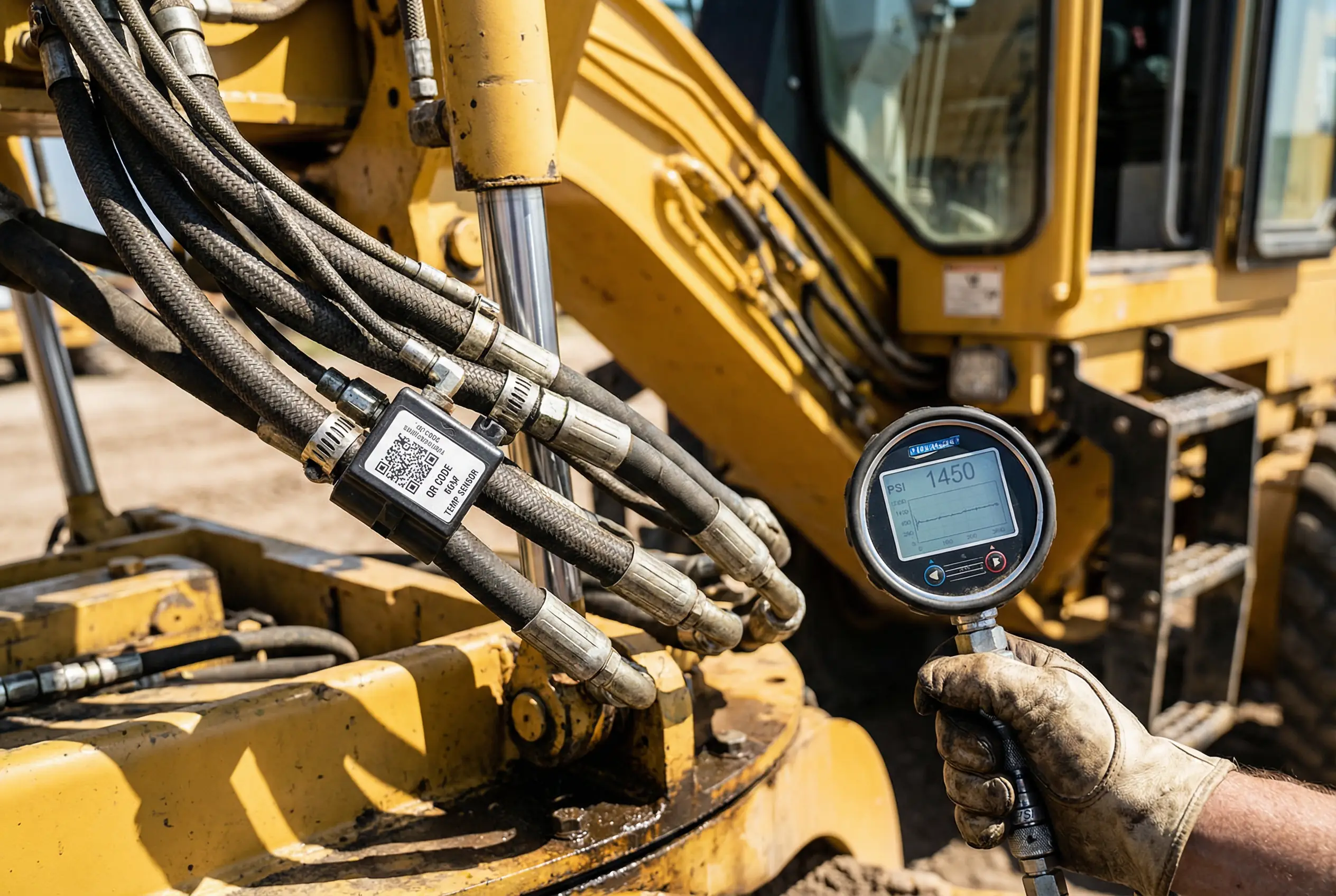
Hydraulic pump failure represents one of the most catastrophic and expensive failures in motor grader operations. Cavitation damage, excessive wear on internal components, and seal degradation typically provide advance warning through increased operating temperatures, unusual noise signatures, and declining system pressure. These failures rarely occur instantaneously; instead, they develop progressively over weeks or months, making them ideal candidates for predictive maintenance strategies.
Contamination-related failures account for approximately 75% of all hydraulic system problems in heavy equipment. Particulate contamination - whether from external dirt ingress, internal component wear, or degraded seals - acts as an abrasive compound that accelerates wear throughout your hydraulic system. Water contamination, often introduced through damaged cylinder seals or improperly sealed reservoirs, compromises fluid viscosity and promotes corrosion. Oil oxidation and thermal degradation reduce the fluid's ability to lubricate and protect system components.
Cylinder seal failures manifest through external leakage, reduced cycle times, and loss of hydraulic function. Internal seal degradation allows pressurized fluid to bypass the piston, resulting in weak or erratic cylinder operation long before external leaking becomes visible. Hose and fitting failures, while seemingly minor, can result in rapid fluid loss, environmental contamination, and complete loss of hydraulic function. Valve malfunctions, including spool sticking, internal leakage, and spring failures, create erratic system behavior that operators often notice as the first symptom of developing problems.
The Cost Impact of Unplanned Hydraulic Failures
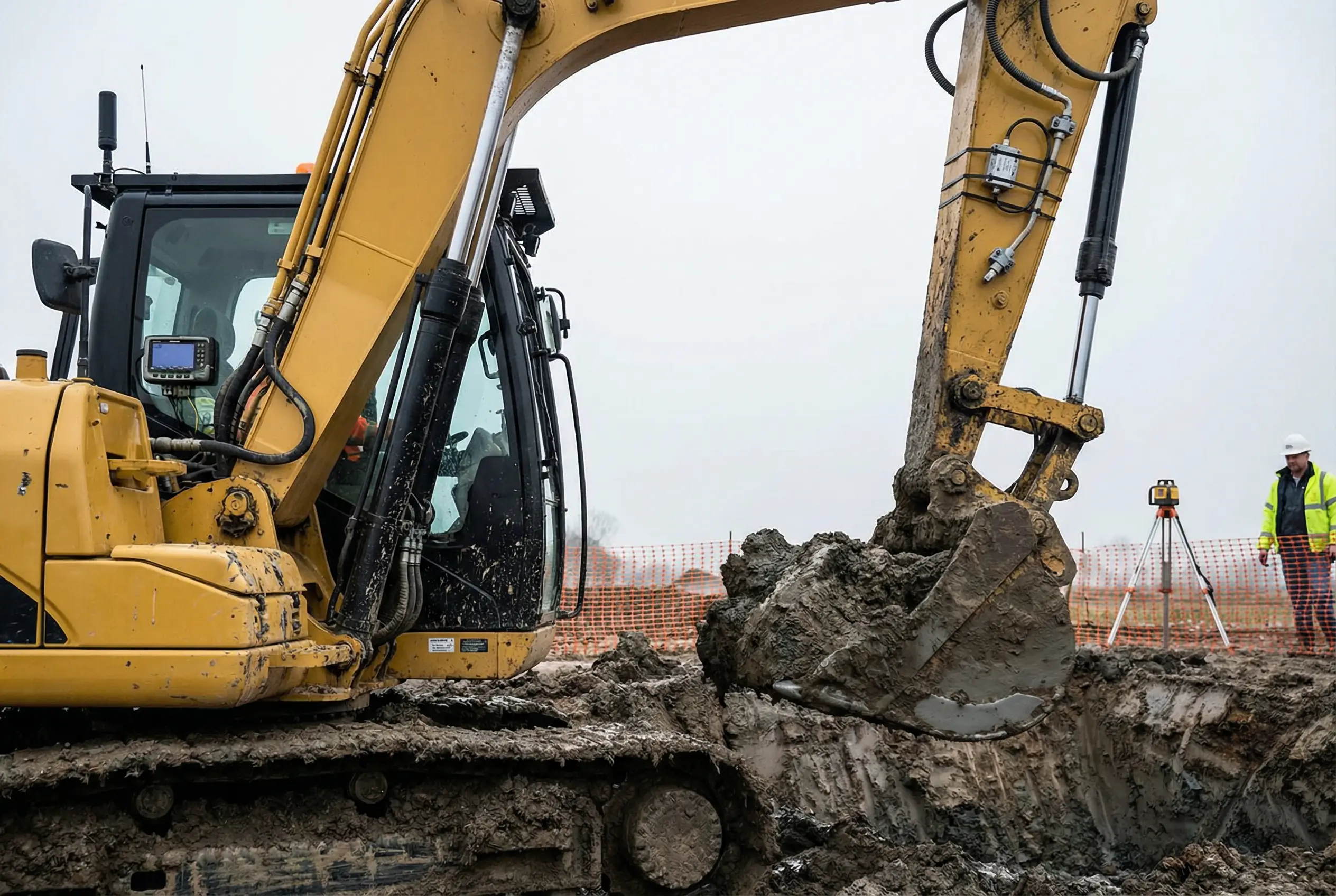
The financial impact of unexpected hydraulic failures extends far beyond the immediate repair invoice. When your motor grader experiences a catastrophic hydraulic failure during operation, you're facing multiple cost categories simultaneously: emergency repair labor at premium rates, expedited parts shipping charges, equipment rental to maintain project schedules, and the substantial costs of project delays and potential contractual penalties.
Consider the real-world economics: a major hydraulic pump failure might require $8,000 to $15,000 in parts and labor for emergency repair, but the total cost impact including downtime, lost productivity, and project delays can easily exceed $50,000 for a single incident. For fleet operators managing multiple motor graders across various project sites, these unplanned failures create scheduling nightmares and erode profit margins on every affected project.
Motor grader predictive diagnostics fundamentally changes this cost equation by identifying developing problems during their early stages when intervention is less expensive and can be scheduled during planned maintenance windows. The ability to order parts in advance, schedule repairs during equipment downtime, and avoid emergency service premiums transforms maintenance from a reactive cost center into a strategic advantage. Contact MCH Parts NYC to discuss how predictive maintenance programs can reduce your hydraulic system repair costs by 40-60% while improving equipment reliability.
Sensor Technology and Data Collection Strategies for Predictive Diagnostics
Essential Sensor Options for Hydraulic System Monitoring
Modern motor grader predictive diagnostics relies on strategically deployed sensors that continuously monitor critical system parameters and detect subtle changes indicating developing problems. Pressure transducers installed at key locations throughout the hydraulic circuit provide real-time data on system pressure, identifying issues like pump degradation, valve malfunctions, or circuit restrictions before they cause complete failures. These sensors detect pressure anomalies measured in single-digit PSI variations that human operators would never notice during normal operation.
Temperature sensors strategically positioned on hydraulic reservoirs, pump housings, and critical valve bodies track thermal conditions that indicate excessive friction, inadequate lubrication, or impending component failure. Hydraulic systems operating outside their designed temperature range experience accelerated component wear, fluid degradation, and seal failures. Advanced predictive systems establish baseline temperature profiles for your specific equipment and operating conditions, then trigger alerts when deviations suggest developing problems.
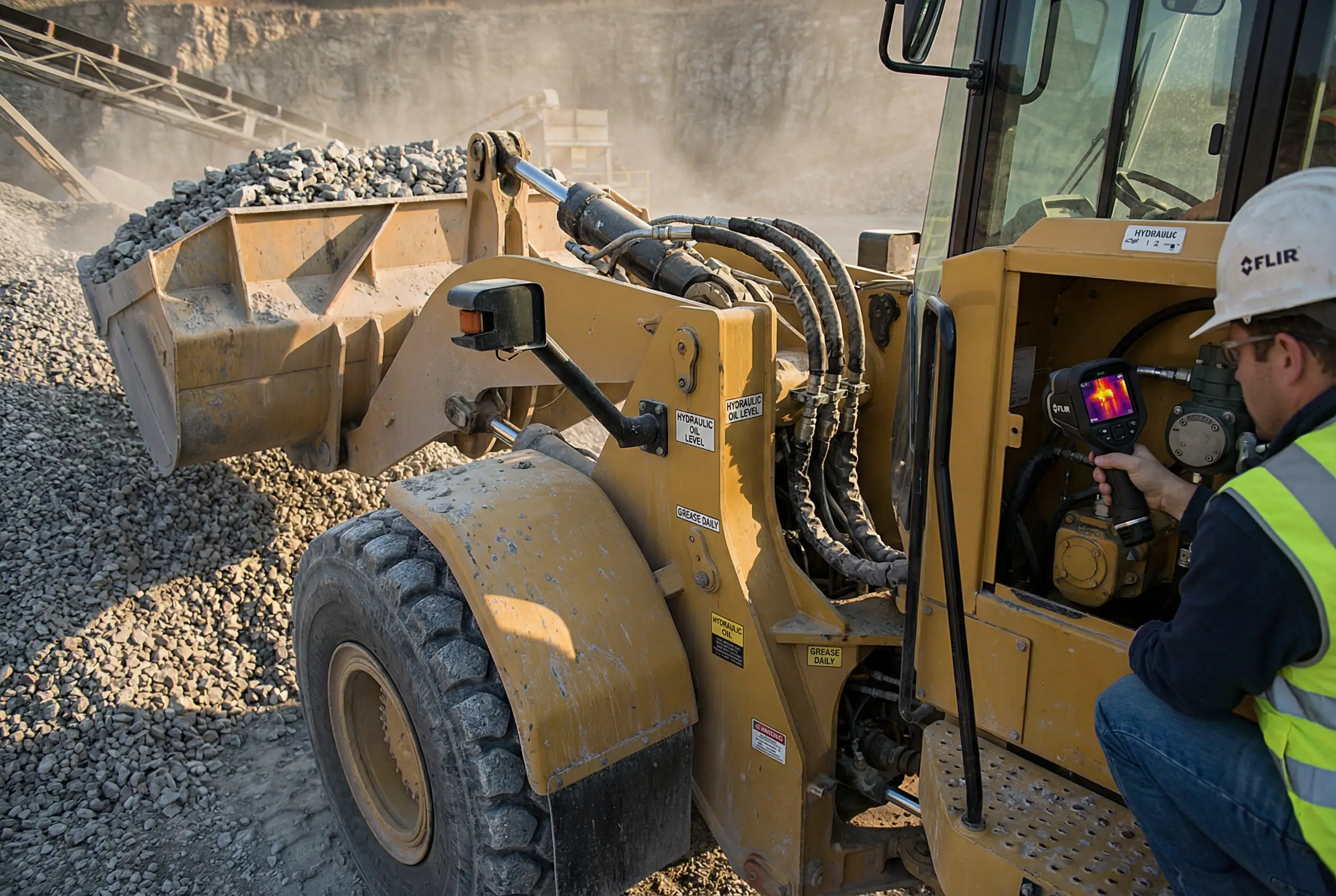
Flow meters measure the volume of hydraulic fluid moving through critical circuits, providing insights into pump efficiency, internal leakage, and system performance degradation. Declining flow rates often indicate internal wear or bypass conditions long before operators notice reduced machine performance. Particle counters and fluid condition sensors analyze hydraulic fluid quality in real-time, detecting contamination, water content, and fluid degradation that predict imminent component failures.
Vibration sensors mounted on hydraulic pumps and motors detect bearing wear, cavitation, and mechanical imbalances through frequency analysis of vibration signatures. Each component generates characteristic vibration patterns when healthy; changes in these patterns provide early warning of developing mechanical problems. Acoustic sensors complement vibration monitoring by detecting the high-frequency sounds associated with cavitation, air entrainment, and internal leakage.
Designing an Effective Data Collection Plan
Successful motor grader predictive diagnostics programs require thoughtful data collection strategies that balance comprehensive monitoring with practical implementation constraints. Your data collection plan should identify which parameters to monitor, establish appropriate sampling frequencies for different sensor types, and determine data storage and analysis methodologies that convert raw sensor readings into actionable maintenance insights.
Begin by conducting a failure modes and effects analysis (FMEA) specific to your motor grader model and operating conditions. This analysis identifies which hydraulic components are most critical, which failures would have the greatest operational impact, and which parameters provide the earliest warning of developing problems. Not every system requires constant monitoring; focus your sensor deployment on high-value, high-risk components where early detection delivers the greatest return on investment.
Sampling frequency represents a critical design consideration in your data collection strategy. Some parameters like system pressure and temperature require continuous or high-frequency sampling (every few seconds) to detect rapid changes, while others like fluid contamination levels can be sampled less frequently (hourly or daily) without compromising predictive accuracy. Your data collection system should also capture contextual information like operating hours, load conditions, and environmental factors that help interpret sensor readings and distinguish normal operational variations from genuine developing problems.
Data integration and analysis capabilities determine whether your sensor network delivers actionable insights or simply generates overwhelming amounts of unanalyzed information. Modern predictive maintenance platforms use machine learning algorithms to establish baseline patterns, identify anomalies, and predict remaining useful life for critical components. Explore MCH Parts NYC's diagnostic services to implement comprehensive monitoring solutions tailored to your motor grader fleet's specific requirements and operating conditions.
Establishing Intelligent Alert Thresholds
Setting appropriate alert thresholds represents one of the most challenging aspects of motor grader predictive diagnostics implementation. Thresholds set too conservatively generate excessive false alarms that undermine user confidence and waste maintenance resources investigating non-problems. Thresholds set too permissively fail to provide adequate warning before failures occur, defeating the purpose of predictive monitoring.
Effective threshold strategies employ multiple levels of alerts corresponding to different urgency levels and required responses. Informational alerts notify maintenance personnel of developing trends that require monitoring but don't yet demand immediate action. Warning alerts indicate conditions requiring planned maintenance intervention within a defined timeframe, such as the next scheduled service interval. Critical alerts signify imminent failure conditions requiring immediate action to prevent catastrophic damage or safety hazards.
Dynamic thresholds that adapt to operating conditions provide superior predictive accuracy compared to static threshold values. For example, hydraulic operating temperature thresholds should account for ambient temperature, machine workload, and operational duration rather than applying a single fixed value regardless of circumstances. Sophisticated predictive systems establish equipment-specific baseline profiles during normal operation, then use statistical analysis to identify deviations indicating developing problems.
Threshold validation requires ongoing refinement based on actual failure data and false alarm rates. Track every alert generated by your predictive system: Did it correctly identify a developing problem? Was the warning timeline appropriate for planned intervention? Did maintenance actions confirm the sensor-indicated condition? This feedback loop continuously improves threshold accuracy and builds confidence in your predictive maintenance program.

Implementing Predictive Diagnostics and Calculating Return on Investment
Practical Implementation Steps for Your Motor Grader Fleet
Implementing comprehensive motor grader predictive diagnostics requires a phased approach that builds capability progressively while demonstrating value at each stage. Begin with a pilot program on a subset of your fleet - ideally machines that are critical to operations, have high utilization rates, or have experienced previous hydraulic failures. This focused approach allows you to refine your processes, validate your sensor selections and alert thresholds, and build the organizational expertise needed for broader deployment.
Phase one typically involves installing basic monitoring equipment covering the most critical failure modes: hydraulic pressure, temperature, and fluid condition monitoring. These fundamental parameters provide immediate value by detecting the majority of common hydraulic problems while requiring relatively modest investment in sensors and data infrastructure. Establish baseline data collection protocols, train operators and maintenance personnel on system interpretation, and begin documenting the relationship between sensor alerts and actual equipment conditions.
Phase two expands monitoring coverage to include advanced sensors like vibration analysis, particle counters, and flow meters that detect more subtle developing problems. Integrate predictive maintenance data with your existing work order and asset management systems to create seamless workflows that automatically generate maintenance tasks based on sensor alerts. Develop component-specific maintenance protocols that specify exactly what actions to take in response to different alert conditions.
Phase three optimizes your predictive maintenance program based on accumulated experience and performance data. Refine alert thresholds using machine learning algorithms trained on your specific equipment and operating conditions. Implement predictive analytics that estimate remaining useful life for critical components, enabling optimized maintenance timing that maximizes component utilization while minimizing failure risk. Partner with MCH Parts NYC for expert guidance on sensor selection, system integration, and predictive maintenance program development tailored to your operational requirements.
Calculating and Maximizing Return on Investment
The return on investment for motor grader predictive diagnostics programs typically becomes positive within the first year of implementation, with ongoing benefits accumulating over the equipment's operational life. Understanding and quantifying these benefits helps justify the initial investment and guides ongoing program optimization to maximize value delivery.
Direct cost savings come from multiple sources: reduced emergency repair frequency and associated premium labor rates, optimized parts inventory through advance failure prediction, extended component life through early intervention before cascading damage occurs, and reduced secondary damage from catastrophic failures. Document your current reactive maintenance costs including emergency repairs, unplanned downtime, and premature component replacement to establish baseline metrics for measuring improvement.
Productivity improvements often deliver the largest financial benefits from predictive maintenance programs. Unplanned equipment downtime disrupts project schedules, requires expensive equipment rentals or reallocation, and creates ripple effects throughout your operation. By reducing unplanned downtime by 40-60% through predictive diagnostics, you improve equipment utilization rates, meet project deadlines more consistently, and enhance your reputation for reliability with clients.
Calculate your ROI projection using this framework: Initial investment includes sensor hardware, data infrastructure, software platforms, and training costs. Annual operational costs include data management, system maintenance, and incremental maintenance personnel time for predictive program administration. Annual benefits include avoided emergency repairs, reduced unplanned downtime costs, extended component life, optimized parts inventory, and improved productivity. Most operators achieve 200-400% ROI within three years of implementation.
Integration with Existing Maintenance Programs
Motor grader predictive diagnostics delivers maximum value when integrated thoughtfully with your existing preventive maintenance programs rather than operating as a separate, parallel system. Predictive insights should inform and optimize your scheduled maintenance activities, creating a comprehensive maintenance strategy that combines the best aspects of both approaches.
Use predictive data to validate and refine your preventive maintenance intervals. If sensors consistently show that certain components remain in excellent condition at scheduled service intervals, you may safely extend those intervals, reducing unnecessary maintenance costs. Conversely, if predictive monitoring reveals that components regularly approach failure conditions between scheduled services, shorten those intervals or modify operating procedures to reduce stress on vulnerable systems.
Develop integrated maintenance workflows that seamlessly incorporate both preventive and predictive activities. When technicians perform scheduled services, have them review recent predictive monitoring data for the specific machine to identify any developing issues requiring attention. When predictive alerts trigger maintenance actions, use those opportunities to perform related preventive maintenance tasks, maximizing maintenance efficiency and minimizing equipment downtime.
Create a continuous improvement culture where maintenance personnel provide feedback on predictive system accuracy, suggest threshold refinements based on field experience, and contribute to evolving best practices. The most successful predictive maintenance programs treat implementation as an ongoing journey of optimization rather than a one-time project with a defined completion date. Connect with MCH Parts NYC's technical team to develop integrated maintenance strategies that leverage predictive diagnostics while optimizing your existing preventive maintenance investments.
Conclusion
Motor grader predictive diagnostics represents a fundamental shift in how forward-thinking equipment managers approach hydraulic system maintenance, transforming reactive repair cycles into proactive, data-driven maintenance strategies that dramatically improve reliability while reducing costs. By implementing comprehensive sensor networks, establishing intelligent alert thresholds, and developing sophisticated data analysis capabilities, you gain unprecedented visibility into your equipment's actual condition and can intervene precisely when needed - not too early, wasting resources on unnecessary maintenance, and not too late, after catastrophic failures have already occurred.
The financial case for predictive diagnostics continues strengthening as sensor technology becomes more affordable, data analysis platforms grow more sophisticated, and the competitive pressure to maximize equipment utilization intensifies. Organizations that embrace these technologies today position themselves for sustained competitive advantage through superior equipment reliability, optimized maintenance costs, and enhanced operational efficiency that translates directly to improved project profitability.
Success with motor grader predictive diagnostics requires more than just installing sensors - it demands organizational commitment to data-driven decision making, investment in training and capability development, and partnership with experienced service providers who understand both the technology and the practical realities of heavy equipment operations. The journey toward truly predictive maintenance is ongoing, but every step forward delivers measurable improvements in equipment reliability and operational performance.
Take the first step toward transforming your motor grader maintenance program. Contact MCH Parts NYC today to schedule a comprehensive assessment of your fleet's hydraulic systems and develop a customized predictive diagnostics implementation plan that delivers measurable ROI from day one.
Frequently Asked Questions
Q1: How much does it cost to implement motor grader predictive diagnostics on a single machine?
Implementation costs vary significantly based on the comprehensiveness of your monitoring system and your existing equipment infrastructure. A basic predictive diagnostics package covering essential hydraulic parameters (pressure, temperature, and fluid condition) typically ranges from $3,000 to $8,000 per machine including sensors, data collection hardware, and initial software setup. More comprehensive systems incorporating vibration analysis, particle counting, and advanced predictive analytics can range from $10,000 to $20,000 per machine. However, most operators achieve positive ROI within 12-18 months through reduced emergency repairs and improved equipment availability, making this investment highly cost-effective over the equipment's operational life.
Q2: Can predictive diagnostics be retrofitted to older motor graders, or does it only work on newer equipment?
Predictive diagnostics systems can absolutely be retrofitted to older motor graders, often with even greater benefit than newer machines since older equipment typically experiences higher failure rates and more expensive repairs. The key requirement is access to critical system parameters through pressure test ports, temperature measurement points, and hydraulic fluid sampling locations - features present on virtually all motor graders regardless of age. In some cases, older equipment may require minor modifications like installing pressure test ports or temperature sensor bungs, but these adaptations are straightforward and inexpensive. Retrofitting predictive diagnostics to high-value older equipment often makes excellent financial sense, extending operational life and improving reliability without the capital expense of equipment replacement.
Q3: What level of technical expertise is required to operate and maintain a predictive diagnostics system?
Modern predictive diagnostics platforms are designed for use by typical maintenance personnel rather than requiring specialized engineering expertise. After initial training (typically 1-2 days), maintenance technicians can interpret alert conditions, verify sensor readings, and perform recommended maintenance actions without advanced technical knowledge. The predictive system handles the complex data analysis, statistical trending, and anomaly detection automatically, presenting results in straightforward terms that specify what condition exists and what action is recommended. However, implementing and optimizing the system initially does benefit from expertise in hydraulic systems, sensor technology, and data analysis - resources that experienced service providers like MCH Parts NYC can provide during implementation and ongoing optimization phases.
Q4: How accurate are predictive diagnostics at forecasting hydraulic component failures?
Well-designed motor grader predictive diagnostics systems typically achieve 85-95% accuracy in identifying developing hydraulic problems before they result in operational failures, when properly implemented with appropriate sensors and correctly calibrated alert thresholds. Accuracy improves over time as the system accumulates operational data specific to your equipment and operating conditions, allowing machine learning algorithms to refine predictive models. Some failure modes like gradual seal degradation, pump wear, and contamination-related problems are highly predictable with current technology. Other failure modes like sudden hose bursts from external damage or random electrical component failures remain difficult to predict. The key metric isn't perfect prediction of every possible failure but rather significant reduction in unplanned downtime and emergency repairs - goals that predictive diagnostics reliably achieves.
Q5: What happens if the predictive diagnostics system generates a false alarm - doesn't that waste maintenance resources investigating non-problems?
False alarms represent a legitimate concern in any predictive maintenance program, which is why proper threshold calibration and validation protocols are essential during implementation. Well-tuned systems typically generate false alarm rates below 10-15%, meaning that 85-90% of alerts correspond to genuine developing problems requiring intervention. When false alarms do occur, they provide valuable feedback for refining alert thresholds and improving system accuracy. Additionally, investigating alerts—even those that turn out to be false alarms - takes far less time and resources than responding to emergency failures, and these investigations often reveal other maintenance needs or operational issues that warrant attention. Most organizations find that even accounting for occasional false alarms, predictive diagnostics dramatically reduces total maintenance costs while improving equipment reliability compared to purely reactive maintenance approaches.
Read More

Engine Air Filter vs. Cabin Filter 2026: EPA Guide

Radiator and Cooling System Parts: NYC Summer 2026

Bucket Teeth Selection 2026: Right Teeth for NYC Soil

Construction Equipment Filters 2026: Complete Replacement Schedule Updated
Track Replacement Guide 2026: How Long Do Undercarriage Parts Really Last?

Final Drive Troubleshooting 2026: 7 Warning Signs Before Complete Failure

Excavator Hydraulic Pump Replacement 2026: OEM vs Aftermarket Complete Guide

Weekend Equipment Breakdown: NYC After-Hours Parts Sourcing Guide 2026

Equipment Down in 2026? Get These 15 Critical Parts in NYC Within 2 Hours

NYC Port Modernization 2026: Heavy Equipment Parts for Hudson River Terminal Upgrades
Queens Is Being Built Right Now - Is Your Equipment Ready?

NYC High-Rise Construction Boom 2026: Parts for Record Number of Tower Projects

Brooklyn Navy Yard Construction: Specialized Parts for Historic Site Work

NYC DOB Construction Equipment Requirements 2026: Updated Parts & Modifications

Equipment Down in 2026? Get These 15 Critical Parts in NYC Within 2 Hours

NYC Winter 2026 Construction: Critical Parts That Fail Below 20°F : Prevention Guide

Prevent Crane Downtime with a Proactive Parts Roadmap
How to Prevent Downtime in Multi-Brand Earthmoving Fleets

How to Source OEM Undercarriage Parts Without Project Delays
Motor Grader Predictive Diagnostics: Prevent Hydraulic Failures & Reduce Downtime

Pesticide Sprayer Calibration: Essential Safety Compliance Guide & Protection

Seeder Bearing Parts Sourcing Guide: Critical Components & Strategy

Downtime Prevention Through Smart Inventory for Grain Dryers

Combine Harvester Breakdown Prevention Guide: Predictive Analytics for Zero Downtime

Master Global Agricultural Parts Delivery | Mid-Season MRO Guide

Fixing Haul Truck Downtime Issues: Remote Parts Strategy Guide 2025
Blasting Equipment Safety Compliance: Must-Know Audit Requirements for 2025

The Step-by-Step Guide to Global Drill Rig Consumables Sourcing

Mining Conveyor Maintenance Guide: Detecting Hidden Risks in Underground Systems
Best Practices for Certified Pipeline Valve Selection: From Specs to Installation

Optimizing Oil Rig PPE Delivery: Proven Strategies That Saved $2M Annually

FPSO Smart Parts Planning: Proven Methods to Cut Downtime

How FPSO Inspection Prevents Million-Dollar Shutdown Losses

Fix It Before It Breaks: A Farmer's Guide to Combine and Harvester Maintenance

Why Fast Tractor Parts Delivery is Changing Modern Farming [2025 Guide]

The Critical Farm Equipment Replacement Parts You Need Before Harvest 2025
.webp)
How to Double Your Farm Efficiency: Expert Guide to Smart Scaling

Cut Costs by 30%: Pre-Season Spare Parts Audit Checklist

Proven Success Factors for Agricultural Equipment Manufacturers in 2025

13 Overlooked Farm Spare Parts That Halt Operations — Pt. 2

13 Overlooked Farm Spare Parts That Halt Operations — Pt. 1

Top Hydraulic Components for Agricultural Equipment in 2025: Complete Guide

The Essential Farm Equipment Parts You Can't Afford to Run Out Of

How to Service Farm Equipment: A Farmer's Guide to Zero Harvest Downtime

Construction Machinery Parts Suppliers: Expert Selection Guide

How to Apply Machine Safety Rules: From Selection to Installation

Smart Diagnostics Cut Heavy Equipment Failures by 73%

5 Ways to Assess the Environmental Impact of Heavy Construction Machinery

10 Smart Ways to Pick Construction Machinery for 2025 Projects

Rent vs Purchase Equipment: What Heavy Industry Experts Hide

How to Implement a Construction Inventory Management System for Equipment Efficiency

How to Extend Equipment Life Expectancy with Regular Maintenance

Advanced Heavy Equipment Diagnostic Tools: Ensuring Construction Machinery Quality

Essential Features Your Construction Equipment Inventory System Needs

29 Quick Tips for Choosing Construction Equipment for Remote Locations

How to Select Construction Machinery with Optimal Equipment Maintenance in Mind

Top 25 Tips for Selecting Bulldozers for Construction Sites

Which Construction Loader is Best for Your Project Needs?

4 Key Steps to Form a Construction Machinery QC Team

15 Essential Tips for Selecting the Perfect Crane for Construction

Maximize Savings: Multi-Purpose Construction Machinery for Lower Costs

Affordable Heavy Equipment Parts: A Sourcing Guide

Choosing the Right Road Construction Equipment: A Complete Guide

Motor Graders: Key Elements to Consider for Optimal Selection

A Detailed Guide to Choosing Excavators for Construction Work

Top Tips for Choosing Cranes for Construction Projects
5 Top-Rated Demolition Machines for Construction Professionals

Expert Tips on Choosing Earthmoving Equipment for Large Projects
Top Functional Criteria for Selecting Heavy Construction Equipment

Construction Machinery: Detailed Guide to Equipment Specifications

Heavy Machinery Prices: Key Factors in Cost and Quality Balance
Best Construction Heavy Equipment Brands: Pros and Cons

Construction Site Equipment: How to Determine Your Requirements

Maximizing Safety: Risk Management for Construction Projects

Innovations in Construction: Transforming Machinery and Equipment

Heavy Equipment Safety: Beyond the Basics in Construction Compliance

The Essential Handbook for Construction Equipment Repair and Maintenance

How to Efficiently Source Oil and Gas Machinery Parts in NYC

Essential Guide to Sourcing Agriculture Equipment Parts

How to Source Mining Machinery Parts: Tips and Strategies