Prevent Crane Downtime with a Proactive Parts Roadmap

Every minute your crane sits idle costs money. Production halts, deadlines slip, and labor stands waiting. Yet most crane downtime is entirely preventable with one critical strategy: a proactive parts roadmap. Instead of scrambling when components fail, forward-thinking operations managers are building systematic approaches to parts management that keep cranes running and revenue flowing.
This comprehensive guide reveals how to implement a parts roadmap that transforms reactive maintenance into predictive reliability, ensuring your material handling equipment operates at peak performance when you need it most.
Understanding Critical Crane Components That Commonly Fail
Crane reliability hinges on recognizing which components are most vulnerable to failure and understanding their typical lifecycles. By identifying these weak points, you can build a targeted parts strategy that prevents unexpected breakdowns.
High-Wear Components Requiring Frequent Replacement
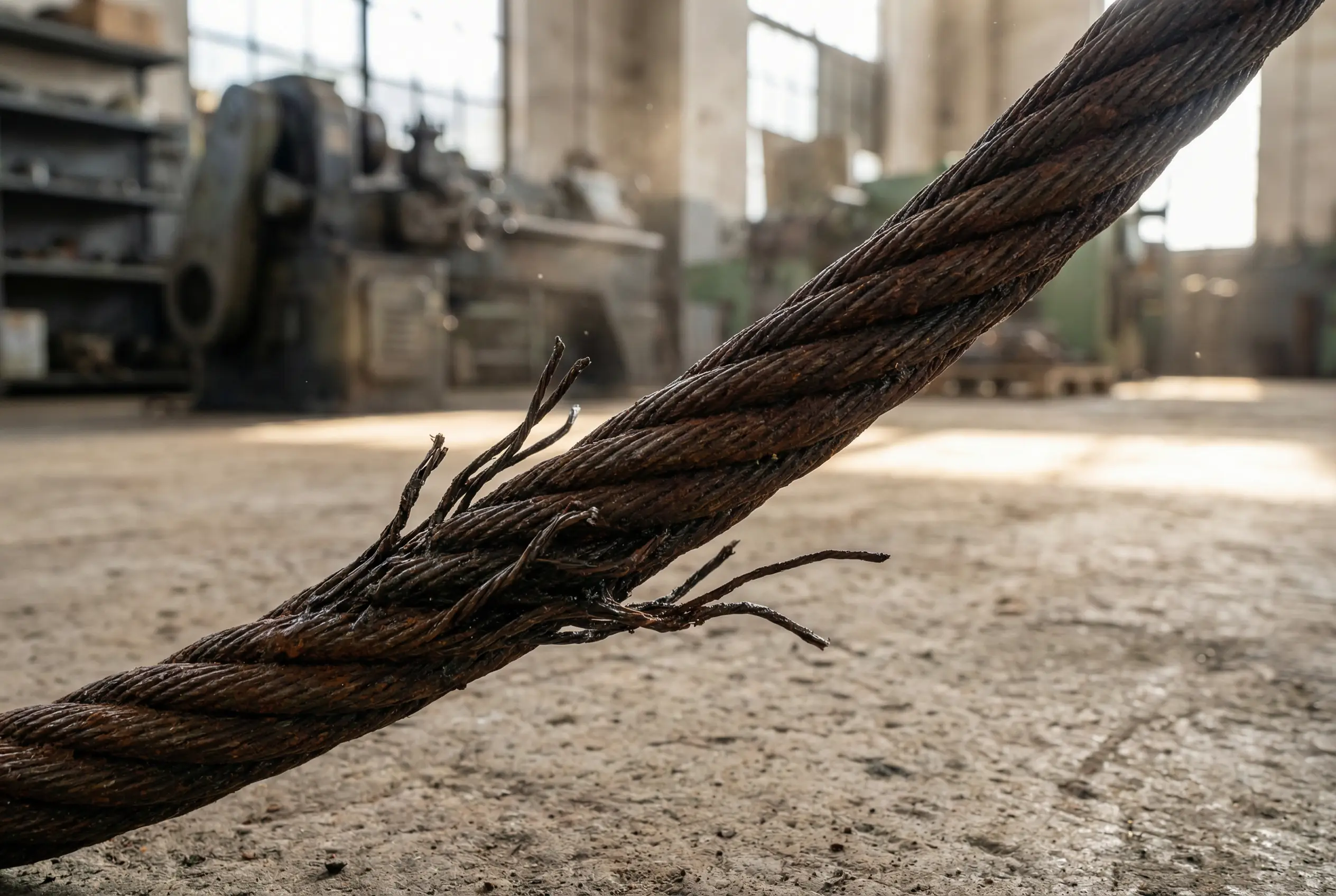
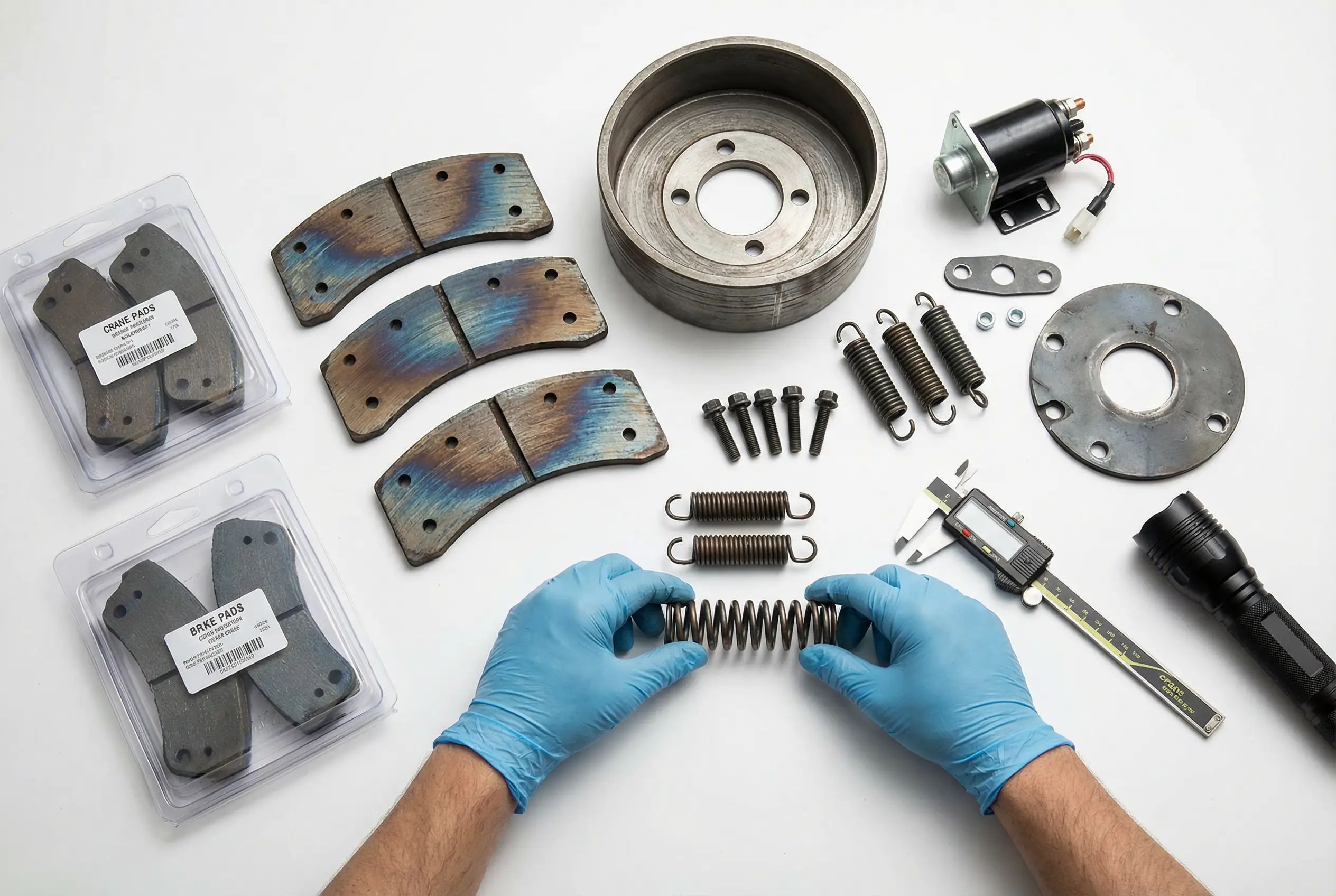
Certain crane parts bear the brunt of operational stress and require regular attention. Wire ropes deteriorate from repeated bending cycles and load stress, typically needing replacement every 12 to 24 months depending on usage intensity. Brake pads and linings wear continuously during load control operations, with replacement intervals varying from quarterly to annually based on crane duty classification. Wheel bearings and trolley wheels experience constant friction and impact, making them prime candidates for scheduled replacement every 18 to 36 months.
Electrical contactors and relay switches represent another frequent failure point, particularly in cranes with high cycle counts. These components handle significant electrical loads during motor starting and stopping sequences, leading to contact erosion over time. Limit switches and pendant control buttons also wear from repeated operator interaction, often requiring replacement within 2 to 3 years of continuous service.
Critical Safety Components With Defined Service Lives
Safety-critical parts demand replacement based on manufacturer specifications regardless of apparent condition. Load hooks must be inspected regularly and replaced when throat openings exceed tolerance or when cracks appear, typically every 5 to 10 years depending on load history. Hoist chains require replacement based on elongation measurements and inspection findings, with service lives ranging from 3 to 7 years under normal conditions.
Overload protection devices and load moment indicators have defined calibration and replacement intervals that cannot be extended. These systems protect against catastrophic failures and must be maintained according to strict schedules. Emergency brake systems, including spring-set brakes and backup holding brakes, also fall into this category, requiring replacement based on time in service rather than visible wear patterns.
Electrical and Control System Vulnerabilities
Modern cranes depend heavily on sophisticated electrical and control systems that present unique failure modes. Variable frequency drives experience component degradation from heat cycling and power quality issues, with capacitor banks often requiring replacement every 5 to 7 years. Programmable logic controllers and human-machine interfaces can fail due to environmental factors like dust, moisture, and temperature extremes, particularly in harsh industrial environments.
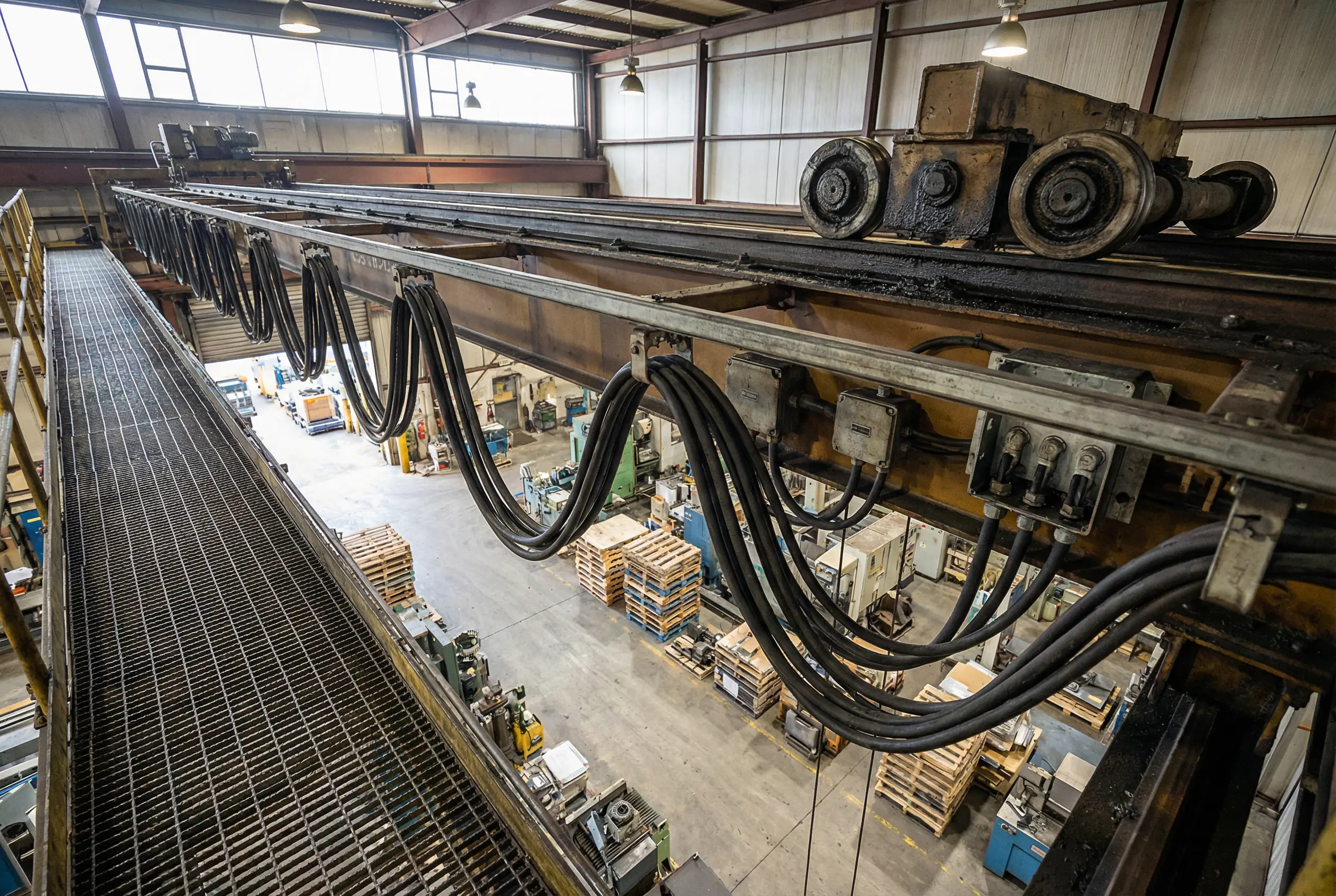
Power distribution components including bus bars, cable connections, and festoon systems deteriorate from vibration, thermal cycling, and environmental exposure. Festoon systems supporting moving cables are particularly vulnerable, with trolley assemblies and cable carriers requiring replacement every 3 to 5 years in demanding applications. Organizations like MCH Parts NYC specialize in maintaining adequate inventory of these critical electrical components to minimize lead times when replacements become necessary.

Implementing an Effective Parts Tracking Schedule
A systematic parts tracking schedule transforms maintenance from reactive crisis management into predictable operational planning. This organizational framework ensures nothing falls through the cracks while optimizing inventory investment.
Creating Component-Specific Replacement Timelines
Begin by cataloging every crane in your facility with its complete component inventory, including manufacturer part numbers, installation dates, and expected service lives. Develop individual replacement timelines for each component category based on manufacturer recommendations, historical failure data, and your specific operating conditions. High-duty-cycle cranes require more aggressive replacement schedules than occasional-use equipment, even for identical components.
Structure your timeline using a color-coded system that flags components approaching replacement windows. Yellow alerts should trigger at 75% of expected service life, prompting parts ordering and maintenance scheduling. Red alerts at 90% indicate immediate action required. This graduated approach prevents both premature replacement and unexpected failures while allowing maintenance teams to batch work for efficiency.
Digital Tracking Systems Versus Manual Methods
Modern computerized maintenance management systems offer powerful tracking capabilities that manual spreadsheets cannot match. These platforms automatically generate work orders when components reach predetermined service intervals, track parts consumption patterns, and provide analytics on failure trends. Integration with inventory management ensures parts availability aligns with scheduled maintenance windows.
However, smaller operations may find success with well-organized spreadsheet systems that track component installation dates, expected replacement dates, and reorder points. The key is consistency in data entry and regular review cycles. Whether digital or manual, your tracking system should be accessible to everyone involved in maintenance planning, procurement, and operations management to ensure coordinated action.
Establishing Review Cycles and Audit Protocols
Even the best tracking system fails without regular review and verification. Establish monthly review meetings where maintenance supervisors examine upcoming replacement needs for the next 90 days, confirming parts availability and scheduling resources. Quarterly audits should verify that tracking data matches actual equipment conditions, correcting any discrepancies that emerge.
Annual comprehensive reviews provide opportunities to adjust replacement intervals based on accumulated experience. Components consistently outlasting their scheduled replacement may indicate overly conservative timelines, while premature failures suggest more aggressive scheduling is warranted. This continuous improvement approach refines your parts roadmap over time, improving both reliability and cost efficiency.
Mastering Supplier Relationships and Lead Time Management
The most sophisticated parts roadmap fails if components aren't available when needed. Strategic supplier relationships and lead time management separate reactive operations from proactive ones.
Understanding Supplier Cutoff Times and Ordering Windows
Every supplier operates on specific cutoff schedules that dictate when orders ship. Understanding these windows is crucial for minimizing lead times. Many distributors offer same-day shipping for orders placed before noon, while others operate on next-business-day fulfillment cycles. International suppliers may have weekly shipping consolidations that determine whether you receive parts in days or weeks.
Map out these cutoff times for all your critical suppliers and incorporate them into your parts ordering workflows. For components approaching replacement windows, place orders well before these cutoffs to ensure timely delivery. Consider that shipping carriers also have cutoff times for next-day or second-day delivery services, adding another layer of timing complexity to manage.
Building Strategic Partnerships With Multiple Suppliers
Relying on a single supplier for critical crane components creates vulnerability to stock-outs, price fluctuations, and service disruptions. Develop relationships with at least two qualified suppliers for each major component category, ensuring competitive pricing and backup availability. Specialized suppliers like MCH Parts NYC often maintain deeper inventory of specific crane brands and models, providing faster fulfillment than general industrial distributors.
Negotiate blanket purchase orders or preferred pricing agreements with primary suppliers while maintaining active accounts with secondary sources. This dual-source strategy provides leverage during price negotiations while ensuring parts availability even when primary suppliers face stock constraints. Share your parts roadmap and projected annual consumption with strategic suppliers so they can anticipate your needs and maintain appropriate inventory levels.
Managing International Sourcing and Extended Lead Times
Some specialized crane components require international sourcing with lead times extending from weeks to months. Identify these long-lead items early in your parts roadmap development and implement extended planning horizons for their procurement. Components manufactured overseas or available only through OEM channels demand six-month or longer advance planning to prevent supply gaps.
Consider establishing consignment inventory arrangements for the most critical long-lead components, where suppliers maintain stock at your facility or nearby warehouses without immediate payment. This strategy is particularly valuable for high-value items with extended replacement cycles. Document customs requirements, international shipping options, and potential trade restriction impacts for international components to avoid surprises when ordering becomes necessary.
Optimizing Emergency Stock Levels for Critical Operations
Strategic emergency inventory represents insurance against the unexpected, balancing capital investment against downtime risk. The right approach maintains appropriate safety stock without excessive inventory carrying costs.
Calculating Minimum Stock Requirements by Component Category
Determine minimum stock levels using a risk-based approach that weighs component criticality against lead time and failure probability. For mission-critical components with long lead times and high failure rates, maintain at least one spare on hand at all times. Less critical parts with short lead times may not warrant any emergency inventory if reliable next-day delivery is available.
Calculate safety stock using the formula: (Maximum Daily Usage × Maximum Lead Time) – (Average Daily Usage × Average Lead Time). This provides a buffer that accounts for variability in both consumption and supply. For crane operations, maximum daily usage should consider scenarios like multiple simultaneous failures or accelerated wear during peak production periods.
Fast-Moving Parts Versus Rarely Used Components
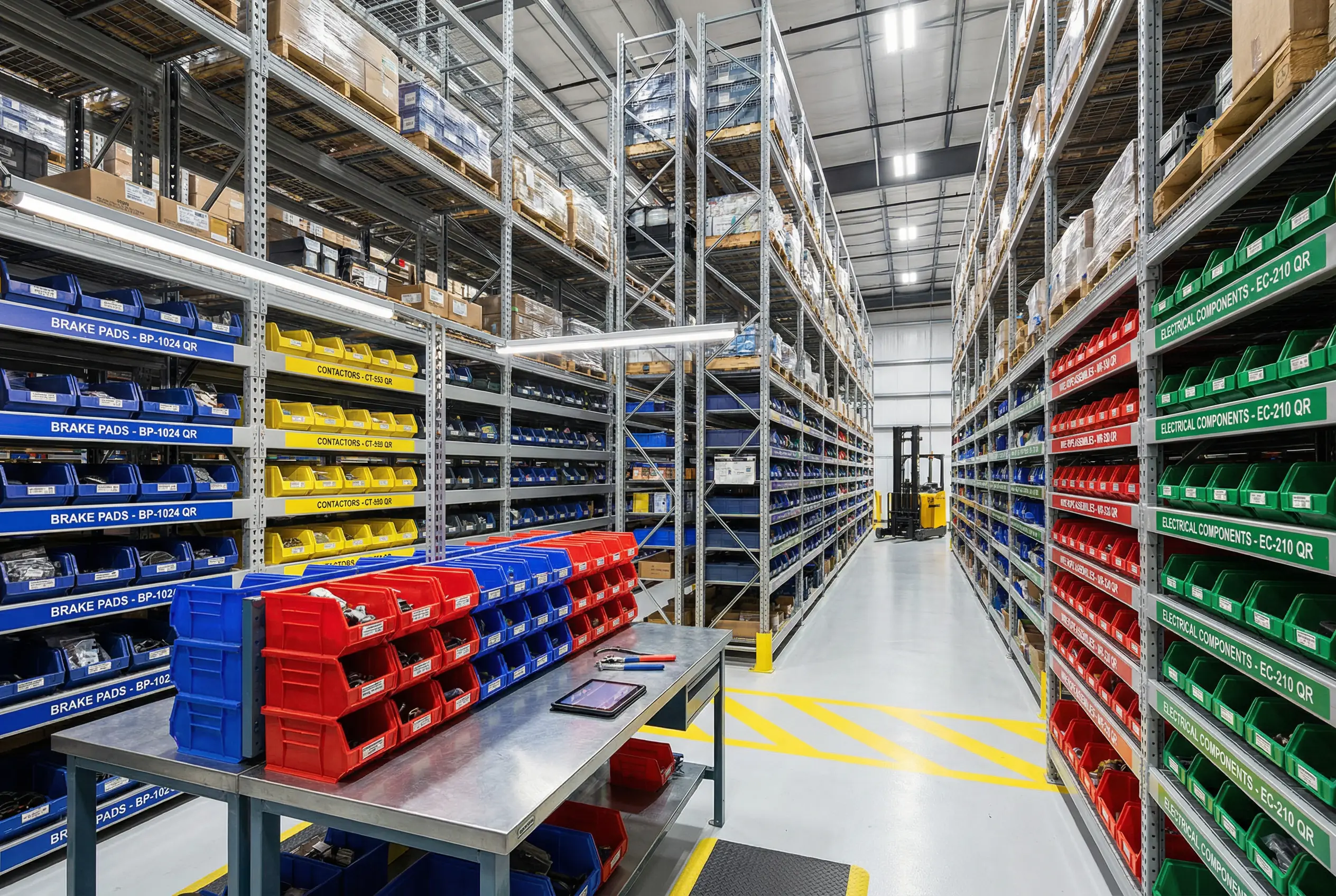
Differentiate your stocking strategy between high-turnover consumables and rarely replaced components. Fast-moving items like brake pads, contactors, and wire rope fittings justify higher stock levels since invested capital turns quickly and carrying costs remain low. Purchase these items in economic order quantities that balance per-unit cost savings against storage requirements.
Rarely replaced components like hoist drums, bridge girder assemblies, or complete gearbox assemblies represent significant capital investment with low turnover. For these items, maintain relationships with suppliers who stock these components rather than tying up your own capital. Negotiate guaranteed availability or maximum lead time commitments for these critical but infrequent needs.
Geographic Considerations for Multi-Site Operations
Organizations operating cranes across multiple facilities face additional complexity in emergency stock optimization. Centralized inventory at a single location reduces total stock requirements through risk pooling but increases response time for distant sites. Distributed inventory at each location ensures fastest response but multiplies total investment and increases obsolescence risk.
Consider a hybrid approach where commodity parts are stocked locally at each site while specialized components are centralized at a regional hub with expedited shipping capabilities. This strategy balances response time with inventory efficiency. For geographically dispersed operations, identify suppliers with multiple distribution centers that can provide rapid delivery to all your locations, effectively creating a virtual inventory network.
Building Your KPI Dashboard for Parts Management Excellence
Data-driven decision making separates adequate parts management from excellence. A well-designed KPI dashboard transforms raw data into actionable insights that continuously improve crane reliability.
Essential Metrics for Tracking Parts Performance
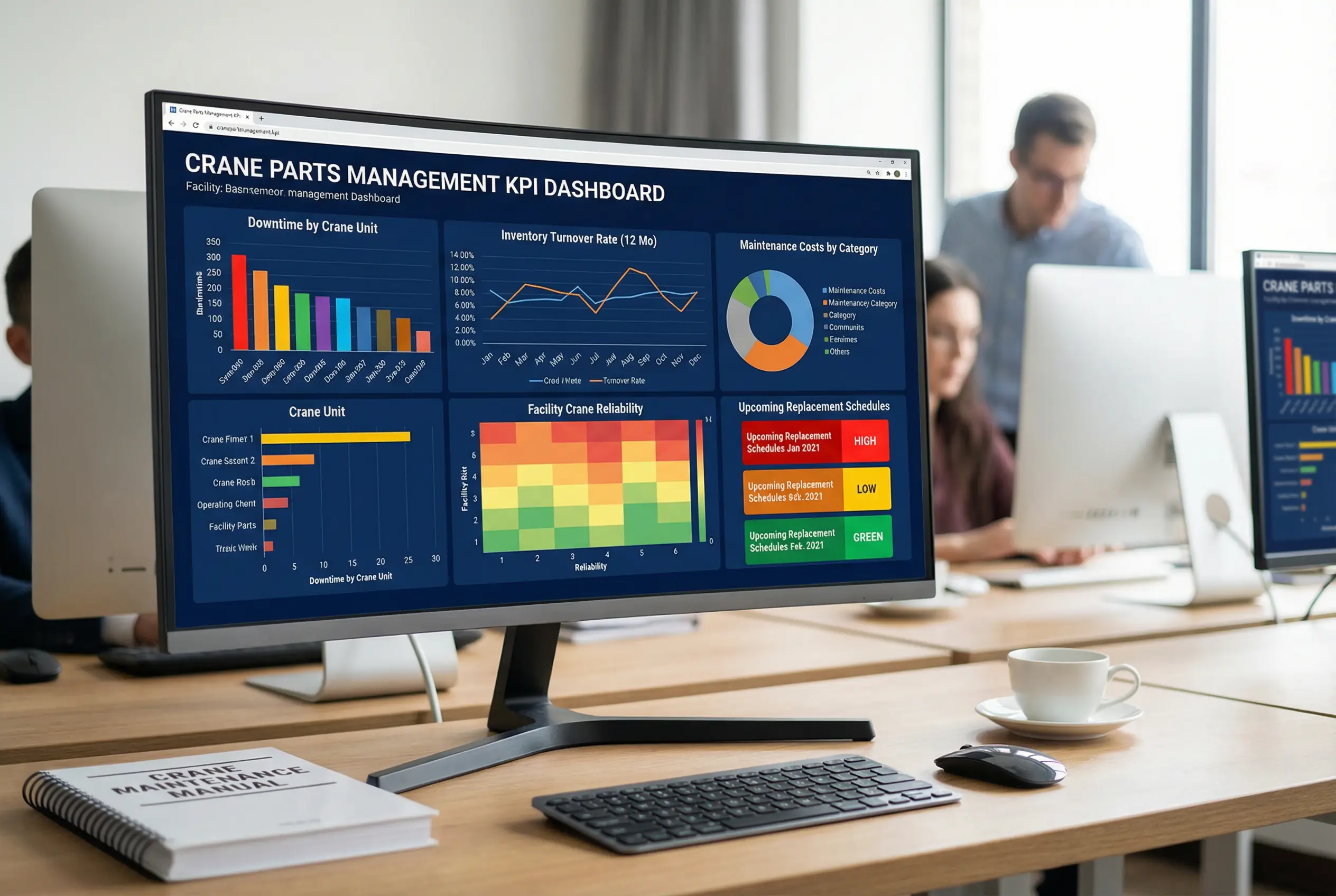
Track parts-related downtime as your primary KPI, measuring both frequency and duration of crane outages caused by parts unavailability. This metric directly quantifies the financial impact of parts management effectiveness. Break this down by crane, component category, and root cause to identify improvement opportunities.
Monitor inventory turnover rates to ensure your emergency stock strategy remains balanced. Annual turnover ratios below 2.0 suggest excessive inventory investment, while ratios above 6.0 may indicate insufficient safety stock. Track stockout rates and emergency order frequency to gauge how often your planned inventory fails to meet actual needs. High emergency order rates signal either inadequate stock levels or inaccurate consumption forecasting.
Measure supplier performance through on-time delivery rates, order accuracy, and quality defect rates. Suppliers consistently falling below 95% on-time delivery or order accuracy require corrective action or replacement. Cost per maintenance work order and parts cost as a percentage of total maintenance spending provide financial visibility into your program efficiency.
Predictive Analytics and Failure Pattern Recognition
Advanced analytics transform historical data into predictive insights. Analyze failure patterns by component type, crane age, manufacturer, and operating conditions to identify trends that inform improved replacement schedules. Components failing consistently before or after scheduled replacement intervals indicate opportunities to optimize your parts roadmap.
Track mean time between failures for critical components, watching for deteriorating trends that might indicate changing operating conditions, quality issues with replacement parts, or emerging design weaknesses. Correlation analysis can reveal non-obvious relationships, such as increased electrical component failures following facility power quality problems or accelerated wear during seasonal production cycles.
Creating Actionable Reports for Stakeholder Communication
Design dashboard reports that communicate parts management performance to different stakeholder groups in their preferred format. Operations managers need real-time visibility into current crane availability and near-term maintenance schedules. Procurement teams require forward-looking demand forecasts for the next 90 to 180 days. Finance departments want historical cost trends and budget variance analysis.
Develop monthly summary reports highlighting key achievements, emerging issues, and improvement initiatives. Use visual elements like trend charts, heat maps showing crane reliability by location, and red-yellow-green status indicators that communicate complex information at a glance. Include specific examples of how proactive parts management prevented downtime or generated cost savings to demonstrate program value and maintain stakeholder support.
Conclusion: Taking Action on Your Crane Parts Roadmap
Crane downtime is expensive, disruptive, and largely preventable. By implementing a comprehensive parts roadmap that identifies critical components, tracks replacement schedules, manages supplier relationships, optimizes emergency inventory, and monitors performance through meaningful KPIs, you transform maintenance from reactive firefighting into strategic asset management. The investment in systematic parts planning pays dividends through improved equipment reliability, reduced emergency costs, and uninterrupted production flow.
Don't let another day of preventable downtime cost your operation thousands of dollars. MCH Parts NYC stands ready to become your strategic partner in crane parts management, offering extensive inventory, expert technical guidance, and the responsive service your operation demands. Whether you need help identifying critical components for your parts roadmap, sourcing hard-to-find replacement parts, or establishing reliable supplier relationships that minimize lead times, their experienced team understands the urgency of keeping your material handling equipment operational.
Contact MCH Parts NYC today to discuss your specific crane parts requirements and discover how their specialized knowledge and comprehensive stock can eliminate the gaps in your current parts strategy. Your cranes are too important to your bottom line to trust to anything less than a dedicated parts partner who prioritizes your uptime as much as you do.
Frequently Asked Questions
How much emergency inventory should I maintain for crane parts?
The optimal emergency inventory level depends on component criticality, supplier lead times, and your risk tolerance. As a general guideline, maintain at least one spare for any component whose failure would cause complete crane downtime and that has a lead time exceeding 48 hours. For operations running multiple identical cranes, statistical risk pooling allows you to maintain fewer total spares than the number of cranes. High-value items with short supplier lead times often don't require emergency stock if you have reliable next-day delivery relationships. Calculate your specific needs using the safety stock formula that accounts for maximum usage rates during lead time periods.
What are the most common reasons crane parts become unavailable when needed?
The primary reasons for parts unavailability include inadequate tracking systems that fail to trigger reorders before components reach critical service life, underestimating lead times especially for specialized or international components, supplier stock-outs due to poor communication about anticipated needs, and obsolescence issues where older crane models require discontinued parts. Budget constraints that delay approved purchases until emergency situations develop also contribute significantly. Addressing these issues requires systematic tracking, lead time documentation, strategic supplier relationships, and proactive communication between maintenance and procurement teams.
How do I justify the investment in a comprehensive parts management program?
Quantify the current cost of crane downtime by calculating lost production value, idle labor costs, and rushed shipping expenses for emergency parts orders. Even a single day of unplanned downtime for a critical crane typically costs thousands to tens of thousands of dollars when all factors are considered. Compare this against the relatively modest investment in tracking systems, strategic inventory, and dedicated management attention. Most organizations find that preventing just one or two major downtime events annually more than justifies the entire program cost. Present this analysis to stakeholders in financial terms that resonate with their priorities, emphasizing return on investment rather than just program costs.
Can a parts roadmap work for older cranes with obsolete components?
Yes, but it requires adapted strategies. For older equipment, your parts roadmap should include obsolescence planning that identifies at-risk components before they become unavailable. Develop relationships with specialized suppliers who focus on legacy equipment and maintain stocks of discontinued parts. Consider purchasing and storing critical components while they remain available, even if immediate need isn't apparent. Investigate aftermarket alternatives, refurbished components, or modern equivalents that can replace obsolete parts. In some cases, planned upgrades to specific subsystems using current technology may be more cost-effective than managing ongoing obsolescence challenges. Your parts roadmap for vintage cranes becomes as much about strategic component sourcing as scheduled replacement.
Read More

Engine Air Filter vs. Cabin Filter 2026: EPA Guide

Radiator and Cooling System Parts: NYC Summer 2026
Bucket Teeth Selection 2026: Right Teeth for NYC Soil

Construction Equipment Filters 2026: Complete Replacement Schedule Updated

Track Replacement Guide 2026: How Long Do Undercarriage Parts Really Last?

Final Drive Troubleshooting 2026: 7 Warning Signs Before Complete Failure

Excavator Hydraulic Pump Replacement 2026: OEM vs Aftermarket Complete Guide

Weekend Equipment Breakdown: NYC After-Hours Parts Sourcing Guide 2026

Equipment Down in 2026? Get These 15 Critical Parts in NYC Within 2 Hours

NYC Port Modernization 2026: Heavy Equipment Parts for Hudson River Terminal Upgrades

Queens Is Being Built Right Now - Is Your Equipment Ready?

NYC High-Rise Construction Boom 2026: Parts for Record Number of Tower Projects

Brooklyn Navy Yard Construction: Specialized Parts for Historic Site Work

NYC DOB Construction Equipment Requirements 2026: Updated Parts & Modifications

Equipment Down in 2026? Get These 15 Critical Parts in NYC Within 2 Hours

NYC Winter 2026 Construction: Critical Parts That Fail Below 20°F : Prevention Guide
Prevent Crane Downtime with a Proactive Parts Roadmap

How to Prevent Downtime in Multi-Brand Earthmoving Fleets

How to Source OEM Undercarriage Parts Without Project Delays
Motor Grader Predictive Diagnostics: Prevent Hydraulic Failures & Reduce Downtime

Pesticide Sprayer Calibration: Essential Safety Compliance Guide & Protection

Seeder Bearing Parts Sourcing Guide: Critical Components & Strategy

Downtime Prevention Through Smart Inventory for Grain Dryers

Combine Harvester Breakdown Prevention Guide: Predictive Analytics for Zero Downtime

Master Global Agricultural Parts Delivery | Mid-Season MRO Guide

Fixing Haul Truck Downtime Issues: Remote Parts Strategy Guide 2025

Blasting Equipment Safety Compliance: Must-Know Audit Requirements for 2025

The Step-by-Step Guide to Global Drill Rig Consumables Sourcing

Mining Conveyor Maintenance Guide: Detecting Hidden Risks in Underground Systems

Best Practices for Certified Pipeline Valve Selection: From Specs to Installation

Optimizing Oil Rig PPE Delivery: Proven Strategies That Saved $2M Annually

FPSO Smart Parts Planning: Proven Methods to Cut Downtime

How FPSO Inspection Prevents Million-Dollar Shutdown Losses

Fix It Before It Breaks: A Farmer's Guide to Combine and Harvester Maintenance

Why Fast Tractor Parts Delivery is Changing Modern Farming [2025 Guide]

The Critical Farm Equipment Replacement Parts You Need Before Harvest 2025
.webp)
How to Double Your Farm Efficiency: Expert Guide to Smart Scaling

Cut Costs by 30%: Pre-Season Spare Parts Audit Checklist

Proven Success Factors for Agricultural Equipment Manufacturers in 2025

13 Overlooked Farm Spare Parts That Halt Operations — Pt. 2

13 Overlooked Farm Spare Parts That Halt Operations — Pt. 1

Top Hydraulic Components for Agricultural Equipment in 2025: Complete Guide

The Essential Farm Equipment Parts You Can't Afford to Run Out Of

How to Service Farm Equipment: A Farmer's Guide to Zero Harvest Downtime

Construction Machinery Parts Suppliers: Expert Selection Guide

How to Apply Machine Safety Rules: From Selection to Installation

Smart Diagnostics Cut Heavy Equipment Failures by 73%

5 Ways to Assess the Environmental Impact of Heavy Construction Machinery

10 Smart Ways to Pick Construction Machinery for 2025 Projects

Rent vs Purchase Equipment: What Heavy Industry Experts Hide

How to Implement a Construction Inventory Management System for Equipment Efficiency

How to Extend Equipment Life Expectancy with Regular Maintenance

Advanced Heavy Equipment Diagnostic Tools: Ensuring Construction Machinery Quality

Essential Features Your Construction Equipment Inventory System Needs
29 Quick Tips for Choosing Construction Equipment for Remote Locations

How to Select Construction Machinery with Optimal Equipment Maintenance in Mind

Top 25 Tips for Selecting Bulldozers for Construction Sites

Which Construction Loader is Best for Your Project Needs?

4 Key Steps to Form a Construction Machinery QC Team

15 Essential Tips for Selecting the Perfect Crane for Construction

Maximize Savings: Multi-Purpose Construction Machinery for Lower Costs

Affordable Heavy Equipment Parts: A Sourcing Guide

Choosing the Right Road Construction Equipment: A Complete Guide

Motor Graders: Key Elements to Consider for Optimal Selection

A Detailed Guide to Choosing Excavators for Construction Work

Top Tips for Choosing Cranes for Construction Projects
5 Top-Rated Demolition Machines for Construction Professionals

Expert Tips on Choosing Earthmoving Equipment for Large Projects

Top Functional Criteria for Selecting Heavy Construction Equipment

Construction Machinery: Detailed Guide to Equipment Specifications

Heavy Machinery Prices: Key Factors in Cost and Quality Balance

Best Construction Heavy Equipment Brands: Pros and Cons

Construction Site Equipment: How to Determine Your Requirements

Maximizing Safety: Risk Management for Construction Projects

Innovations in Construction: Transforming Machinery and Equipment

Heavy Equipment Safety: Beyond the Basics in Construction Compliance

The Essential Handbook for Construction Equipment Repair and Maintenance

How to Efficiently Source Oil and Gas Machinery Parts in NYC

Essential Guide to Sourcing Agriculture Equipment Parts

How to Source Mining Machinery Parts: Tips and Strategies