How to Prevent Downtime in Multi-Brand Earthmoving Fleets
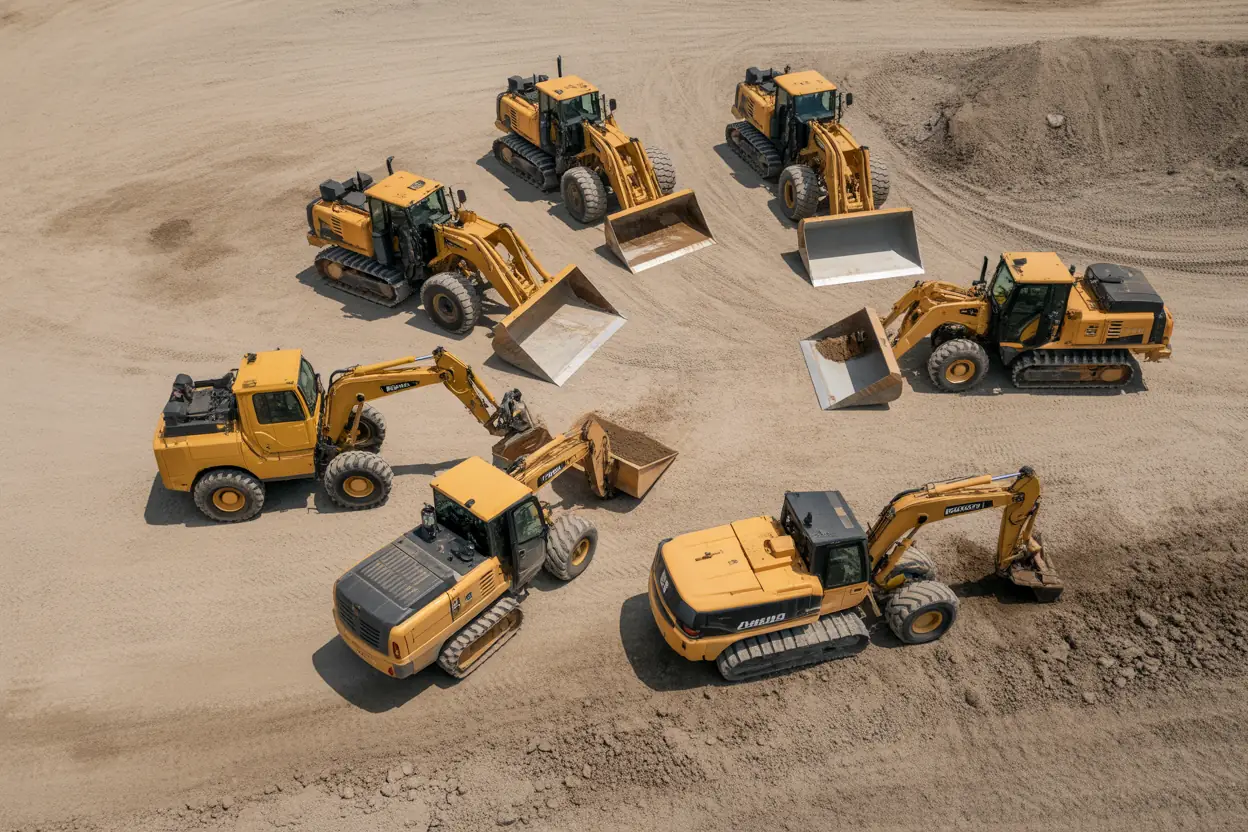
In the earthmoving industry, every hour of downtime translates directly to lost revenue, missed deadlines, and frustrated clients. For contractors managing multi-brand fleets - where Caterpillar excavators work alongside Komatsu dozers and Volvo loaders - the challenge of preventing downtime becomes exponentially more complex. The reality is stark: a single piece of equipment sitting idle can cost operations between $2,000 to $5,000 per day, and the ripple effects on project timelines can be catastrophic. Yet many fleet managers still operate reactively, addressing breakdowns as they occur rather than implementing systematic prevention strategies. The solution isn't simply buying newer equipment or stockpiling every conceivable part - it's about building an intelligent, integrated downtime prevention system that accounts for the unique challenges of managing diverse machinery brands.
This comprehensive approach combines strategic parts management, predictive maintenance protocols, and smart resource allocation to keep your entire fleet operational when it matters most.
Fleet Age Segmentation: The Foundation of Strategic Maintenance
Understanding your fleet's age profile is the cornerstone of effective downtime prevention. Not all equipment requires the same level of attention, and treating a 15-year-old excavator the same as a 3-year-old model is a recipe for inefficiency and unexpected failures.
Categorizing Equipment by Operational Stage
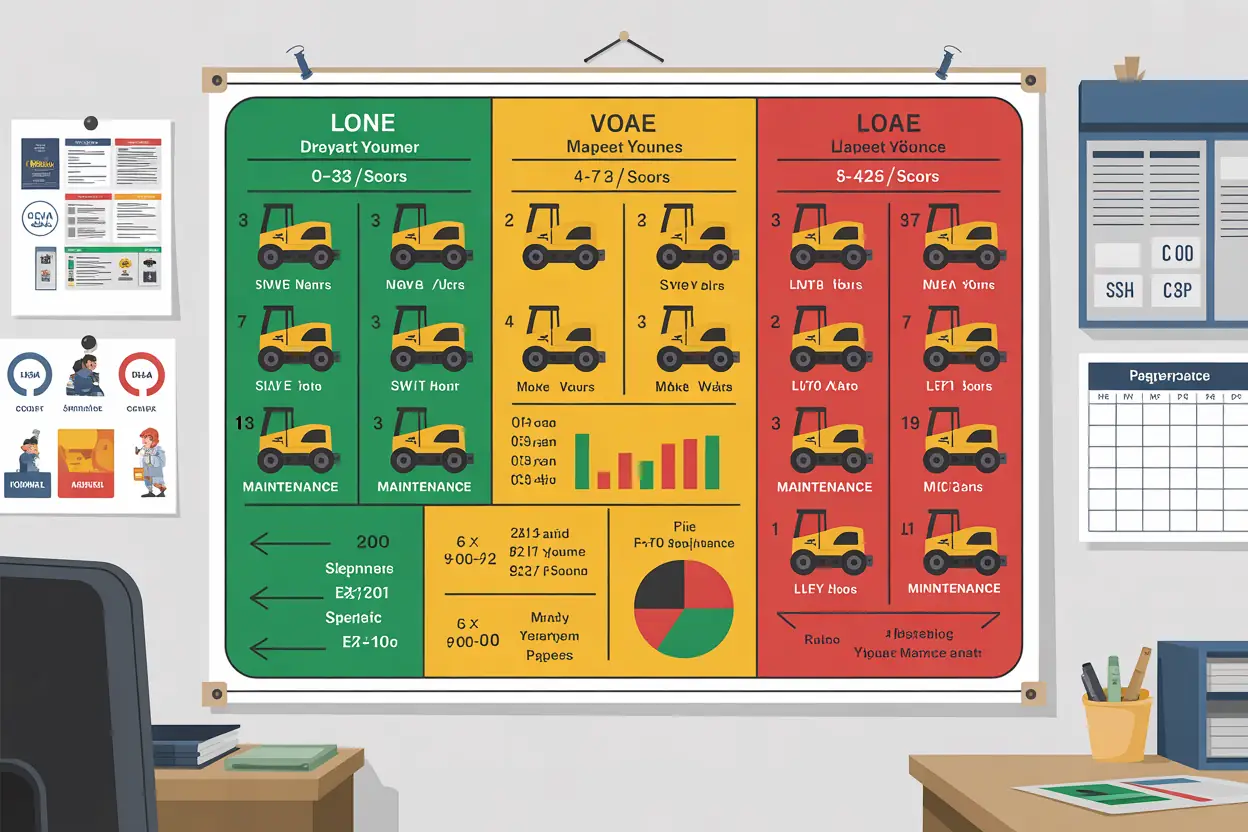
The first step in fleet age segmentation involves dividing your machinery into distinct categories based on age and operating hours. New equipment (0-3 years or under 3,000 hours) typically operates within manufacturer warranty periods and requires primarily scheduled maintenance. Mid-life equipment (4-7 years or 3,000-8,000 hours) enters the phase where component wear accelerates and the first major rebuilds become necessary. Legacy equipment (8+ years or over 8,000 hours) demands the most attention, with frequent parts replacement and heightened monitoring becoming critical.
This segmentation allows you to allocate maintenance resources proportionally to risk. Your newest machines might need quarterly inspections, while legacy equipment benefits from monthly detailed assessments. For multi-brand fleets, this becomes particularly important because different manufacturers' equipment ages differently - a 10-year-old Caterpillar machine might have vastly different maintenance needs than a 10-year-old Komatsu of similar specification.
Tailoring Maintenance Schedules to Equipment Age
Once you've segmented your fleet, develop age-specific maintenance protocols that address the predictable failure patterns of each group. For newer equipment, focus on fluid analysis and basic preventive measures that protect warranty coverage. Mid-life machines require more intensive inspections targeting high-wear components like hydraulic cylinders, final drives, and undercarriage systems. Legacy equipment needs comprehensive preventive replacement strategies where you proactively swap components approaching their expected lifespan rather than waiting for failure.
By partnering with reliable parts suppliers like MCH Parts NYC, you can ensure access to quality OEM and aftermarket components for equipment across all age categories. This relationship becomes particularly valuable for legacy equipment where original parts may be harder to source, and having a trusted supplier who understands multi-brand needs prevents the delays that turn minor maintenance into major downtime.

Standard Swap Kits: Pre-Positioned Solutions for Common Failures
Even the most meticulously maintained fleet will experience component failures. The difference between a two-hour repair and a two-day shutdown often comes down to parts availability. Standard swap kits eliminate the waiting game by pre-positioning critical components for the most common failure scenarios.
Identifying High-Frequency Failure Points
Creating effective swap kits begins with data analysis. Review your maintenance records from the past 24-36 months to identify which components fail most frequently across your fleet. Common culprits typically include hydraulic hoses and fittings, filters (fuel, hydraulic, and air), electrical components like sensors and switches, wear parts such as teeth and cutting edges, seals and O-rings, and belts and bearings.
For multi-brand fleets, you'll notice patterns emerging both within specific brands and across your entire operation. While a Komatsu excavator and a Volvo excavator might use different part numbers, they often fail in similar ways due to comparable operating stresses. This insight allows you to create both brand-specific and universal swap kits that address the majority of unscheduled maintenance events without requiring extensive diagnostic time.
Assembling Strategic Parts Collections
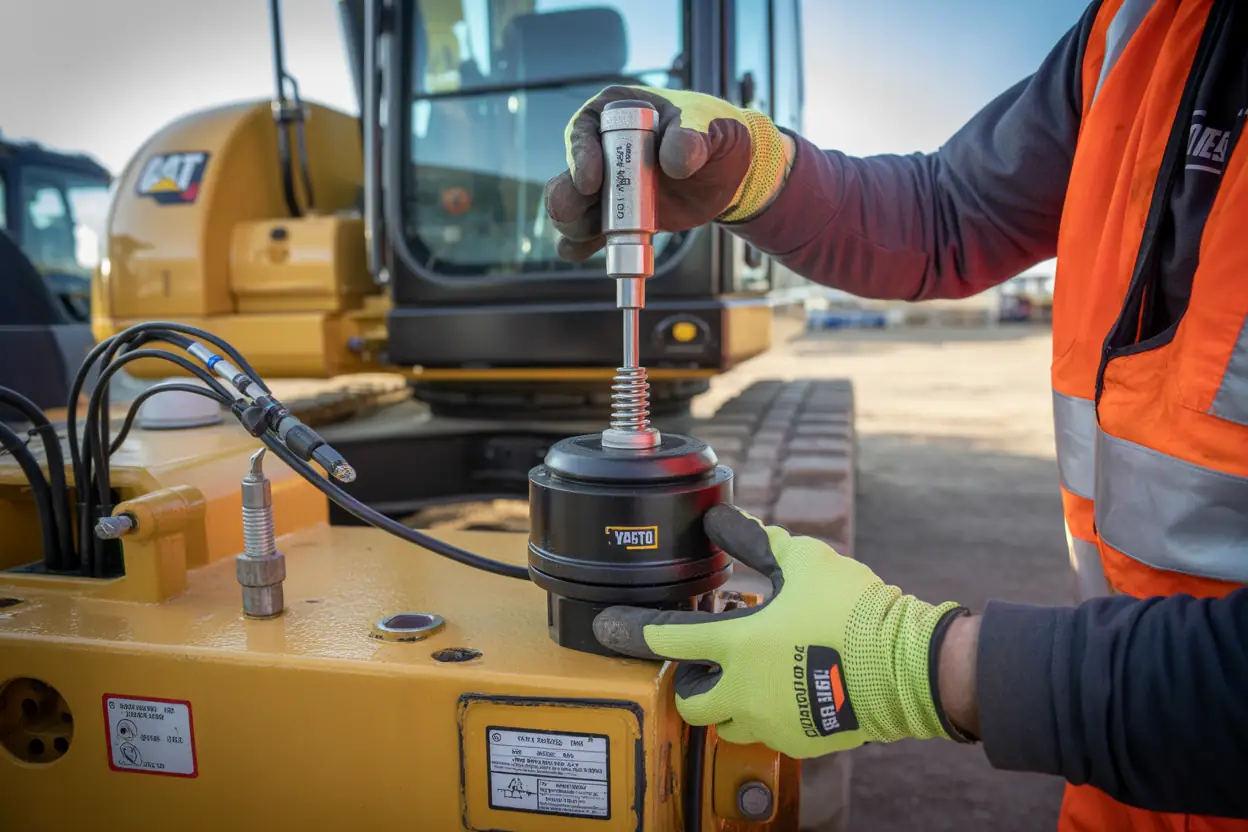
The most effective swap kits are organized around specific repair scenarios rather than random parts collections. Consider creating themed kits such as hydraulic emergency kits containing common hoses, fittings, seals, and quick-couplers; electrical troubleshooting kits with sensors, relays, fuses, and connectors; and undercarriage maintenance kits with track pins, bushings, and bolts specific to your most-used machines.
Store these kits in clearly labeled, weather-resistant containers positioned strategically - some in your main shop, others in service vehicles, and perhaps mobile kits that travel to remote job sites. The investment in pre-assembled kits pays dividends the first time a technician can immediately swap a failed hydraulic pump instead of losing a full production day waiting for parts delivery. Quality suppliers like MCH Parts NYC can help you source the right components for these kits, ensuring you're stocking reliable parts that match your equipment specifications across multiple brands.
Remote Monitoring Setup: Early Warning Systems for Fleet Health
Modern telematics and remote monitoring technology has transformed fleet management from reactive to predictive. By implementing comprehensive monitoring systems across your multi-brand fleet, you gain real-time visibility into equipment health and can intervene before minor issues cascade into costly failures.
Implementing Cross-Platform Monitoring Solutions
The challenge with multi-brand fleets is that each manufacturer typically offers its own proprietary telematics platform - Caterpillar has Product Link, Komatsu uses KOMTRAX, and Volvo employs CareTrack. While these systems provide valuable data, managing multiple separate platforms creates information silos and increases the chance that warning signs slip through the cracks.
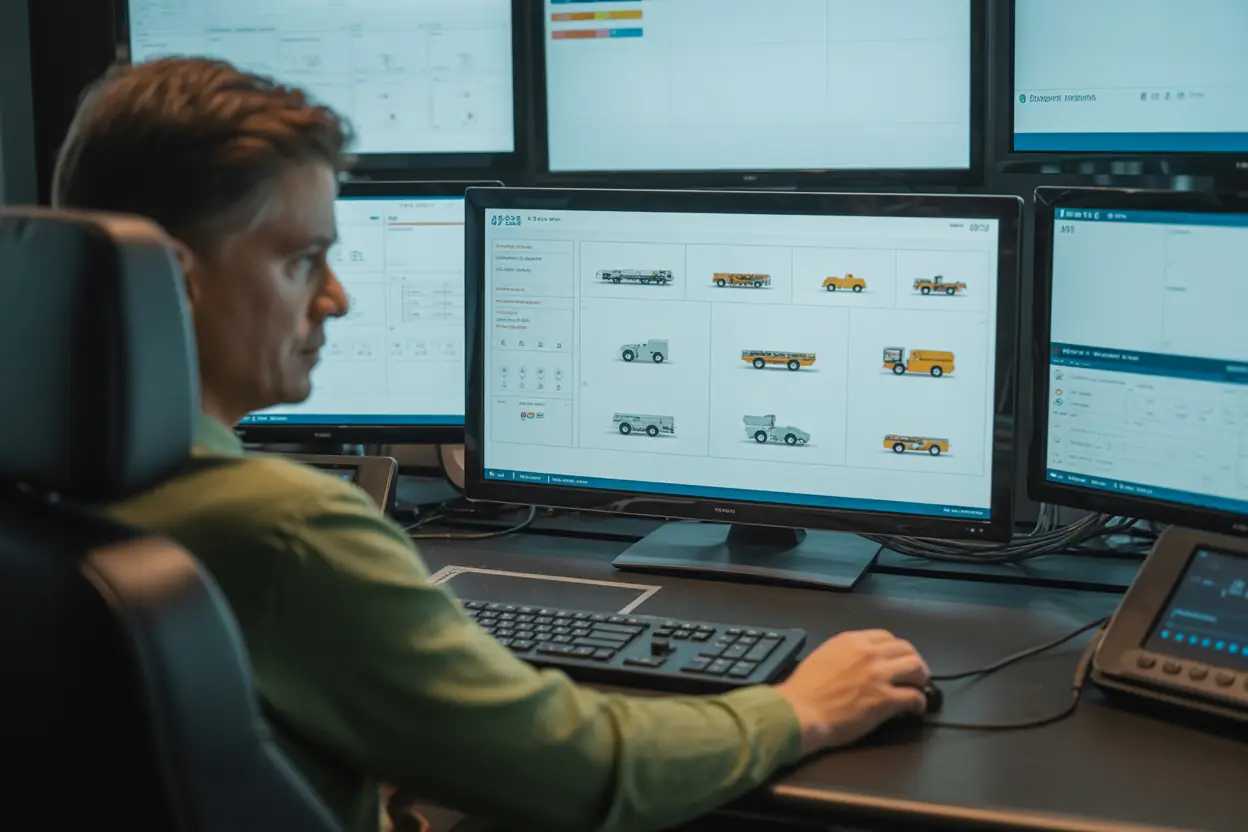
The solution is implementing a universal fleet management platform that integrates data from multiple sources into a single dashboard. These third-party systems can pull information from OEM telematics, aftermarket sensors, and even manual inputs to create a comprehensive fleet health picture. Key parameters to monitor include operating hours and idle time, fuel consumption patterns, hydraulic system temperature and pressure, engine diagnostics and fault codes, and location and utilization rates.
Establishing Alert Thresholds and Response Protocols
Raw data only becomes valuable when it triggers actionable responses. Configure your monitoring system with graduated alert thresholds that distinguish between informational notices, maintenance advisories, and critical warnings requiring immediate action. For instance, slightly elevated hydraulic oil temperature might generate an informational log entry, moderately elevated temperature triggers a maintenance advisory to schedule inspection, and critically high temperature sends an immediate alert to both the operator and maintenance supervisor to shut down equipment.
Create clear response protocols for each alert level, assigning responsibility and establishing maximum response times. Your newest equipment might tolerate longer response windows for non-critical alerts, while legacy machines warrant more aggressive intervention even for minor anomalies. This proactive approach, combined with readily available parts from suppliers like MCH Parts NYC, means you're scheduling repairs during planned downtime rather than scrambling to source components after catastrophic failures.
Shared Parts Pool and Audit Workflow: Maximizing Resource Efficiency
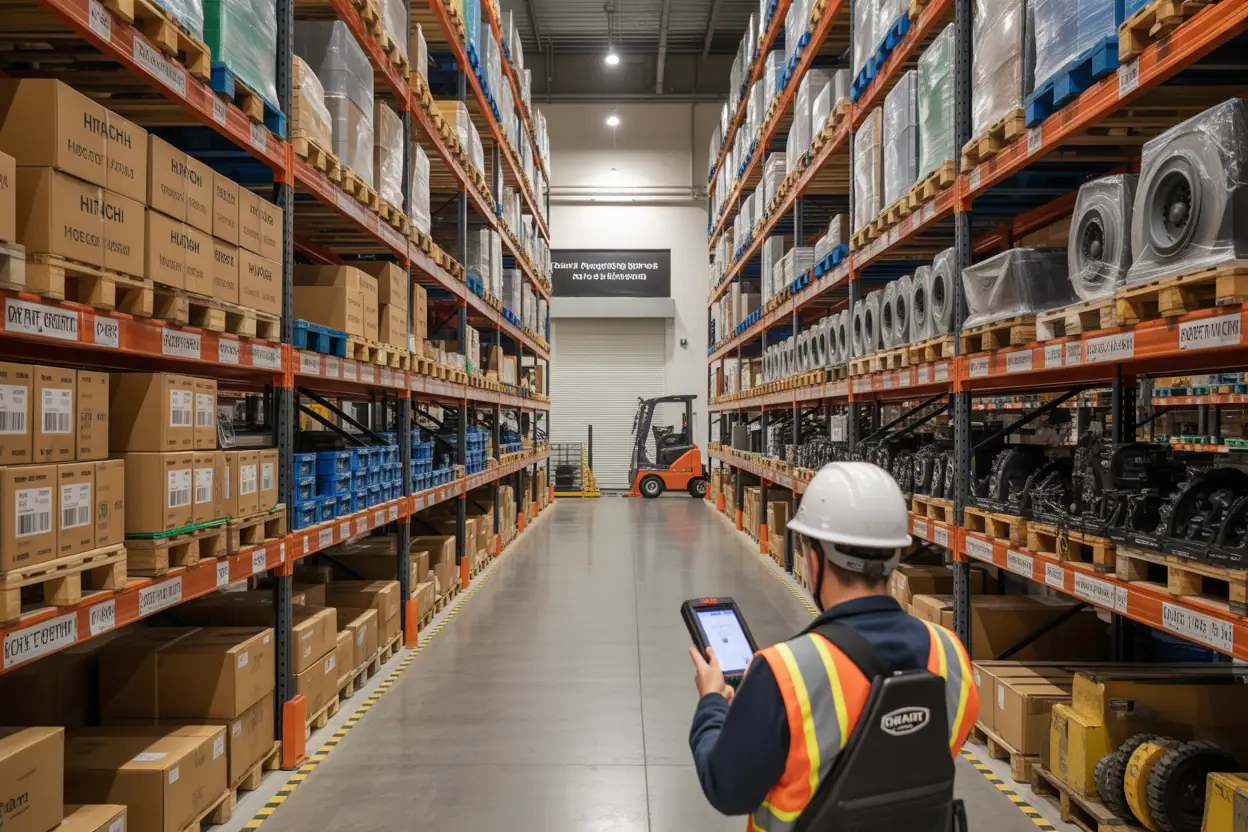
For companies managing multiple job sites or divisions, a centralized shared parts pool combined with rigorous audit workflows creates significant operational advantages. This approach transforms parts inventory from scattered, site-specific collections into a strategic corporate asset.
Creating Centralized Inventory Systems
A shared parts pool consolidates slow-moving and expensive components into a central location accessible to all operating units. Rather than having three job sites each carrying a spare final drive for their excavators - tying up significant capital in inventory - a centralized system might maintain two spares available for distribution as needed. This approach works particularly well for high-value components like transmissions, major engine assemblies, complete hydraulic pumps, computer modules and controllers, and specialized attachments.
The key to success is implementing robust inventory management software that provides real-time visibility into parts location, quantity, and reservation status. When a technician in the field needs a component from the shared pool, they should be able to check availability, reserve the part, and arrange delivery or pickup within minutes. For multi-brand fleets, this system becomes even more valuable because it helps identify cross-compatibility opportunities - discovering, for example, that certain hydraulic components work across multiple equipment brands, reducing the total variety of parts you need to stock.
Implementing Continuous Audit Workflows
Even the best inventory system degrades without regular auditing. Establish continuous audit workflows where physical inventory is regularly verified against system records. This doesn't mean shutting down for annual inventory counts - instead, implement cycle counting where portions of your inventory are audited weekly or monthly on a rotating basis.
Your audit workflow should also track parts consumption patterns to optimize stocking levels. If certain components from MCH Parts NYC consistently show high turnover, increase stock quantities or explore consignment arrangements. Conversely, parts that sit unused for extended periods represent capital that could be better deployed elsewhere. For multi-brand fleets, these insights help you understand the true cost of ownership for different equipment types and can inform future purchasing decisions. The audit process should also flag obsolete inventory - parts for equipment no longer in your fleet - which can often be returned or sold to recoup capital tied up in unnecessary stock.
Building Resilience into Multi-Brand Fleet Operations
Downtime prevention for multi-brand earthmoving fleets isn't a single initiative - it's an operational philosophy that recognizes the interconnected nature of modern equipment management. By implementing fleet age segmentation, you allocate attention and resources where they're needed most. Standard swap kits ensure that common repairs happen in hours rather than days. Remote monitoring systems provide early warning of developing problems before they cause failures. And shared parts pools combined with audit workflows maximize the efficiency of your parts investment while ensuring availability when components are needed.
The most successful operators understand that these strategies work synergistically. Remote monitoring data informs which components should be included in swap kits. Fleet age segmentation determines how aggressively you intervene when monitoring alerts trigger. Audit workflows ensure that your carefully planned parts inventory actually matches reality when a technician reaches for a critical component.
For multi-brand fleets, the complexity is higher but so are the stakes. The contractors who thrive in this environment are those who invest in systems and partnerships that simplify rather than complicate their operations. Working with knowledgeable parts suppliers like MCH Parts NYC who understand the nuances of supporting diverse equipment brands becomes a competitive advantage. These partnerships, combined with the strategic approaches outlined here, transform downtime prevention from an aspiration into a measurable operational strength - keeping your equipment productive, your projects on schedule, and your business profitable even in the demanding world of multi-brand fleet management.
Frequently Asked Questions
How much inventory should I maintain for a multi-brand fleet of 20-30 machines?
The ideal inventory level depends on your specific equipment mix, operating environment, and distance from suppliers, but a good starting point is maintaining approximately 8-12% of your fleet's total value in spare parts inventory. For a multi-brand fleet, focus on high-turnover consumables (filters, fluids, wear parts) at quantities sufficient for 60-90 days of operations, mid-frequency components (hydraulic hoses, electrical components) covering 30 days, and critical high-value items (major assemblies like pumps or final drives) at quantities of 1-2 per equipment type. Working with a responsive supplier like MCH Parts NYC that can deliver quickly allows you to maintain leaner inventory for less common components while still preventing extended downtime.
What's the ROI on implementing remote monitoring across my entire fleet?
Most fleet operators see positive ROI within 12-18 months of implementing comprehensive remote monitoring. The typical earthmoving machine experiences 3-5% unscheduled downtime annually, and remote monitoring can reduce this by 40-60% through early intervention. For a $300,000 excavator operating 2,000 hours per year with a full-cost hourly rate of $150, preventing just 25 hours of unscheduled downtime annually saves $3,750. Across a 25-machine fleet, that's over $93,000 in annual savings. When you add secondary benefits like optimizing fuel consumption (typically 5-10% improvement), extending component life through better maintenance timing, and improving operator behavior through data visibility, the ROI becomes compelling even before considering the reduced emergency repair costs and expedited parts shipping fees.
Can I really use the same maintenance approach for equipment from different manufacturers?
While specific parts and procedures vary by brand, the fundamental maintenance principles absolutely transfer across manufacturers. Hydraulic systems, powertrains, undercarriages, and electrical systems all operate on similar principles whether they're in a Caterpillar, Komatsu, Volvo, or Hitachi machine. The key is building brand-specific knowledge within your maintenance team while applying universal best practices around inspection intervals, fluid analysis, component life tracking, and predictive maintenance. Your maintenance management system should accommodate brand-specific service requirements while your overall strategy - fleet segmentation, monitoring thresholds, parts pooling - remains consistent. This unified-yet-flexible approach is actually more efficient than treating each brand as completely separate, and experienced suppliers can help identify cross-compatible parts that simplify your inventory.
How do I prioritize which machines get the most attention when maintenance resources are limited?
Prioritization should consider three factors: equipment criticality (how essential is this machine to current projects?), financial exposure (replacement value and revenue generation capacity), and failure probability (age, condition, and operating environment). Create a simple scoring matrix that rates each machine on these dimensions, then allocate maintenance attention proportionally. Your newest, highest-value, most-critical machines deserve premium attention, but don't neglect legacy equipment entirely - a well-maintained 12-year-old machine can be more reliable than a poorly maintained 5-year-old one. During resource constraints, increase monitoring frequency on lower-priority machines (so you catch problems early) while concentrating hands-on preventive maintenance on your highest-priority units. This data-driven approach ensures you're optimizing uptime across the fleet rather than treating all equipment equally regardless of their actual contribution to your operations.
Read More

Engine Air Filter vs. Cabin Filter 2026: EPA Guide

Radiator and Cooling System Parts: NYC Summer 2026
Bucket Teeth Selection 2026: Right Teeth for NYC Soil

Construction Equipment Filters 2026: Complete Replacement Schedule Updated
Track Replacement Guide 2026: How Long Do Undercarriage Parts Really Last?

Final Drive Troubleshooting 2026: 7 Warning Signs Before Complete Failure
Excavator Hydraulic Pump Replacement 2026: OEM vs Aftermarket Complete Guide

Weekend Equipment Breakdown: NYC After-Hours Parts Sourcing Guide 2026

Equipment Down in 2026? Get These 15 Critical Parts in NYC Within 2 Hours

NYC Port Modernization 2026: Heavy Equipment Parts for Hudson River Terminal Upgrades
Queens Is Being Built Right Now - Is Your Equipment Ready?

NYC High-Rise Construction Boom 2026: Parts for Record Number of Tower Projects

Brooklyn Navy Yard Construction: Specialized Parts for Historic Site Work

NYC DOB Construction Equipment Requirements 2026: Updated Parts & Modifications

Equipment Down in 2026? Get These 15 Critical Parts in NYC Within 2 Hours
NYC Winter 2026 Construction: Critical Parts That Fail Below 20°F : Prevention Guide
Prevent Crane Downtime with a Proactive Parts Roadmap
How to Prevent Downtime in Multi-Brand Earthmoving Fleets

How to Source OEM Undercarriage Parts Without Project Delays
Motor Grader Predictive Diagnostics: Prevent Hydraulic Failures & Reduce Downtime

Pesticide Sprayer Calibration: Essential Safety Compliance Guide & Protection

Seeder Bearing Parts Sourcing Guide: Critical Components & Strategy
Downtime Prevention Through Smart Inventory for Grain Dryers

Combine Harvester Breakdown Prevention Guide: Predictive Analytics for Zero Downtime

Master Global Agricultural Parts Delivery | Mid-Season MRO Guide

Fixing Haul Truck Downtime Issues: Remote Parts Strategy Guide 2025

Blasting Equipment Safety Compliance: Must-Know Audit Requirements for 2025

The Step-by-Step Guide to Global Drill Rig Consumables Sourcing
Mining Conveyor Maintenance Guide: Detecting Hidden Risks in Underground Systems

Best Practices for Certified Pipeline Valve Selection: From Specs to Installation

Optimizing Oil Rig PPE Delivery: Proven Strategies That Saved $2M Annually

FPSO Smart Parts Planning: Proven Methods to Cut Downtime

How FPSO Inspection Prevents Million-Dollar Shutdown Losses

Fix It Before It Breaks: A Farmer's Guide to Combine and Harvester Maintenance

Why Fast Tractor Parts Delivery is Changing Modern Farming [2025 Guide]

The Critical Farm Equipment Replacement Parts You Need Before Harvest 2025
.webp)
How to Double Your Farm Efficiency: Expert Guide to Smart Scaling

Cut Costs by 30%: Pre-Season Spare Parts Audit Checklist

Proven Success Factors for Agricultural Equipment Manufacturers in 2025

13 Overlooked Farm Spare Parts That Halt Operations — Pt. 2

13 Overlooked Farm Spare Parts That Halt Operations — Pt. 1

Top Hydraulic Components for Agricultural Equipment in 2025: Complete Guide
The Essential Farm Equipment Parts You Can't Afford to Run Out Of

How to Service Farm Equipment: A Farmer's Guide to Zero Harvest Downtime
Construction Machinery Parts Suppliers: Expert Selection Guide

How to Apply Machine Safety Rules: From Selection to Installation

Smart Diagnostics Cut Heavy Equipment Failures by 73%

5 Ways to Assess the Environmental Impact of Heavy Construction Machinery

10 Smart Ways to Pick Construction Machinery for 2025 Projects

Rent vs Purchase Equipment: What Heavy Industry Experts Hide

How to Implement a Construction Inventory Management System for Equipment Efficiency

How to Extend Equipment Life Expectancy with Regular Maintenance
Advanced Heavy Equipment Diagnostic Tools: Ensuring Construction Machinery Quality

Essential Features Your Construction Equipment Inventory System Needs
29 Quick Tips for Choosing Construction Equipment for Remote Locations

How to Select Construction Machinery with Optimal Equipment Maintenance in Mind
Top 25 Tips for Selecting Bulldozers for Construction Sites
Which Construction Loader is Best for Your Project Needs?

4 Key Steps to Form a Construction Machinery QC Team

15 Essential Tips for Selecting the Perfect Crane for Construction

Maximize Savings: Multi-Purpose Construction Machinery for Lower Costs
Affordable Heavy Equipment Parts: A Sourcing Guide
Choosing the Right Road Construction Equipment: A Complete Guide

Motor Graders: Key Elements to Consider for Optimal Selection

A Detailed Guide to Choosing Excavators for Construction Work

Top Tips for Choosing Cranes for Construction Projects
5 Top-Rated Demolition Machines for Construction Professionals

Expert Tips on Choosing Earthmoving Equipment for Large Projects
Top Functional Criteria for Selecting Heavy Construction Equipment

Construction Machinery: Detailed Guide to Equipment Specifications
Heavy Machinery Prices: Key Factors in Cost and Quality Balance
Best Construction Heavy Equipment Brands: Pros and Cons

Construction Site Equipment: How to Determine Your Requirements

Maximizing Safety: Risk Management for Construction Projects

Innovations in Construction: Transforming Machinery and Equipment

Heavy Equipment Safety: Beyond the Basics in Construction Compliance

The Essential Handbook for Construction Equipment Repair and Maintenance

How to Efficiently Source Oil and Gas Machinery Parts in NYC

Essential Guide to Sourcing Agriculture Equipment Parts

How to Source Mining Machinery Parts: Tips and Strategies