How to Source OEM Undercarriage Parts Without Project Delays

Every construction manager knows the sinking feeling: your excavator's track chain fails mid-project, and suddenly you're racing against the clock to find replacement parts. The difference between a minor hiccup and a costly shutdown often comes down to one critical factor - how you source your undercarriage components.
Undercarriage parts represent up to 50% of a machine's total operating costs, yet many fleet managers still approach sourcing reactively rather than strategically. The stakes are enormous: a single day of downtime on a commercial project can cost anywhere from $5,000 to $50,000 in lost productivity, penalties, and cascading schedule impacts. When you're managing multiple machines across job sites, the complexity multiplies exponentially.
The challenge isn't just finding parts - it's finding the right parts at the right time without compromising quality or breaking your budget. Whether you're running Caterpillar, Komatsu, Hitachi, or Volvo equipment, your sourcing strategy directly impacts your bottom line. Smart contractors have learned that success requires understanding the nuanced differences between OEM and aftermarket options, building relationships with reliable suppliers who maintain inventory depth, and developing forecasting systems that anticipate needs before emergencies arise.
At MCH Parts NYC, we've spent years helping construction companies eliminate the guesswork from undercarriage parts sourcing. Our approach combines manufacturer-quality components with the inventory availability and technical support that keeps projects moving forward. Let's explore how you can transform your parts sourcing from a reactive scramble into a competitive advantage.
Understanding OEM vs Aftermarket Risk in Undercarriage Parts Sourcing
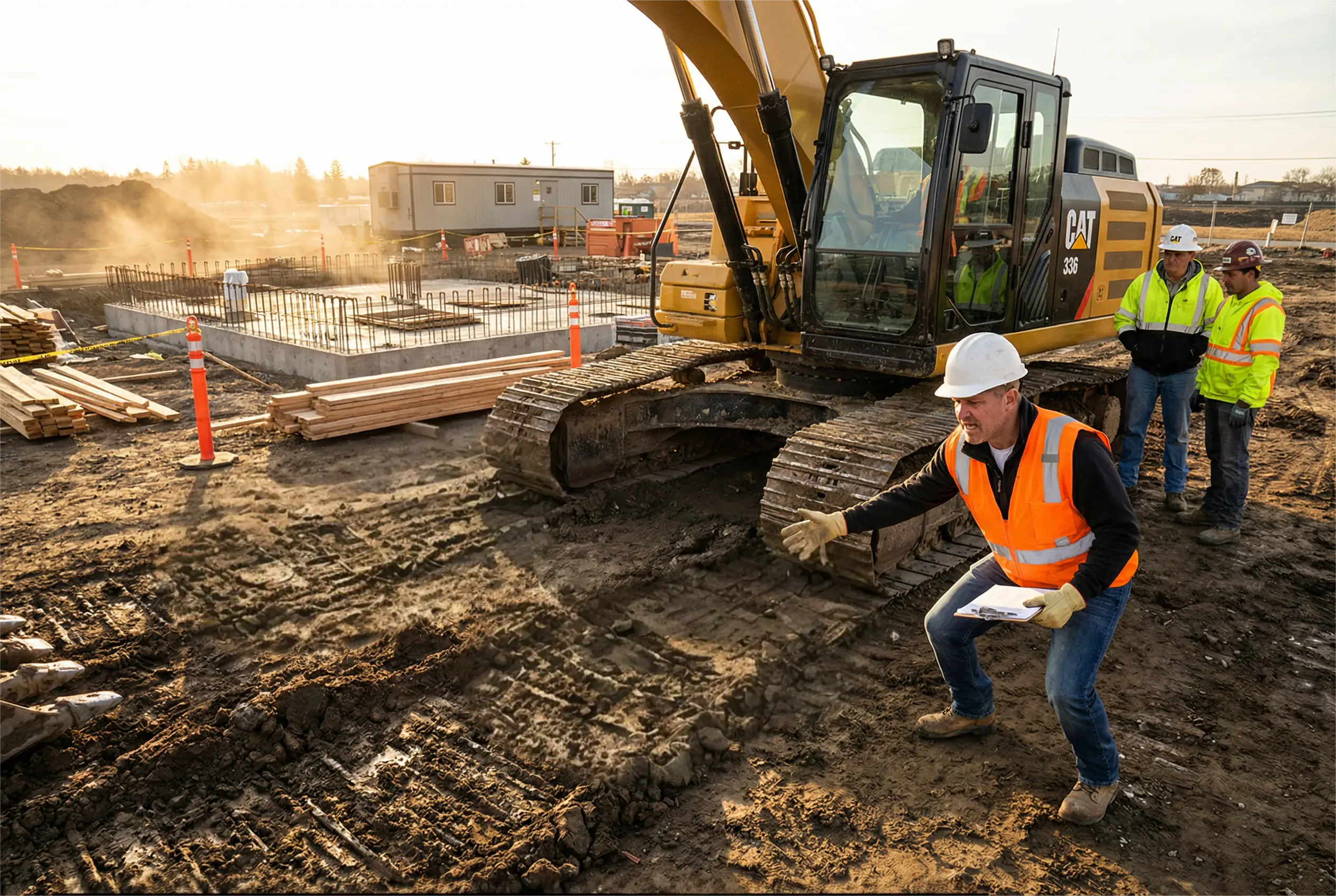
The OEM versus aftermarket decision shapes everything from machine performance to warranty coverage, yet it's rarely as simple as choosing "cheap" or "expensive." The real question is: what level of risk can your operation absorb?
OEM undercarriage parts come directly from equipment manufacturers or their authorized channels. When you install a genuine Caterpillar track link or a factory Komatsu roller, you're getting components engineered specifically for your machine's specifications, manufactured to exact tolerances, and backed by warranty protection. The peace of mind is tangible - these parts integrate seamlessly, maintain your manufacturer warranty, and deliver predictable wear life based on decades of field data.
However, the aftermarket has evolved dramatically. Today's landscape includes everything from low-grade imports that fail within months to premium aftermarket manufacturers producing components that meet or exceed OEM specifications at 30-40% cost savings. The challenge lies in distinguishing quality aftermarket suppliers from opportunistic vendors selling substandard parts.
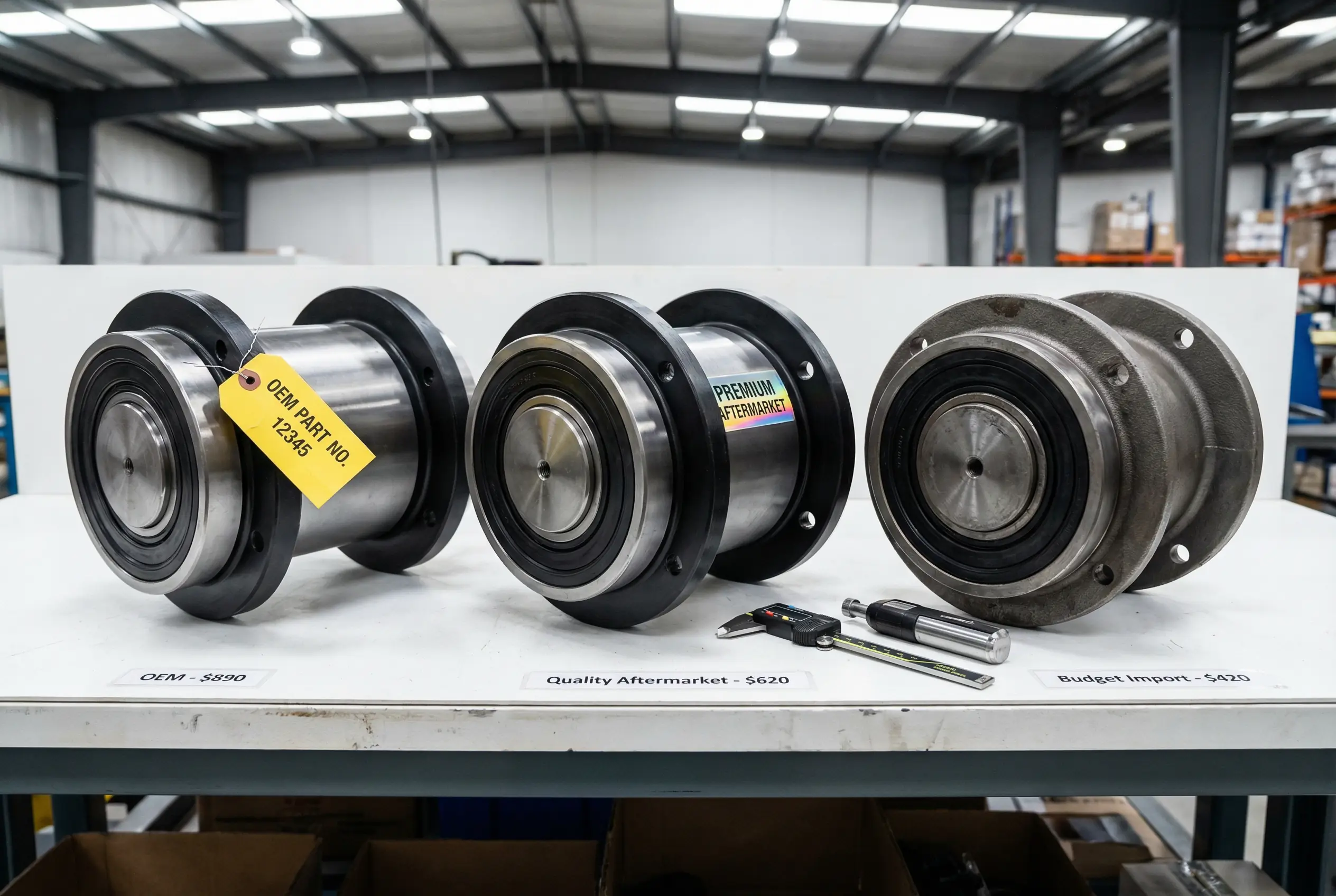
The risk calculation changes based on application. For high-utilization machines operating in abrasive conditions - rock quarries, demolition sites, or mining operations - OEM quality becomes non-negotiable. A premature failure doesn't just mean replacing the part; it means potential damage to adjacent components, increased labor costs for repeated repairs, and the compounding expense of extended downtime. Conversely, for lighter-duty applications or older equipment where total cost of ownership calculations favor different strategies, vetted aftermarket parts can deliver substantial savings without compromising operational reliability.
At MCH Parts NYC, we eliminate the guesswork by offering OEM-quality undercarriage components that meet manufacturer specifications without the inflated pricing. Our parts undergo rigorous quality control because we understand that your reputation depends on equipment reliability. We can guide you through material specifications, heat treatment processes, and expected wear life so you can make informed decisions based on your specific operational requirements rather than marketing claims.
Lead-Time Forecasting That Prevents Emergency Sourcing
The most expensive parts aren't the ones you buy - they're the ones you can't get when you need them. Effective lead-time forecasting transforms undercarriage management from crisis response to strategic planning.
Start by establishing wear-life baselines for your specific operating conditions. A track chain might last 2,500 hours in general construction but only 1,200 hours in a rock quarry. Document actual replacement intervals across your fleet, factoring in variations by machine type, operator habits, and job site conditions. This historical data becomes your forecasting foundation.
Build a three-tier alert system: green zone (70%+ remaining life), yellow zone (40-70% remaining), and red zone (below 40%). When components enter the yellow zone, initiate sourcing - not when they hit red and you're weeks away from failure. This buffer absorbs the reality that lead times vary dramatically. Standard OEM parts might arrive in 3-5 business days domestically, but specialized components or international shipments can stretch to 6-8 weeks.
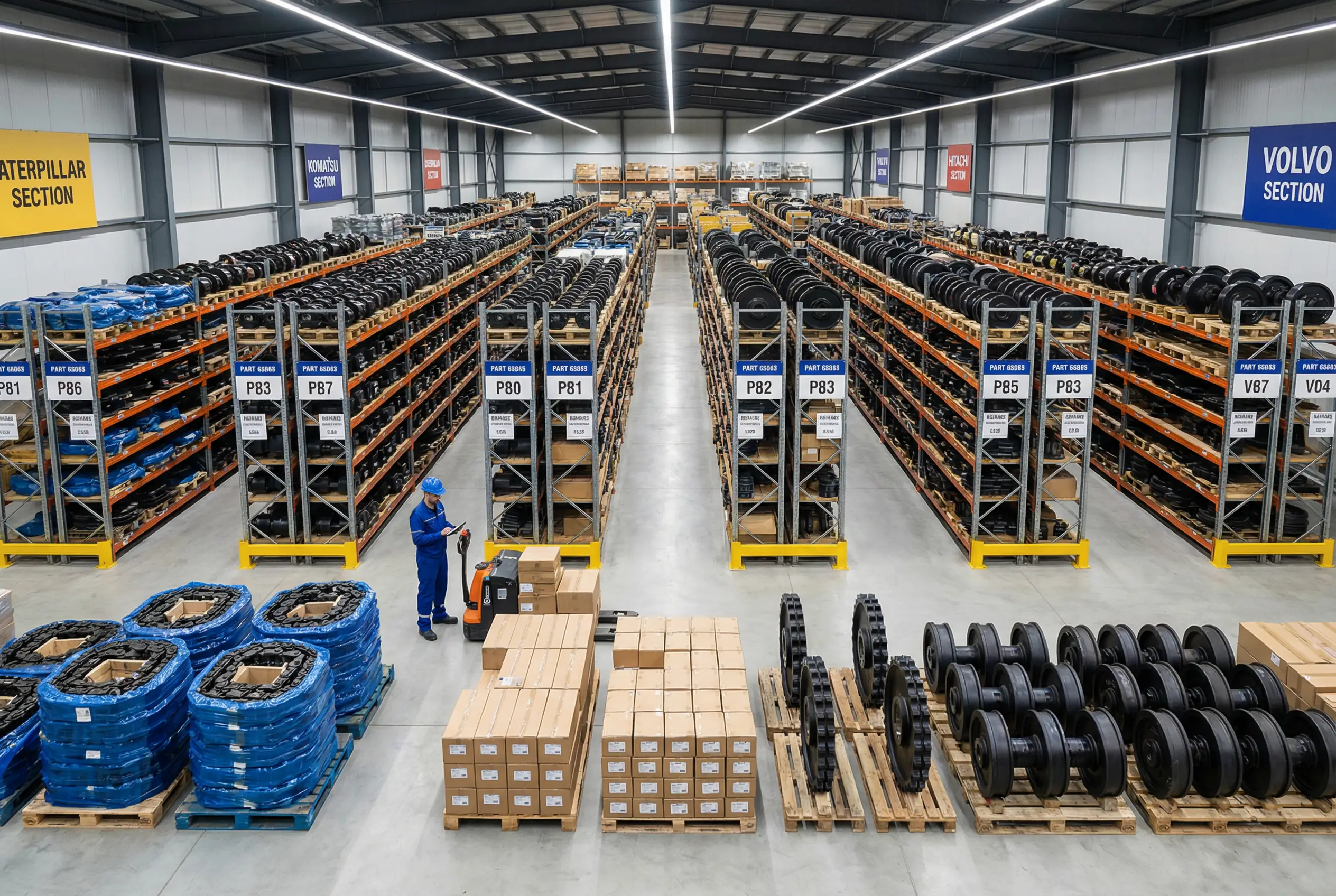
Geographic considerations matter enormously. A supplier like MCH Parts NYC with strategically positioned inventory can deliver critical components to Northeast job sites within 24-48 hours, while ordering directly from distant warehouses or overseas introduces variables you can't control - customs delays, shipping disruptions, or simple logistics complications.
Create standing relationships with suppliers who maintain deep inventory rather than drop-shipping from manufacturers. When your excavator throws a track at 4 PM on Friday, you need a partner who has the part in stock and can expedite delivery, not someone who needs to "check with the warehouse" on Monday morning. The cost differential between proactive ordering and emergency air freight can easily reach 300-500% for the same component.
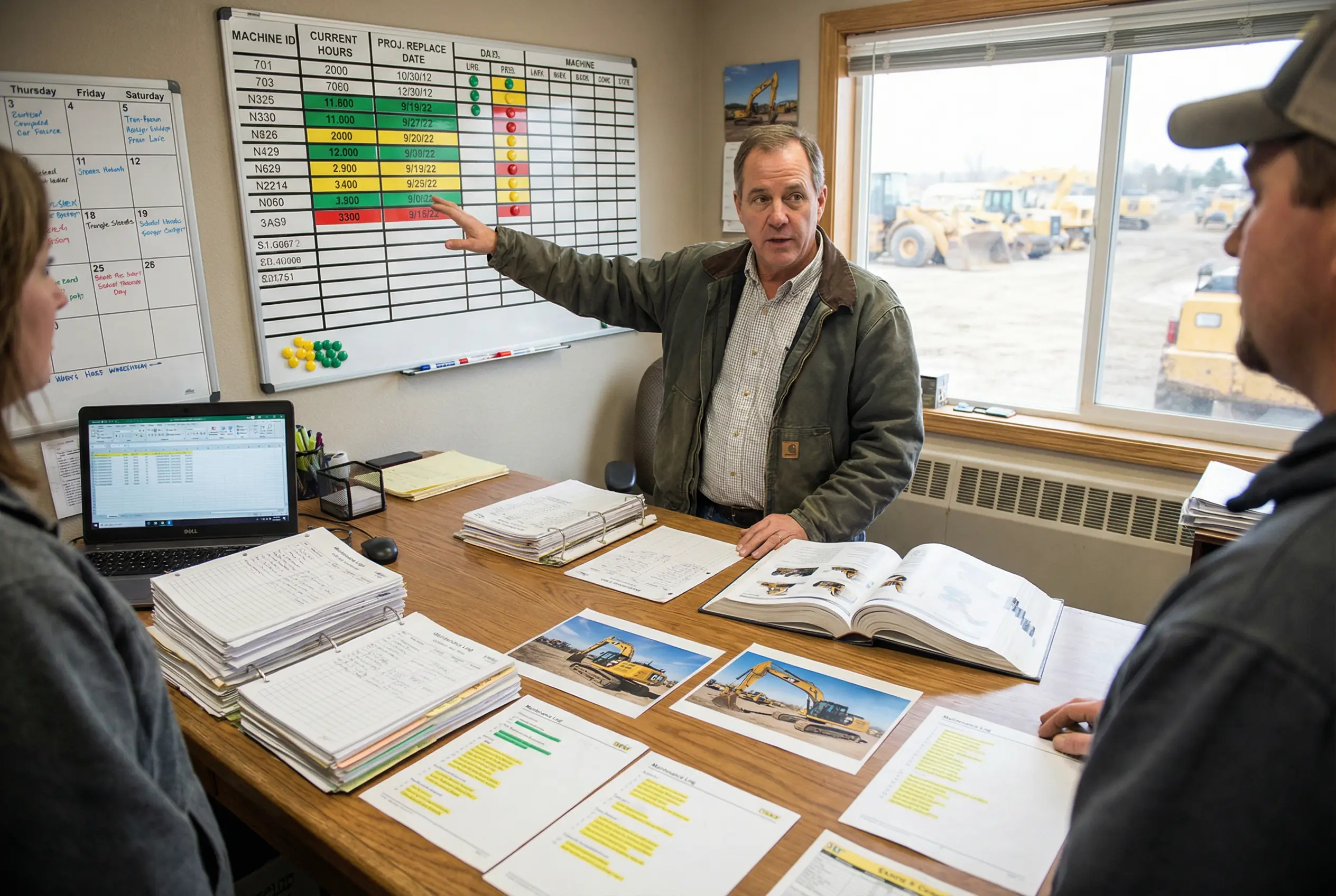
Technology helps, but don't overcomplicate it. A simple spreadsheet tracking machine hours, last replacement dates, and projected replacement windows outperforms sophisticated software that nobody actually uses. The goal is creating a rhythm where parts ordering becomes routine maintenance planning rather than emergency scrambling.
Bulk Order Tactics That Balance Inventory Costs and Availability
Smart bulk ordering creates a strategic parts buffer without tying up excessive capital or risking obsolescence. The key is identifying which components warrant inventory investment and structuring orders to maximize supplier discounts.
Focus bulk purchasing on high-turnover, machine-agnostic components. Track chains, track rollers, idlers, and sprockets often interchange across multiple machines in your fleet, making them ideal candidates for volume orders. A construction company running five excavators can stock two complete sets of track chains and capture 15-20% volume discounts while maintaining ready inventory for inevitable failures.
Negotiate tiered pricing structures with suppliers. MCH Parts NYC works with fleet managers to establish quarterly or annual purchase agreements that lock in volume pricing without requiring full upfront payment. Order three undercarriage sets and receive fourth-set pricing at a 25% discount, but take delivery as needed throughout the year. This approach preserves cash flow while securing bulk economics.
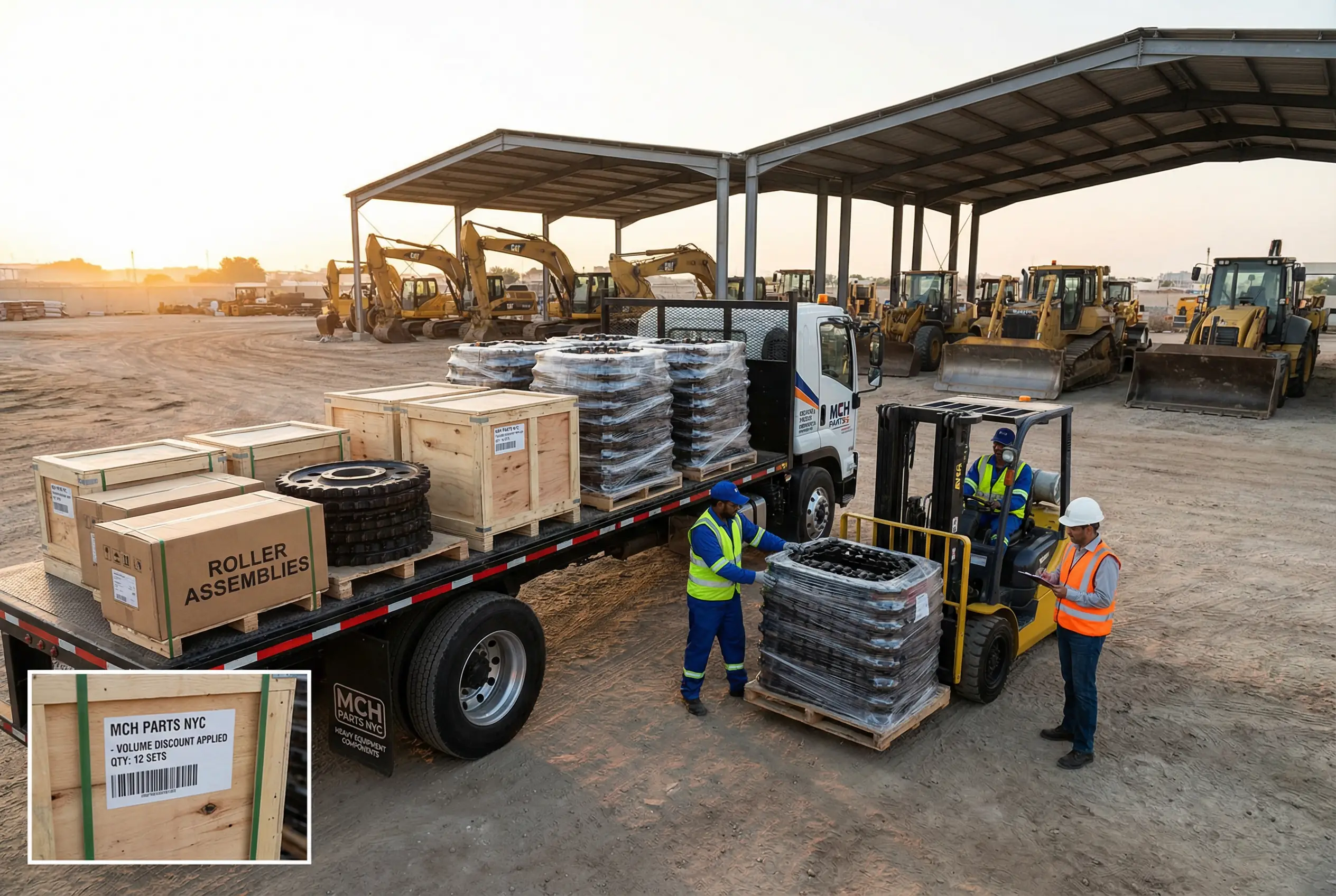
Consortium purchasing amplifies buying power for smaller operators. Regional contractors' associations or informal equipment-sharing networks can aggregate demand across multiple companies, achieving enterprise-level pricing that individual buyers can't access. Five small contractors each running two excavators collectively control ten machines - enough volume to command serious supplier attention.
Balance inventory investment against carrying costs and obsolescence risk. Parts with 18-month replacement cycles and broad application across your fleet justify on-site inventory. Specialized components for single machines or items with unpredictable failure patterns should remain on supplier shelves - let them warehouse the inventory and pay premium pricing only when actually needed.
Consider seasonal patterns in your bulk ordering strategy. If your region's construction activity peaks April through October, place bulk orders during winter months when both demand and pricing soften. Suppliers facing slow periods often negotiate more aggressively, and you secure inventory ahead of your busy season when parts availability tightens industry-wide.
The math is straightforward: if bulk pricing saves 20% on $50,000 in annual undercarriage spending, that's $10,000 in savings. Even if you're carrying $15,000 in inventory, the return on that working capital investment exceeds most alternative uses of that money, and you've eliminated the costliest risk - being down when you need to be working.
Supplier Vetting and Cost-Avoidance Math
Not all parts suppliers are created equal, and the cheapest quote often becomes the most expensive mistake. Effective supplier vetting requires looking beyond price sheets to evaluate the total cost of the relationship.
Start with inventory verification. Does the supplier actually stock the parts they're quoting, or are they brokering from unknown sources? Request documentation showing their inventory management system, warehouse locations, and typical stock levels for your required components. At MCH Parts NYC, we maintain extensive on-site inventory specifically because we understand that availability matters as much as pricing.
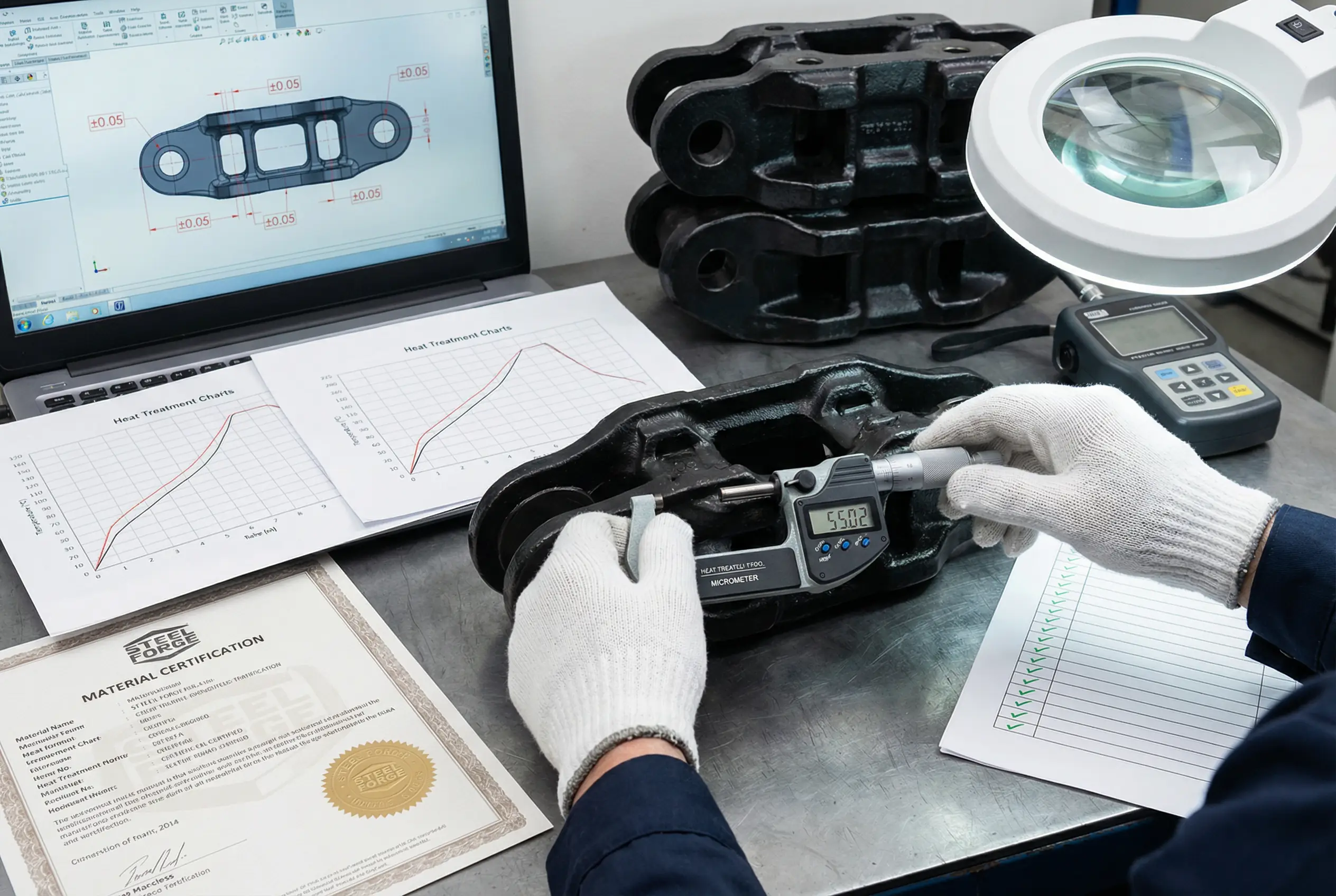
Examine quality assurance processes. Legitimate suppliers provide material certifications, heat treatment documentation, and inspection reports for undercarriage components. Ask about their return/warranty process - not whether they offer one, but how it actually works when you have a failed part and a stopped machine. A supplier offering rock-bottom pricing but requiring you to ship failed parts back at your expense and wait 4-6 weeks for credit evaluation isn't offering a deal; they're transferring risk to you.
Evaluate technical capability. Can the supplier's team help you troubleshoot premature wear patterns, recommend preventive maintenance intervals, or advise on whether a component is genuinely end-of-life or has remaining service potential? This expertise transforms suppliers from order-takers into strategic partners who help you maximize equipment life and minimize total operating costs.
The cost-avoidance math reveals the true economics. Consider a $3,500 track chain: the cheapest option might run $2,800, a quality aftermarket option $3,200, and OEM $3,500. But if the cheap option fails at 800 hours instead of lasting 1,500 hours, your per-hour cost jumps from $2.33 to $3.50 - making it 50% more expensive despite the lower purchase price. Add in the labor cost for premature replacement ($800-1,200 depending on machine size) and potential downtime expenses, and that "savings" becomes a substantial loss.
Calculate your downtime hourly rate honestly. If your excavator generates $500/hour in billable work and a parts failure costs you four hours waiting for emergency delivery, that's $2,000 in lost revenue - possibly more if it triggers schedule penalties or forces you to mobilize backup equipment. Suddenly, paying $50 more for parts from a supplier who stocks inventory locally and delivers same-day makes overwhelming financial sense.
Build relationships with suppliers who understand your business model. A supplier serving construction professionals recognizes that your purchasing decisions balance multiple factors - initial cost, availability, quality assurance, technical support, and payment terms. MCH Parts NYC structures our services around construction reality: we know you need parts that work, delivered when promised, backed by people who understand the consequences when something goes wrong.
Conclusion
Sourcing undercarriage parts without project delays isn't about finding the cheapest components or the fastest shipper - it's about building a strategic approach that balances quality, availability, cost, and risk across your entire operation. The contractors who consistently avoid costly downtime share common practices: they forecast needs before emergencies arise, they understand the true economics beyond initial purchase price, they leverage bulk ordering strategically, and they partner with suppliers who prioritize their success.
Your undercarriage sourcing strategy directly impacts profitability. Every hour saved on emergency sourcing, every dollar preserved through smart bulk purchasing, and every avoided failure from quality components flows straight to your bottom line. The difference between reactive scrambling and proactive planning is measurable - in uptime percentages, in maintenance budgets, and ultimately in competitive advantage.
At MCH Parts NYC, we've built our business around eliminating the uncertainty from undercarriage parts sourcing. We maintain a deep inventory of OEM-quality components, provide technical expertise that helps you make informed decisions, and structure our pricing and delivery to support your project timelines. Whether you're managing a single machine or a diverse fleet, we're committed to keeping your equipment working and your projects on schedule.
The next time you're planning undercarriage replacements, ask yourself: is your current sourcing approach a competitive advantage or a vulnerability? The answer might be the difference between winning bids and watching opportunities go to competitors who've mastered the fundamentals. Don't wait for the next breakdown to find out - build relationships with reliable suppliers, establish forecasting systems, and transform parts sourcing from a necessary hassle into a strategic asset.
Frequently Asked Questions
Q: How do I know if aftermarket undercarriage parts are actually equivalent to OEM quality?
Request material certifications and manufacturing specifications from your supplier. Quality aftermarket parts should match or exceed OEM standards for steel grade, heat treatment, and dimensional tolerances. Look for suppliers who provide documentation rather than just verbal assurances, and check references from contractors running similar equipment in comparable conditions. At MCH Parts NYC, we provide detailed specifications for all our components and stand behind our parts with warranties that demonstrate our confidence in their performance.
Q: What's a realistic lead time for undercarriage parts, and when should I start sourcing?
Lead times vary dramatically based on part availability and supplier location. Common components like track chains, rollers, and idlers from well-stocked suppliers can arrive in 24-48 hours for expedited orders or 3-5 business days for standard shipping. Specialized parts or items requiring custom fabrication might take 2-6 weeks. Start sourcing when components reach 40-50% remaining life rather than waiting until they're critically worn - this buffer absorbs unexpected delays and prevents emergency pricing.
Q: Is it worth stocking undercarriage parts on-site, or should I rely on just-in-time delivery?
The answer depends on your operation's scale and downtime costs. If you're running multiple machines of the same type and your daily downtime cost exceeds $5,000, maintaining strategic inventory for high-failure items (track chains, rollers) makes financial sense. For smaller operations or diverse equipment fleets, partnering with a local supplier who maintains inventory and can deliver quickly often provides better economics than tying up your own capital in parts storage.
Q: How can I negotiate better pricing without sacrificing parts quality or delivery reliability?
Volume and consistency are your negotiating leverage. Consolidate purchases with fewer suppliers rather than spreading orders across many vendors, establish predictable ordering patterns (quarterly bulk orders rather than sporadic purchases), and commit to longer-term relationships. Suppliers reward customers who provide steady business with better pricing, priority delivery, and flexible payment terms. Don't focus exclusively on per-part cost - negotiate on total relationship value including technical support, warranty coverage, and emergency availability.
Q: What should I do if I receive defective undercarriage parts or they fail prematurely?
Document everything immediately: installation date, machine hours, operating conditions, and specific failure mode with photographs. Contact your supplier within 24-48 hours and request a warranty evaluation. Reputable suppliers like MCH Parts NYC have streamlined processes for handling warranty claims, often cross-shipping replacement parts before receiving the failed component back to minimize your downtime. Avoid suppliers who make warranty claims difficult - your time has value, and fighting for coverage on a legitimately failed part costs you money regardless of the eventual outcome.
Read More

Engine Air Filter vs. Cabin Filter 2026: EPA Guide

Radiator and Cooling System Parts: NYC Summer 2026
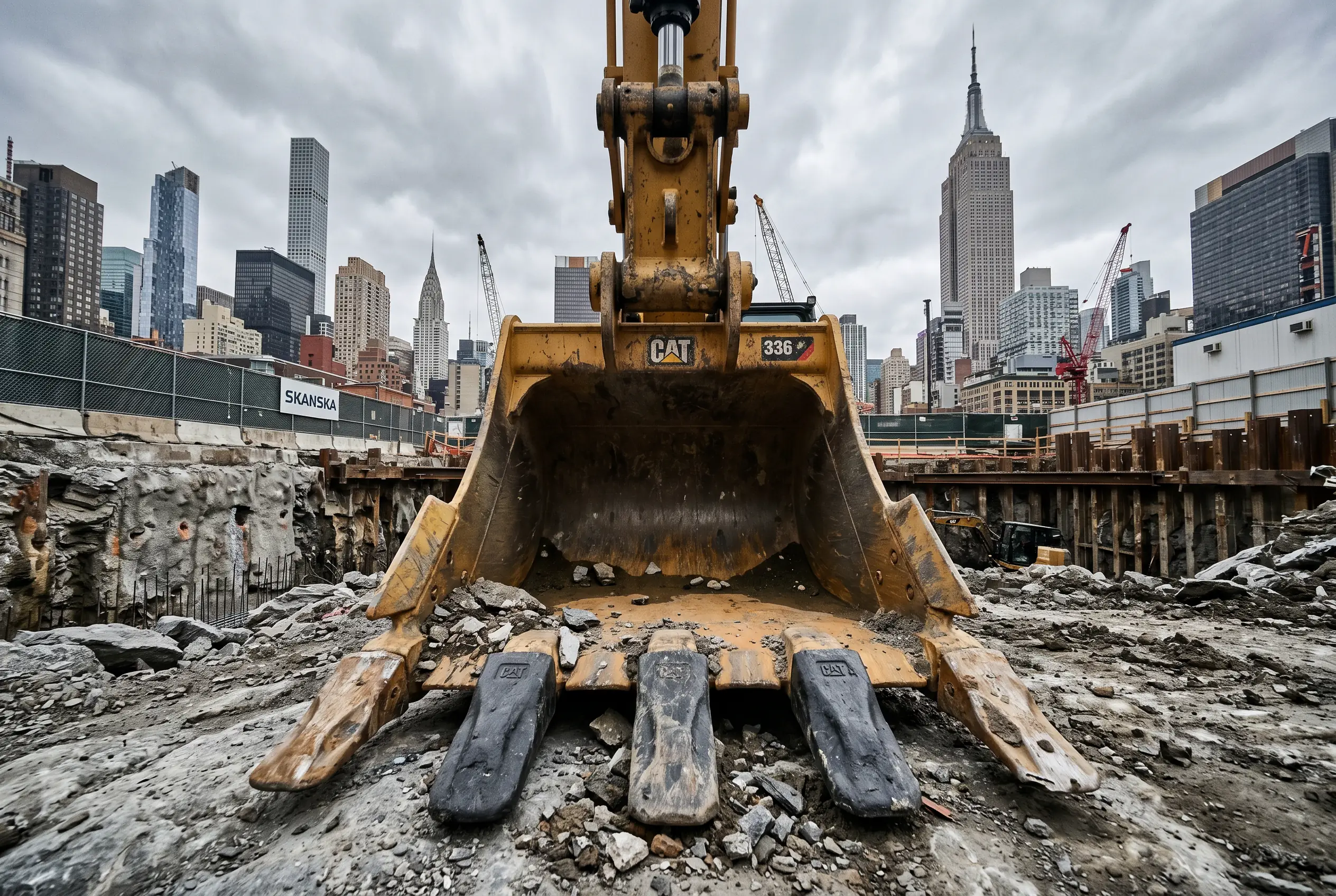
Bucket Teeth Selection 2026: Right Teeth for NYC Soil

Construction Equipment Filters 2026: Complete Replacement Schedule Updated
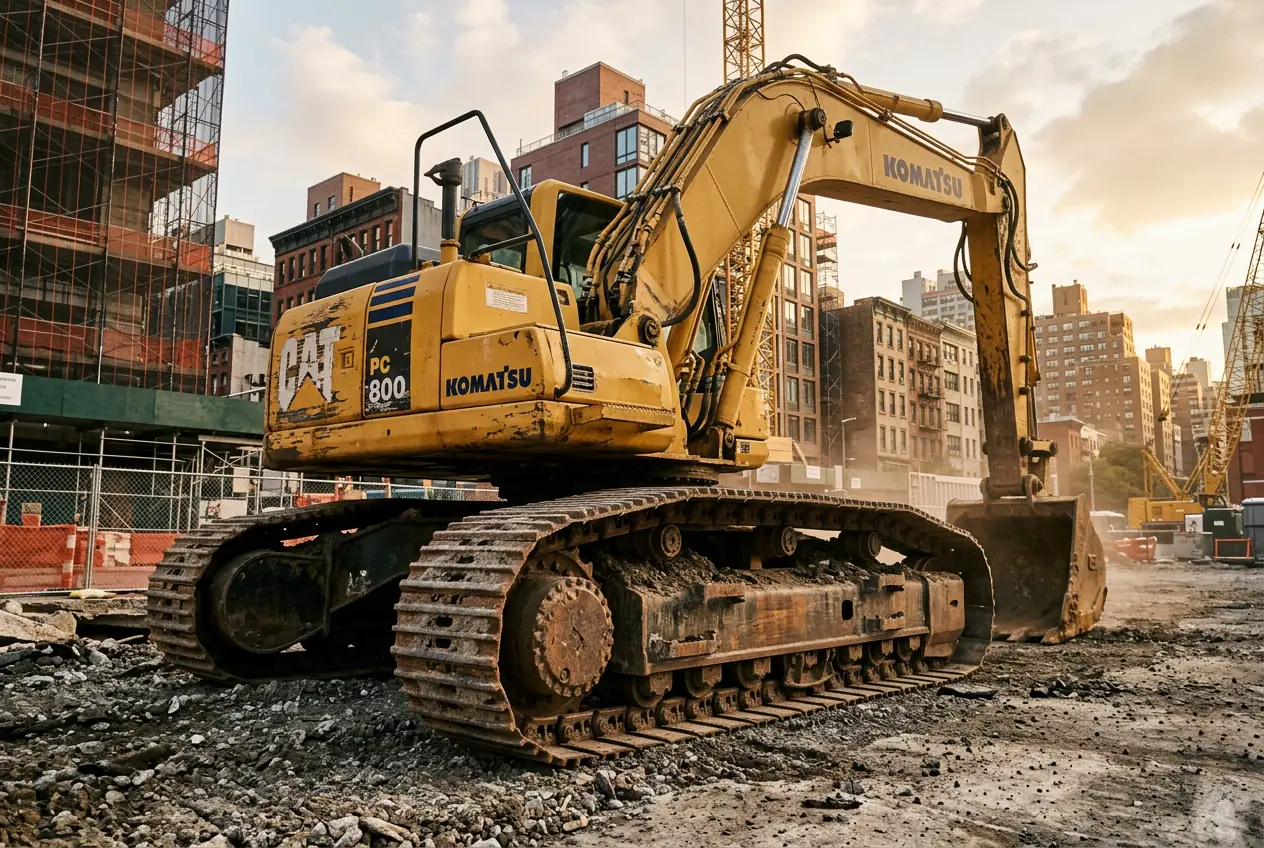
Track Replacement Guide 2026: How Long Do Undercarriage Parts Really Last?

Final Drive Troubleshooting 2026: 7 Warning Signs Before Complete Failure
Excavator Hydraulic Pump Replacement 2026: OEM vs Aftermarket Complete Guide

Weekend Equipment Breakdown: NYC After-Hours Parts Sourcing Guide 2026

Equipment Down in 2026? Get These 15 Critical Parts in NYC Within 2 Hours

NYC Port Modernization 2026: Heavy Equipment Parts for Hudson River Terminal Upgrades
Queens Is Being Built Right Now - Is Your Equipment Ready?

NYC High-Rise Construction Boom 2026: Parts for Record Number of Tower Projects

Brooklyn Navy Yard Construction: Specialized Parts for Historic Site Work

NYC DOB Construction Equipment Requirements 2026: Updated Parts & Modifications

Equipment Down in 2026? Get These 15 Critical Parts in NYC Within 2 Hours
NYC Winter 2026 Construction: Critical Parts That Fail Below 20°F : Prevention Guide
Prevent Crane Downtime with a Proactive Parts Roadmap
How to Prevent Downtime in Multi-Brand Earthmoving Fleets
How to Source OEM Undercarriage Parts Without Project Delays
Motor Grader Predictive Diagnostics: Prevent Hydraulic Failures & Reduce Downtime

Pesticide Sprayer Calibration: Essential Safety Compliance Guide & Protection

Seeder Bearing Parts Sourcing Guide: Critical Components & Strategy

Downtime Prevention Through Smart Inventory for Grain Dryers

Combine Harvester Breakdown Prevention Guide: Predictive Analytics for Zero Downtime

Master Global Agricultural Parts Delivery | Mid-Season MRO Guide

Fixing Haul Truck Downtime Issues: Remote Parts Strategy Guide 2025
Blasting Equipment Safety Compliance: Must-Know Audit Requirements for 2025

The Step-by-Step Guide to Global Drill Rig Consumables Sourcing
Mining Conveyor Maintenance Guide: Detecting Hidden Risks in Underground Systems

Best Practices for Certified Pipeline Valve Selection: From Specs to Installation

Optimizing Oil Rig PPE Delivery: Proven Strategies That Saved $2M Annually
FPSO Smart Parts Planning: Proven Methods to Cut Downtime

How FPSO Inspection Prevents Million-Dollar Shutdown Losses

Fix It Before It Breaks: A Farmer's Guide to Combine and Harvester Maintenance

Why Fast Tractor Parts Delivery is Changing Modern Farming [2025 Guide]

The Critical Farm Equipment Replacement Parts You Need Before Harvest 2025
.webp)
How to Double Your Farm Efficiency: Expert Guide to Smart Scaling
Cut Costs by 30%: Pre-Season Spare Parts Audit Checklist

Proven Success Factors for Agricultural Equipment Manufacturers in 2025

13 Overlooked Farm Spare Parts That Halt Operations — Pt. 2

13 Overlooked Farm Spare Parts That Halt Operations — Pt. 1

Top Hydraulic Components for Agricultural Equipment in 2025: Complete Guide
The Essential Farm Equipment Parts You Can't Afford to Run Out Of

How to Service Farm Equipment: A Farmer's Guide to Zero Harvest Downtime
Construction Machinery Parts Suppliers: Expert Selection Guide

How to Apply Machine Safety Rules: From Selection to Installation

Smart Diagnostics Cut Heavy Equipment Failures by 73%

5 Ways to Assess the Environmental Impact of Heavy Construction Machinery

10 Smart Ways to Pick Construction Machinery for 2025 Projects
Rent vs Purchase Equipment: What Heavy Industry Experts Hide

How to Implement a Construction Inventory Management System for Equipment Efficiency

How to Extend Equipment Life Expectancy with Regular Maintenance
Advanced Heavy Equipment Diagnostic Tools: Ensuring Construction Machinery Quality

Essential Features Your Construction Equipment Inventory System Needs
29 Quick Tips for Choosing Construction Equipment for Remote Locations

How to Select Construction Machinery with Optimal Equipment Maintenance in Mind
Top 25 Tips for Selecting Bulldozers for Construction Sites
Which Construction Loader is Best for Your Project Needs?

4 Key Steps to Form a Construction Machinery QC Team

15 Essential Tips for Selecting the Perfect Crane for Construction

Maximize Savings: Multi-Purpose Construction Machinery for Lower Costs

Affordable Heavy Equipment Parts: A Sourcing Guide
Choosing the Right Road Construction Equipment: A Complete Guide

Motor Graders: Key Elements to Consider for Optimal Selection

A Detailed Guide to Choosing Excavators for Construction Work
Top Tips for Choosing Cranes for Construction Projects
5 Top-Rated Demolition Machines for Construction Professionals

Expert Tips on Choosing Earthmoving Equipment for Large Projects
Top Functional Criteria for Selecting Heavy Construction Equipment

Construction Machinery: Detailed Guide to Equipment Specifications
Heavy Machinery Prices: Key Factors in Cost and Quality Balance

Best Construction Heavy Equipment Brands: Pros and Cons

Construction Site Equipment: How to Determine Your Requirements

Maximizing Safety: Risk Management for Construction Projects

Innovations in Construction: Transforming Machinery and Equipment

Heavy Equipment Safety: Beyond the Basics in Construction Compliance

The Essential Handbook for Construction Equipment Repair and Maintenance

How to Efficiently Source Oil and Gas Machinery Parts in NYC

Essential Guide to Sourcing Agriculture Equipment Parts

How to Source Mining Machinery Parts: Tips and Strategies