Construction Equipment Filters 2026: Complete Replacement Schedule Updated

Filters are the cheapest parts on any machine. They’re also the most skipped. That combination is why filter neglect consistently ranks as one of the top causes of premature engine wear, hydraulic system contamination, and unnecessary downtime on NYC construction sites - and in 2026, the stakes have gone up.
New EPA emission standards have tightened contamination tolerances across both fuel and hydraulic systems on Tier 4 Final equipment. What was once a serviceable filter at 500 hours may now be an out-of-spec component on a compliant machine. Construction crews and fleet managers who haven’t revisited their filter schedules since before the updated standards are running on outdated protocols - and they’ll find out the hard way when a fuel injector fails or a hydraulic pump cavitates.
This guide gives you the updated 2026 replacement intervals for every major filter category, adjusted for the realities of NYC job site conditions, with clear signals for when standard intervals need to be shortened.
If you need filters now or want to build a stocking plan ahead of your next service window, MCH Parts stocks the full range of equipment filters for all major brands with same-day availability across the NYC metro area. Call us before you schedule maintenance and we’ll have everything staged.
What’s Changed in 2026: Emission Standards and Filter Specifications
Tier 4 Final Equipment and Tighter Contamination Tolerances
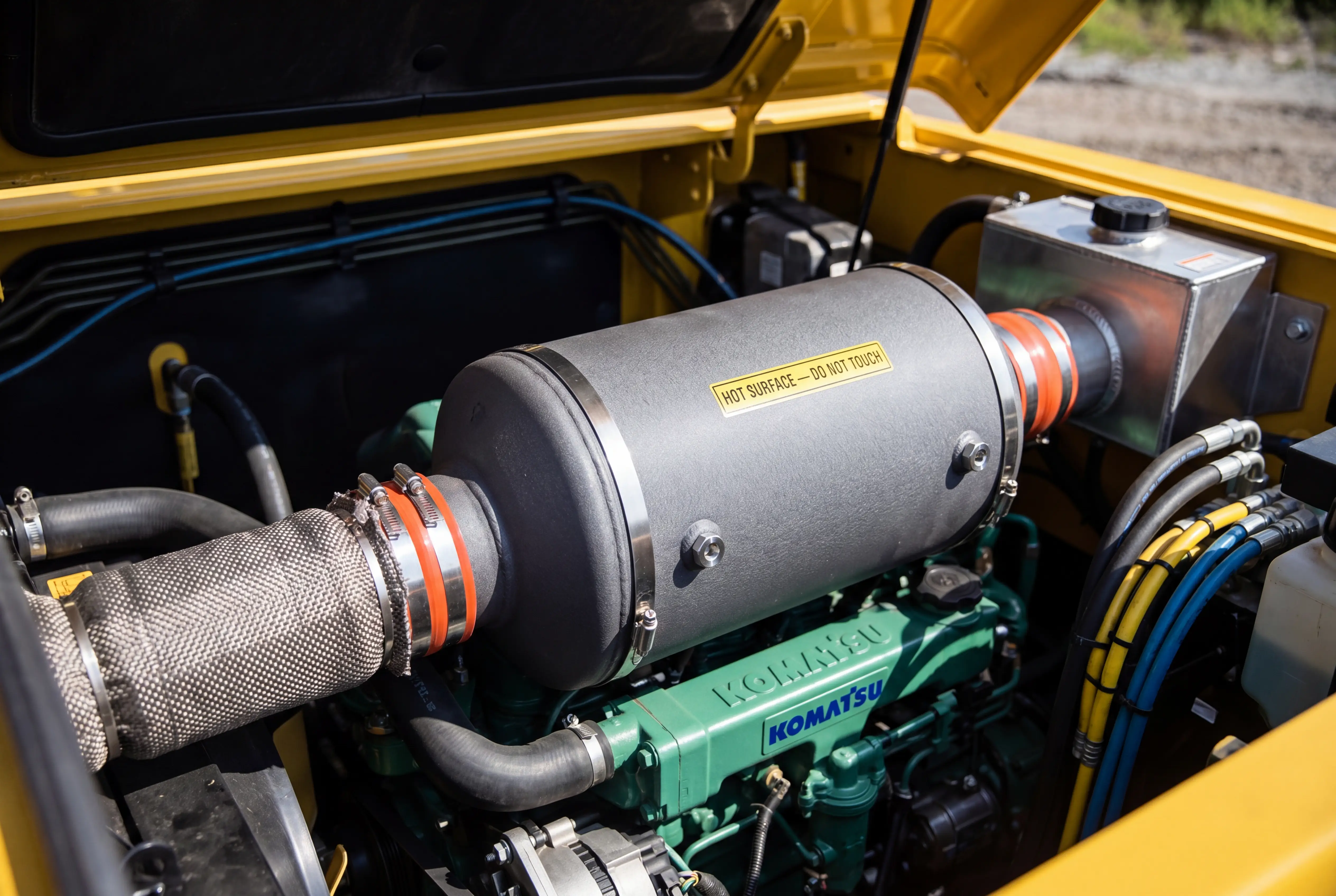
The EPA’s Tier 4 Final emission standards have been the baseline for new off-road diesel equipment for several years, but 2026 has brought updated guidance on filtration requirements that affect how existing fleets should be maintained - not just how new equipment is purchased. Diesel Particulate Filters (DPFs), the emissions aftertreatment systems on Tier 4 Final machines, are highly sensitive to fuel quality and contamination. Running a degraded fuel filter longer than the updated specs allow increases the risk of injector fouling, which in turn loads the DPF faster and shortens its service life.
Both Caterpillar and Komatsu have updated their filtration recommendations for current model year machines - check their online service portals using your machine serial number to confirm your intervals reflect 2026 guidance, not the older spec sheets many crews are still working from.
Hydraulic System Cleanliness Standards Have Tightened
ISO cleanliness codes - the standard by which hydraulic fluid contamination is measured - have moved in a stricter direction for modern hydraulic systems. The proportional control valves and variable displacement pumps on newer machines have tighter internal tolerances than older designs. A hydraulic filter that would have been adequate for a machine from ten years ago may not maintain the ISO cleanliness level required to protect current valve bodies and pump components. If you’re running newer equipment and haven’t updated your hydraulic filter intervals to reflect the manufacturer’s 2026 spec sheet, pull that document before your next service. Hitachi Construction Machinery and Volvo Construction Equipment both publish detailed filtration specifications in their online service portals - register your machine serial number to access model-specific thresholds.
NYC-Specific Compliance Context
NYC’s own construction air quality regulations add another layer to the filter maintenance equation. City rules on diesel equipment emissions apply to machines on permitted job sites, and contaminated or degraded aftertreatment systems - which a neglected DPF-related filter failure can cause - create compliance exposure well beyond equipment damage. Keeping filters current is not only a maintenance decision; it’s a regulatory one. OSHA’s construction equipment standards address equipment maintenance as a core safety requirement, which reinforces the compliance dimension of filter schedules on active NYC sites.
The Complete 2026 Filter Replacement Schedule
Engine Air Filters
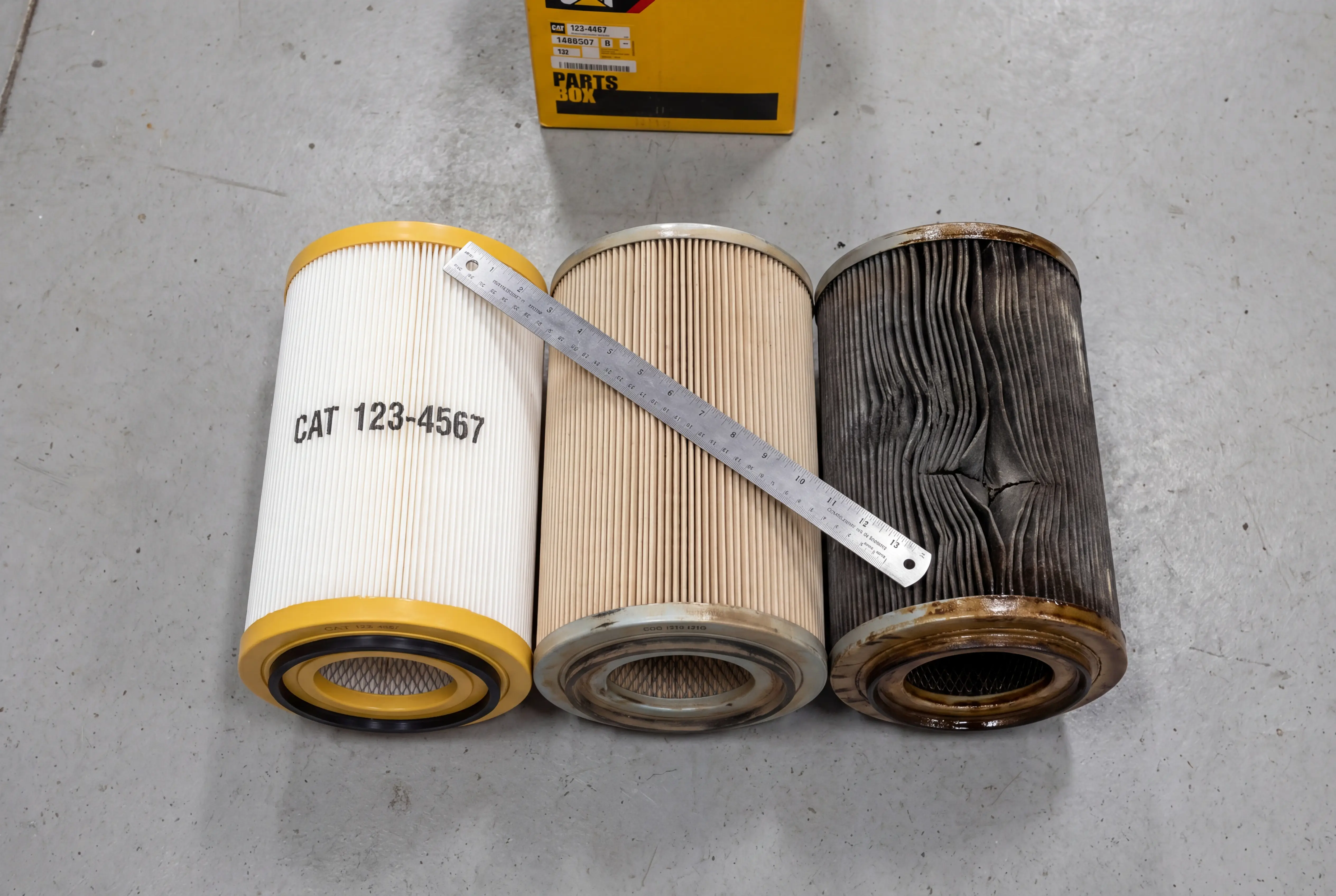
The engine air filter is the first line of defense against the particulate matter and construction dust that are unavoidable on active NYC job sites. Standard manufacturer intervals run 500–1,000 hours for primary air filter replacement and 1,000–2,000 hours for secondary (safety) elements. In 2026, the baseline guidance from most manufacturers has shifted toward the shorter end of those ranges for machines operating in urban construction environments.
On NYC sites with active demolition, concrete cutting, or aggregate handling nearby, 500 hours is the working maximum for primary air filter replacement - and pre-cleaner inspection should happen every 250 hours. Running a restricted air filter increases fuel consumption, reduces power output, and - critically - increases exhaust temperatures and backpressure into the DPF system, accelerating aftertreatment wear. MCH Parts stocks air filter elements for Cat, Komatsu, Hitachi, Volvo, and all major brands - order at mchpartsnyc.com and keep two cycles’ worth of primaries on hand at all times.
Oil Filters
Engine oil filter replacement should be synchronized with every oil change - there is no situation where changing the oil without changing the filter makes sense on a working machine. Standard oil change intervals for most construction equipment run 250–500 hours depending on application and oil specification. The 2026 update worth noting here is the shift toward extended-drain oil products, which some manufacturers now approve for 500-hour intervals in light-duty applications. If you’re using an extended-drain product, verify that your oil filter is rated for the same interval - using a standard-capacity filter with an extended-drain oil defeats the purpose and leaves contamination accumulating in the system.
Never defer an oil filter change as a cost-saving measure. The filter itself is a minor line item. The engine damage from bypassed contamination is not.
Fuel Filters
Primary and secondary fuel filters are the components most directly affected by the 2026 emission standards update. Tier 4 Final injection systems operate at very high pressures - up to 30,000 PSI on some common rail systems - and require fuel cleanliness that older, lower-pressure systems could tolerate. The standard interval for primary fuel filter replacement is 250-500 hours; secondary (final) filters should be replaced at 500 hours or at the first sign of power loss or rough running, whichever comes first.
Water separator elements should be checked at every pre-shift inspection. NYC construction sites often receive fuel delivered across varying supply chains, and moisture contamination in delivered diesel is a real and ongoing issue. Water in the fuel system is the fastest path to injector damage on modern high-pressure common rail engines. If your water separator bowl is filling faster than expected between service intervals, trace the contamination source rather than simply continuing to drain it. MCH Parts carries fuel filter kits for all major engine families - visit mchpartsnyc.com to confirm fitment for your specific machine models before your next order.
Hydraulic Filters
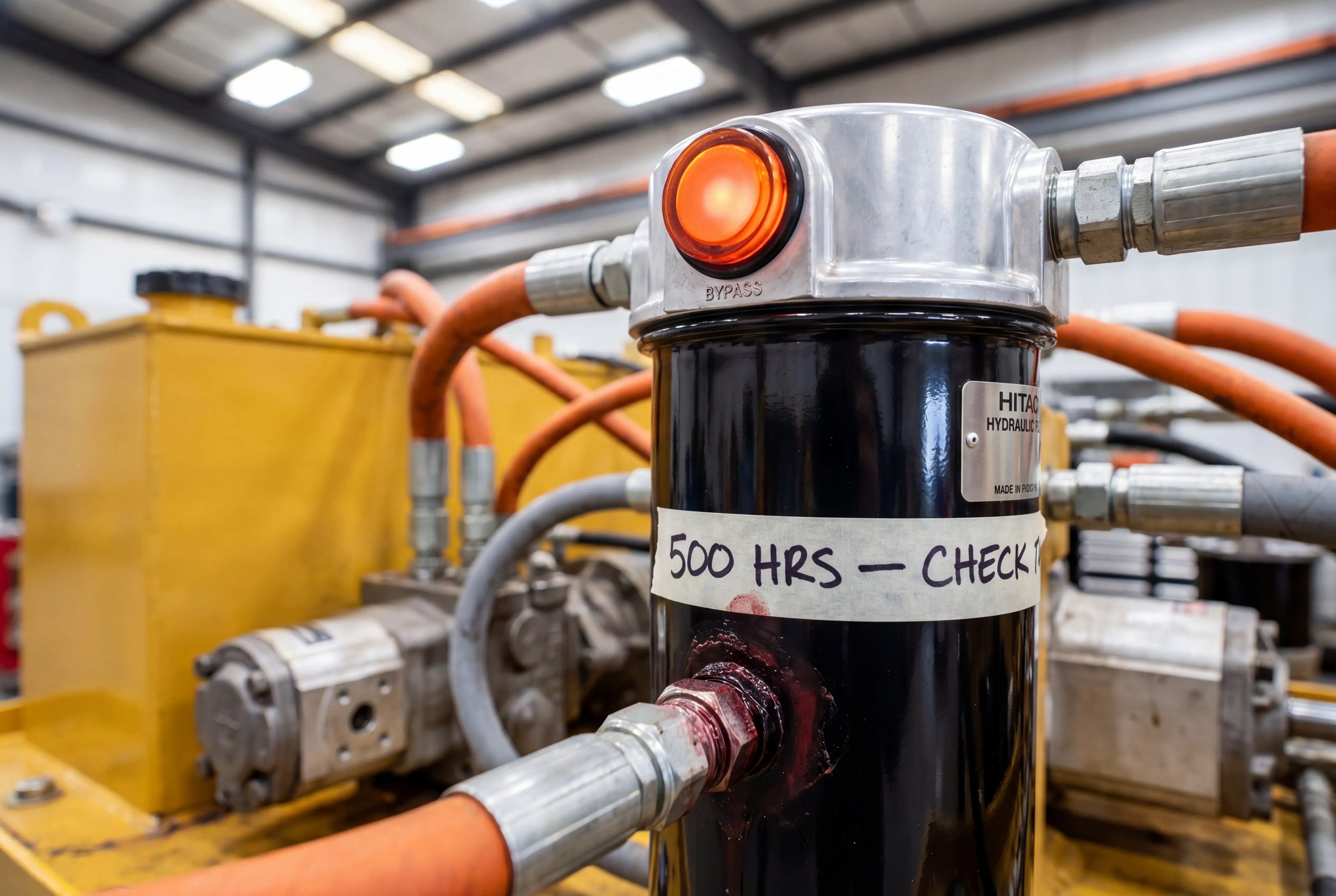
Hydraulic return line filters and case drain filters are the two categories most commonly deferred past their service intervals - and the most consequential when they are. Return line filters typically run 1,000-hour intervals, with some machines now specifying 500 hours for high-cycle applications. Case drain filters protect the final drives and swing drives and should be replaced at every major undercarriage or drive system service, or at 1,000 hours, whichever comes first.
The condition indicator on your hydraulic filter housing is worth taking seriously. If the bypass indicator shows red before you reach the scheduled interval, the filter is loading faster than normal - which means either an accelerated contamination source (seal failure, component wear generating particles) or an incorrect filter specification. Don’t just change the filter and reset the indicator; investigate the cause. Equipment World regularly documents cases where hydraulic filter bypass indicators warned of system problems weeks before a major failure - those early signals are worth acting on. Order hydraulic filters for your full fleet from MCH Parts at mchpartsnyc.com - we’ll match the right filter to each machine model so you’re not guessing on specification.
Cabin Air Filters
Cabin air filters are the category most maintenance managers skip entirely until operators start complaining about dust or degraded HVAC performance. On NYC sites, cabin filters loaded with construction dust restrict airflow through the HVAC system and force the blower motor to work harder - reducing system life and operator comfort in equal measure. Replace cabin air filters every 500 hours on urban sites, or sooner if the machine has been working in heavy demolition dust or near concrete mixing operations.
Beyond operator comfort, a functioning cabin filtration system matters for operator health on sites with silica dust exposure - a category that covers a significant share of NYC groundwork. OSHA’s silica standard for construction establishes operator cab filtration as a control measure on applicable job sites, which gives cabin filter maintenance both a compliance dimension and a worker protection dimension that goes beyond equipment care.
NYC Job Site Conditions: Why Standard Intervals Aren’t Enough
Urban Construction Dust Is Not Standard Construction Dust
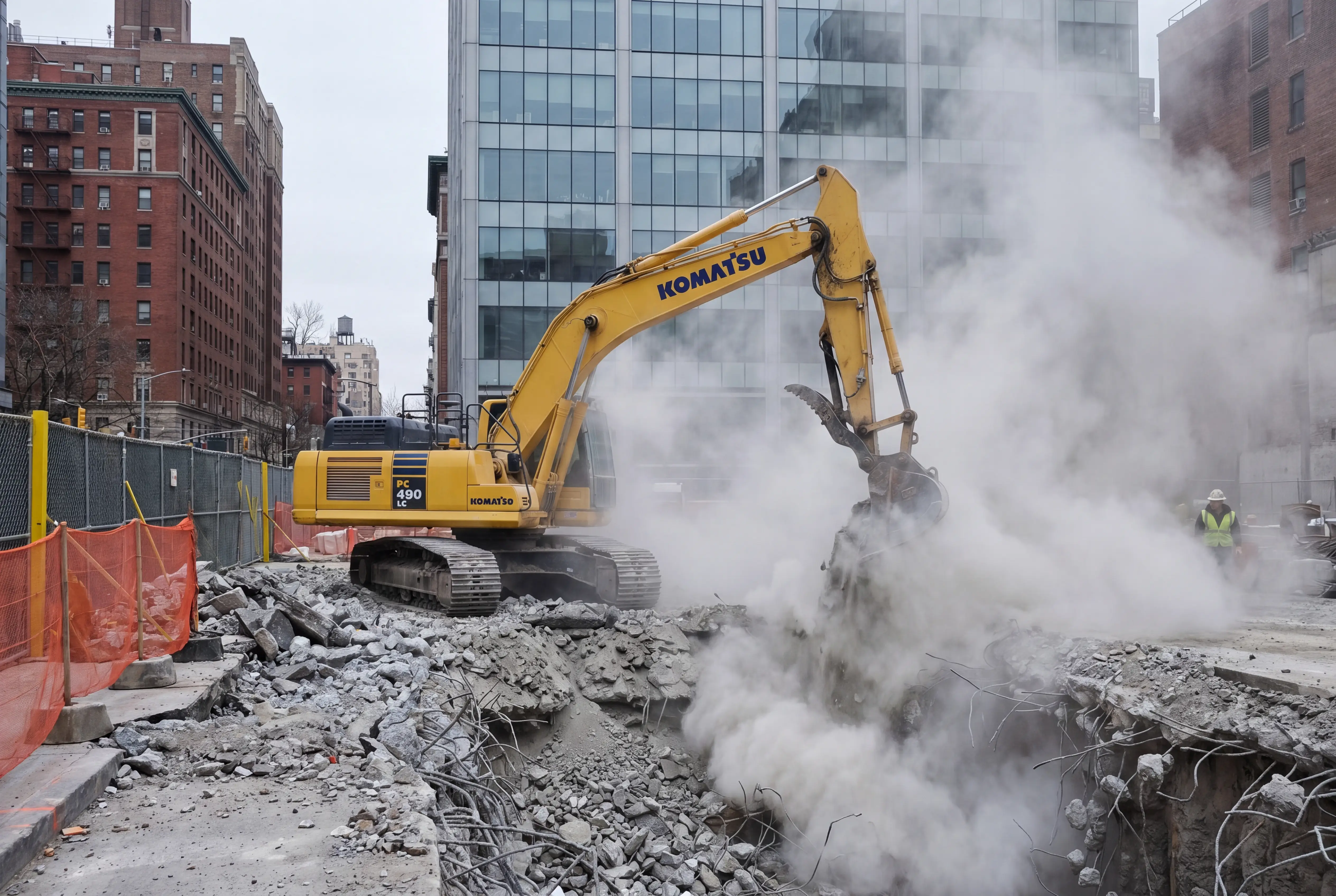
Manufacturer filter intervals are calibrated against “moderate” dust conditions - something closer to open-terrain earthmoving than the mixed debris environment of an active NYC block. Manhattan and Brooklyn sites routinely expose equipment to demolition particulate, silica from concrete cutting, steel dust from torch work, and chemical-heavy fill material from remediation projects - often simultaneously. Any machine working in these conditions should have its air filter intervals cut by 30–40% relative to manufacturer specifications.
The practical rule for NYC operations: inspect primary air filters at every 250-hour service regardless of what the manual says, and replace when restriction reaches 80% of the service indicator limit rather than waiting for full restriction.
Temperature Cycling Accelerates Filter Degradation
New York winters create a specific problem for fuel systems: temperature cycling between below-freezing nights and working-temperature days causes condensation to form inside fuel tanks and filter housings. This moisture accumulates in water separators and can bypass into the system between service intervals. During winter months, water separator inspection should move from a weekly task to a daily pre-shift check. The freeze-thaw cycle also degrades filter media integrity over time - a fuel filter that is technically within its hour-interval may have compromised media from repeated cycling. Plan for shorter fuel filter intervals from November through March.
How to Read the Warning Signs
Several indicators point to filters loading faster than normal or already compromised. Engine power loss or rough running at normal operating temperature points to a restricted fuel system. Black or excessive exhaust smoke on a Tier 4 Final machine that previously ran clean suggests an air restriction or DPF issue that often traces back to filter maintenance. Hydraulic sluggishness or response delay - especially in cold weather - can indicate a bypassing hydraulic filter. Unusual cabin odors or visible dust on interior surfaces despite a working HVAC system mean the cabin filter is past service.
Any of these signs justifies an unscheduled filter inspection and likely replacement. Waiting for the next scheduled interval when equipment is showing active symptoms is how deferred filter maintenance turns into component failures. Contact MCH Parts at mchpartsnyc.com for same-day filter delivery across NYC - if your machine is showing symptoms today, we can have the right filters on site before the afternoon shift.
Building a Filter Inventory and Procurement Strategy
What to Stock On Hand
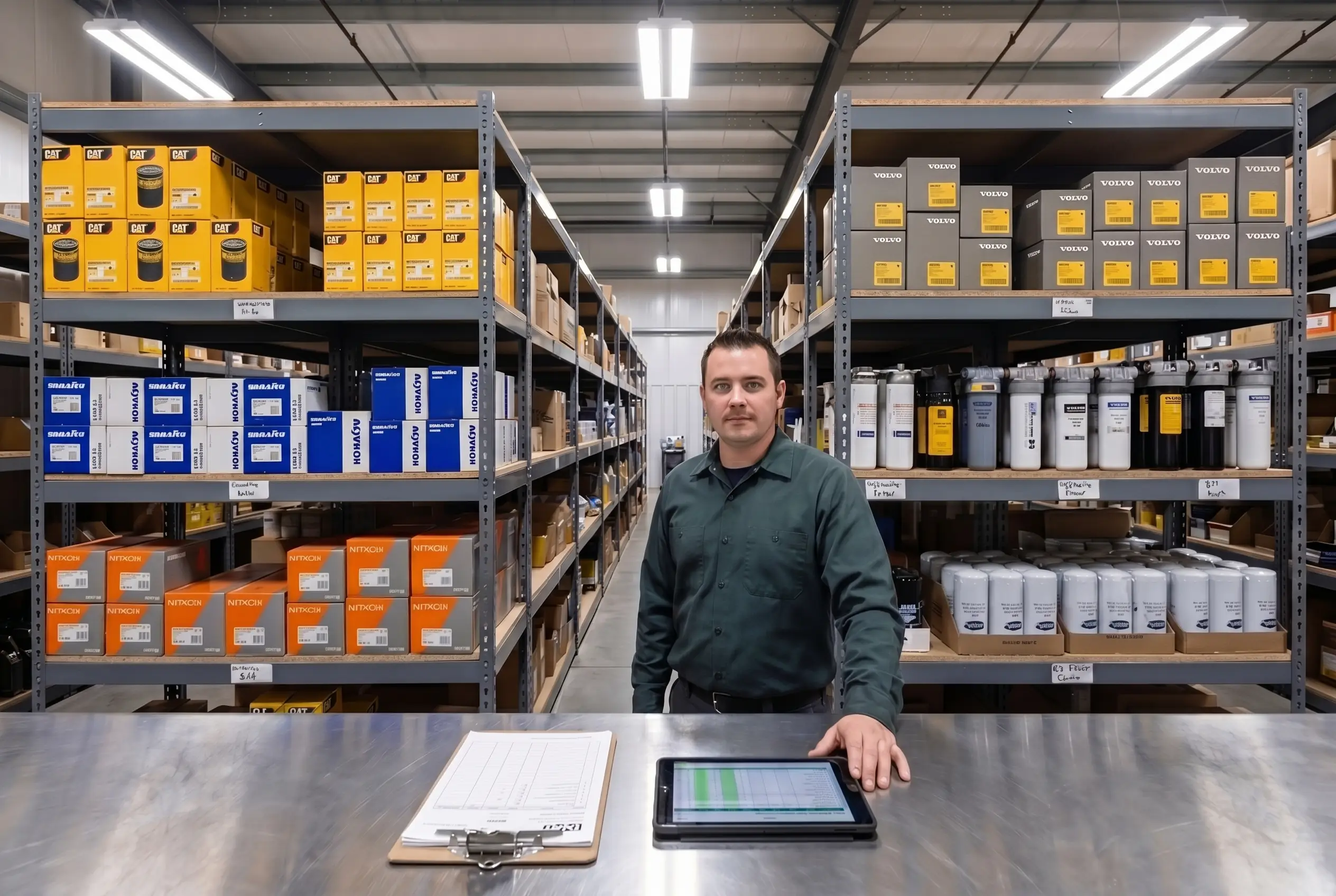
The practical answer for any NYC construction operation running more than two or three machines is to maintain a minimum one-cycle inventory of every filter type for every machine in the fleet. For most operations that means one full set of air, oil, fuel, and hydraulic filters per machine, ready on the shelf. The cost of carrying that inventory is negligible compared to the downtime cost of ordering filters after a machine is already out of service.
Priority stocking list for each machine: primary air filter, secondary air filter element, engine oil filter, primary fuel filter, secondary fuel filter, water separator element, return-line hydraulic filter, and case drain filter. Cabin air filters can typically be ordered on a slightly longer lead time without risk, but they should still be in the procurement pipeline at the midpoint of each filter cycle.
The Associated General Contractors of America recommends fleet managers document their maintenance part inventories as part of formal preventive maintenance programs - a standard increasingly required for public-sector contract compliance in NYC. Having the parts on hand and the records to prove it protects you on compliance audits as well as on the job site. Talk to the MCH Parts team at mchpartsnyc.com about building a stocking plan for your specific machine mix.
OEM vs Aftermarket Filters: What the 2026 Standards Mean for the Decision
The 2026 emission standards make the OEM vs. aftermarket filter decision more consequential than it was five years ago. For fuel and hydraulic systems on Tier 4 Final equipment, the filtration specification - particularly micron rating and collapse pressure - needs to match the manufacturer’s requirement exactly. An aftermarket filter with a higher micron rating (coarser filtration) than specified will pass contamination that damages high-pressure injectors and precision valve bodies. For these systems, stick with OEM or verified OEM-equivalent aftermarket filters.
For engine air and cabin air applications, quality aftermarket filters from established manufacturers are generally suitable and can offer meaningful cost savings across a large fleet. The key is verifying that the replacement filter matches the OEM restriction rating and media area - not just the physical fitment dimensions. MCH Parts carries both OEM and verified aftermarket filter options and will confirm specification compliance for your machine models before you order. Reach out through mchpartsnyc.com with your machine make, model, and serial number range and we’ll build a complete filter kit list for your fleet.
Scheduling Filter Orders Ahead of Maintenance Windows
The most efficient procurement approach for fleet managers is to tie filter orders to your maintenance schedule rather than waiting for a machine to come due. If your 500-hour service window opens in three weeks, order filters this week. Lead times for common filter sets from MCH Parts are same-day or next-day across the NYC metro area - but having them staged a few days early means your service technician isn’t waiting on a delivery to start work.
For operations running mixed fleets - Cat, Komatsu, Hitachi, Volvo, or a combination - consolidating your filter orders with a single local supplier who knows your machine inventory reduces the administrative overhead and the risk of ordering incorrect specifications. Start that conversation with MCH Parts at mchpartsnyc.com - we stock filters for all major brands and can set up a standing order structure tied to your service intervals.
Conclusion
In 2026, filter maintenance is a compliance issue as much as a mechanical one. New emission standards have tightened the tolerances on fuel and hydraulic systems, and the penalties for running degraded filters are now measured not just in component wear but in aftertreatment system damage and potential regulatory exposure. The replacement intervals in this guide reflect where manufacturers and industry standards stand today - not where they stood three or five years ago.
For NYC operations, the additional factor is environment. Urban construction conditions load filters faster than the conditions manufacturer intervals assume. Cutting your air filter inspections to every 250 hours and your fuel system checks to daily pre-shifts is not over-maintenance - it’s calibration to the actual conditions your machines are working in.
Get your fleet’s filter inventory squared away before the next service window. The cost of a set of filters is rounding error in any project budget. The cost of the failures they prevent is not.
MCH Parts stocks the full range of filters for all major construction equipment brands, with same-day delivery across NYC and the surrounding metro area. Visit mchpartsnyc.com to place an order or talk to our team about setting up a proactive filter procurement plan for your fleet.
FAQ
1. How do the 2026 emission standards actually affect my filter replacement schedule?
The updated standards tightened contamination tolerances for fuel and hydraulic systems on Tier 4 Final equipment. The precision components in high-pressure fuel injection systems and modern proportional hydraulic valves have tighter internal clearances than older designs, making them more sensitive to contamination that passes through a degraded filter. The practical result is that both fuel filter and hydraulic filter intervals should be at or near the shorter end of the manufacturer’s specified range - and you should pull the current spec sheet for your machine models rather than relying on older maintenance records. MCH Parts can help you identify the right filter specifications for your fleet - reach out at mchpartsnyc.com.
2. Can I extend filter intervals if I’m using premium or synthetic oil products?
For engine oil filters, some extended-drain oil products are approved for longer oil change intervals - but the oil filter must be rated for the same extended interval. Standard-capacity oil filters are not designed for extended-drain cycles, and using one with an extended-drain oil means bypassed contamination is accumulating in the crankcase before the oil change happens. If your oil supplier recommends an extended-drain product, confirm with your equipment manufacturer that both the oil specification and the filter specification support the extended interval. When in doubt, change both at the shorter interval.
3. What does it actually cost to skip one filter change cycle?
It depends on which filter and which system, but the asymmetry is significant. A set of filters for a mid-size excavator typically runs a few hundred dollars. A set of fuel injectors on a Tier 4 Final common rail engine can run several thousand dollars, and injector failure that loads the DPF with unburned fuel can damage the aftertreatment system - a repair that runs $5,000 to $15,000 or more depending on the machine. Industry data suggests the failure cost multiplier for deferred filter maintenance is 10x to 50x the cost of the skipped service. Equipment World has published fleet cost analyses that document this pattern across real construction operations - the numbers are consistent.
4. How do I verify that an aftermarket filter meets the spec for my Tier 4 Final machine?
Ask your supplier to provide the micron rating, collapse pressure rating, and media area specification for the filter, and compare it against the OEM specification in your machine’s service manual. Physical fitment is not sufficient verification - two filters can be dimensionally identical and have completely different filtration specifications. For fuel and hydraulic systems on emission-compliant equipment, this verification step is not optional. MCH Parts stocks verified OEM-equivalent filters and will confirm spec compliance for your machine before you order - visit mchpartsnyc.com.
5. How much lead time do I need to order filters for a scheduled service?
For standard filter sets on common machine brands - Cat, Komatsu, Hitachi, Volvo, and most others - MCH Parts can deliver same-day or next-day across the NYC metro area. That said, ordering a few days ahead of your maintenance window is the right practice, not because lead times require it, but because having filters staged before the machine comes due keeps your service window on schedule. If you’re running a mixed fleet or have less common machine models, give us a call in advance to confirm stock. Reach out at mchpartsnyc.com and we’ll make sure everything is ready when you need it.
Read More

Engine Air Filter vs. Cabin Filter 2026: EPA Guide

Radiator and Cooling System Parts: NYC Summer 2026
Bucket Teeth Selection 2026: Right Teeth for NYC Soil
Construction Equipment Filters 2026: Complete Replacement Schedule Updated
Track Replacement Guide 2026: How Long Do Undercarriage Parts Really Last?
Final Drive Troubleshooting 2026: 7 Warning Signs Before Complete Failure
Excavator Hydraulic Pump Replacement 2026: OEM vs Aftermarket Complete Guide

Weekend Equipment Breakdown: NYC After-Hours Parts Sourcing Guide 2026

Equipment Down in 2026? Get These 15 Critical Parts in NYC Within 2 Hours

NYC Port Modernization 2026: Heavy Equipment Parts for Hudson River Terminal Upgrades
Queens Is Being Built Right Now - Is Your Equipment Ready?

NYC High-Rise Construction Boom 2026: Parts for Record Number of Tower Projects

Brooklyn Navy Yard Construction: Specialized Parts for Historic Site Work

NYC DOB Construction Equipment Requirements 2026: Updated Parts & Modifications
Equipment Down in 2026? Get These 15 Critical Parts in NYC Within 2 Hours
NYC Winter 2026 Construction: Critical Parts That Fail Below 20°F : Prevention Guide
Prevent Crane Downtime with a Proactive Parts Roadmap
How to Prevent Downtime in Multi-Brand Earthmoving Fleets

How to Source OEM Undercarriage Parts Without Project Delays
Motor Grader Predictive Diagnostics: Prevent Hydraulic Failures & Reduce Downtime
Pesticide Sprayer Calibration: Essential Safety Compliance Guide & Protection

Seeder Bearing Parts Sourcing Guide: Critical Components & Strategy
Downtime Prevention Through Smart Inventory for Grain Dryers
Combine Harvester Breakdown Prevention Guide: Predictive Analytics for Zero Downtime
Master Global Agricultural Parts Delivery | Mid-Season MRO Guide

Fixing Haul Truck Downtime Issues: Remote Parts Strategy Guide 2025
Blasting Equipment Safety Compliance: Must-Know Audit Requirements for 2025

The Step-by-Step Guide to Global Drill Rig Consumables Sourcing
Mining Conveyor Maintenance Guide: Detecting Hidden Risks in Underground Systems
Best Practices for Certified Pipeline Valve Selection: From Specs to Installation

Optimizing Oil Rig PPE Delivery: Proven Strategies That Saved $2M Annually
FPSO Smart Parts Planning: Proven Methods to Cut Downtime

How FPSO Inspection Prevents Million-Dollar Shutdown Losses

Fix It Before It Breaks: A Farmer's Guide to Combine and Harvester Maintenance

Why Fast Tractor Parts Delivery is Changing Modern Farming [2025 Guide]

The Critical Farm Equipment Replacement Parts You Need Before Harvest 2025
.webp)
How to Double Your Farm Efficiency: Expert Guide to Smart Scaling
Cut Costs by 30%: Pre-Season Spare Parts Audit Checklist

Proven Success Factors for Agricultural Equipment Manufacturers in 2025

13 Overlooked Farm Spare Parts That Halt Operations — Pt. 2

13 Overlooked Farm Spare Parts That Halt Operations — Pt. 1

Top Hydraulic Components for Agricultural Equipment in 2025: Complete Guide
The Essential Farm Equipment Parts You Can't Afford to Run Out Of
How to Service Farm Equipment: A Farmer's Guide to Zero Harvest Downtime
Construction Machinery Parts Suppliers: Expert Selection Guide
How to Apply Machine Safety Rules: From Selection to Installation

Smart Diagnostics Cut Heavy Equipment Failures by 73%

5 Ways to Assess the Environmental Impact of Heavy Construction Machinery

10 Smart Ways to Pick Construction Machinery for 2025 Projects
Rent vs Purchase Equipment: What Heavy Industry Experts Hide

How to Implement a Construction Inventory Management System for Equipment Efficiency
How to Extend Equipment Life Expectancy with Regular Maintenance
Advanced Heavy Equipment Diagnostic Tools: Ensuring Construction Machinery Quality

Essential Features Your Construction Equipment Inventory System Needs
29 Quick Tips for Choosing Construction Equipment for Remote Locations

How to Select Construction Machinery with Optimal Equipment Maintenance in Mind
Top 25 Tips for Selecting Bulldozers for Construction Sites
Which Construction Loader is Best for Your Project Needs?

4 Key Steps to Form a Construction Machinery QC Team

15 Essential Tips for Selecting the Perfect Crane for Construction

Maximize Savings: Multi-Purpose Construction Machinery for Lower Costs

Affordable Heavy Equipment Parts: A Sourcing Guide
Choosing the Right Road Construction Equipment: A Complete Guide

Motor Graders: Key Elements to Consider for Optimal Selection

A Detailed Guide to Choosing Excavators for Construction Work
Top Tips for Choosing Cranes for Construction Projects
5 Top-Rated Demolition Machines for Construction Professionals

Expert Tips on Choosing Earthmoving Equipment for Large Projects
Top Functional Criteria for Selecting Heavy Construction Equipment

Construction Machinery: Detailed Guide to Equipment Specifications
Heavy Machinery Prices: Key Factors in Cost and Quality Balance
Best Construction Heavy Equipment Brands: Pros and Cons

Construction Site Equipment: How to Determine Your Requirements

Maximizing Safety: Risk Management for Construction Projects

Innovations in Construction: Transforming Machinery and Equipment
Heavy Equipment Safety: Beyond the Basics in Construction Compliance

The Essential Handbook for Construction Equipment Repair and Maintenance

How to Efficiently Source Oil and Gas Machinery Parts in NYC

Essential Guide to Sourcing Agriculture Equipment Parts

How to Source Mining Machinery Parts: Tips and Strategies