Final Drive Troubleshooting 2026: 7 Warning Signs Before Complete Failure

Every minute your heavy equipment sits idle, money drains from your project budget. Final drive failure doesn't announce itself - it whispers first. A faint whine here, a subtle oil stain there, a sluggish response you almost chalk up to operator error. By the time the machine grinds to a halt on a job site, the repair bill has already tripled what it would have cost to act on those early warnings. In 2026, there is no excuse for being caught off guard. New diagnostic tools, smarter monitoring systems, and trusted parts suppliers like MCH Parts NYC have made it possible to spot final drive problems weeks - sometimes months - before complete failure. This guide walks you through the 7 critical warning signs every equipment manager and operator needs to know, and shows you how to use today's diagnostic technology to keep your machines moving.
Understanding the Final Drive and Why It Fails
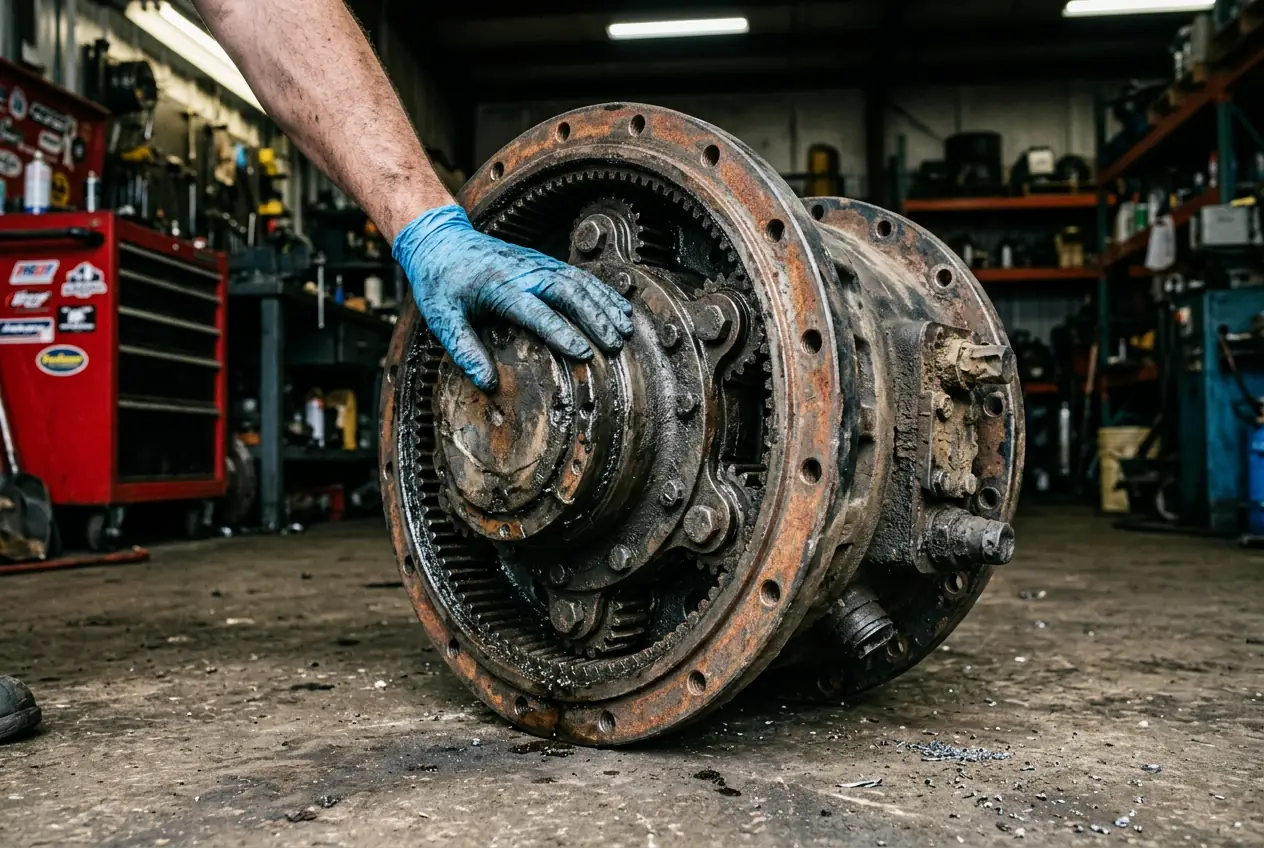
The final drive is the last mechanical link between your hydraulic system and the machine's movement. It converts hydraulic power into the torque that moves tracks, wheels, and loads across demanding terrain. When it fails, everything stops. Understanding its anatomy is the first step in effective final drive troubleshooting in 2026.
Key Components Most Prone to Wear
The planetary gear set, travel motor, bearings, and oil seals are the four components responsible for the overwhelming majority of final drive failures. The planetary gears absorb constant shock loads, the travel motor operates under sustained hydraulic pressure, bearings experience metal fatigue from vibration, and seals degrade from heat and contamination. Any one of these failing silently can cascade into full assembly failure within days. Manufacturers like Komatsu and Hitachi Construction Machinery publish detailed component wear specifications for their equipment lines - always a useful reference point when benchmarking your inspection findings.
The Most Common Root Causes of Drive Failure
Contaminated gear oil is the leading cause of accelerated internal wear. When dirt or water enters the final drive housing, it turns lubrication into an abrasive paste. Other frequent culprits include clogged drain filters that allow pressure to build dangerously, weakened charge pumps that fail to release brake plates properly, and overheated transmission fluid that breaks down gear oil viscosity. Identifying the root cause - not just the symptom - is what separates a lasting repair from a repeat failure.
How Operating Conditions in 2026 Accelerate Wear
Modern job sites are pushing equipment harder than ever. Extended operating hours, heavier payloads, and demanding terrain combined with supply chain pressures that delay maintenance windows are creating a perfect storm for premature final drive failure. Machines running in extreme temperatures - both hot and cold - face accelerated seal degradation and oil viscosity breakdown, making early warning sign detection more important than ever this year. Caterpillar and Volvo Construction Equipment have both updated their 2025-2026 maintenance interval recommendations in response to the increasing severity of job site conditions globally.

The 7 Warning Signs You Cannot Ignore
These are the indicators that experienced equipment technicians look for before a final drive reaches the point of no return. None of them should ever be dismissed as "normal wear."
Audible and Mechanical Alerts
1. Unusual Grinding or Whining Noise A grinding sound during travel - especially under load - typically signals failing planetary gears or worn bearings. A high-pitched whine that changes pitch with speed points to bearing damage. These sounds are the final drive asking for help before metal-on-metal contact causes irreversible damage.
2. Excessive Vibration at the Undercarriage Vibration that wasn't present last month is not normal settling. It indicates gear wear, bearing degradation, or imbalance within the travel motor assembly. Run a hand along the undercarriage housing after operation - unusual heat concentrations and vibration patterns together indicate an imminent failure point.
3. Sluggish or Uneven Track/Wheel Response When one track moves noticeably slower than the other, or the machine pulls to one side without operator input, the final drive on the slow side is losing hydraulic efficiency. This is a textbook symptom of internal motor wear or a failing charge pump struggling to maintain pressure.
Fluid and Seal Indicators
4. Oil Leaks Around the Final Drive Housing Any oil seeping from around the hub seal, the motor mounting face, or the drain plug area is a direct warning. Leaky seals reduce the oil supply inside the housing, and reduced oil means increased metal-to-metal friction - the fastest route to total gear destruction. Check the ground under your machine every morning.
5. Dark, Gritty, or Milky Gear Oil At every oil change interval, examine the gear oil pulled from the final drive. Healthy oil is relatively clear and amber-colored. Dark, black oil indicates extreme heat and oxidation. Gritty oil contains metallic debris from internal wear. Milky or foamy oil signals water contamination - often from a cracked seal or compromised breather cap. Any of these conditions requires immediate attention. John Deere's maintenance documentation provides excellent visual oil condition reference guides for field technicians working with their equipment.
Performance and Sensor Data
6. Loss of Tractive Effort Under Load If your machine is struggling to climb grades it handled easily before, or stalling when pushing through material it previously handled without strain, the final drive is losing its mechanical efficiency. This performance degradation precedes total mechanical failure and is often measurable weeks before the machine becomes inoperable.
7. Fault Codes or Anomalous Telematics Data Modern heavy equipment generates a continuous stream of diagnostic data. In 2026, machines equipped with telematics systems will often flag abnormal hydraulic pressure readings, elevated motor temperatures, or drive motor current anomalies long before an operator notices anything wrong. If your system is generating codes related to travel motor pressure or final drive hydraulic circuit performance - do not clear and ignore them. Investigate immediately.
New Diagnostic Tools for Final Drive Troubleshooting in 2026
The biggest change in final drive troubleshooting in recent years is the shift from reactive to predictive diagnostics. The tools now available to fleet managers and field technicians make it possible to detect problems with remarkable precision before any mechanical damage has occurred.

Oil Analysis and Spectral Testing Technology
Sending a gear oil sample to a laboratory for spectral analysis is one of the most cost-effective diagnostic investments available. Modern oil analysis reports can identify wear metals - iron, copper, aluminum, chromium - at concentrations measured in parts per million. Elevated iron particles indicate gear or bearing wear. Copper particles point to bronze bushing degradation. Silicon spikes signal external contamination. Paired with a consistent sampling schedule, oil analysis creates a trend history that shows exactly when a component began degrading, allowing intervention at the optimal repair window. Mobil Lubricants' industrial oil analysis program is one widely used resource for establishing baseline wear metal benchmarks.
Vibration Analysis and Thermal Imaging
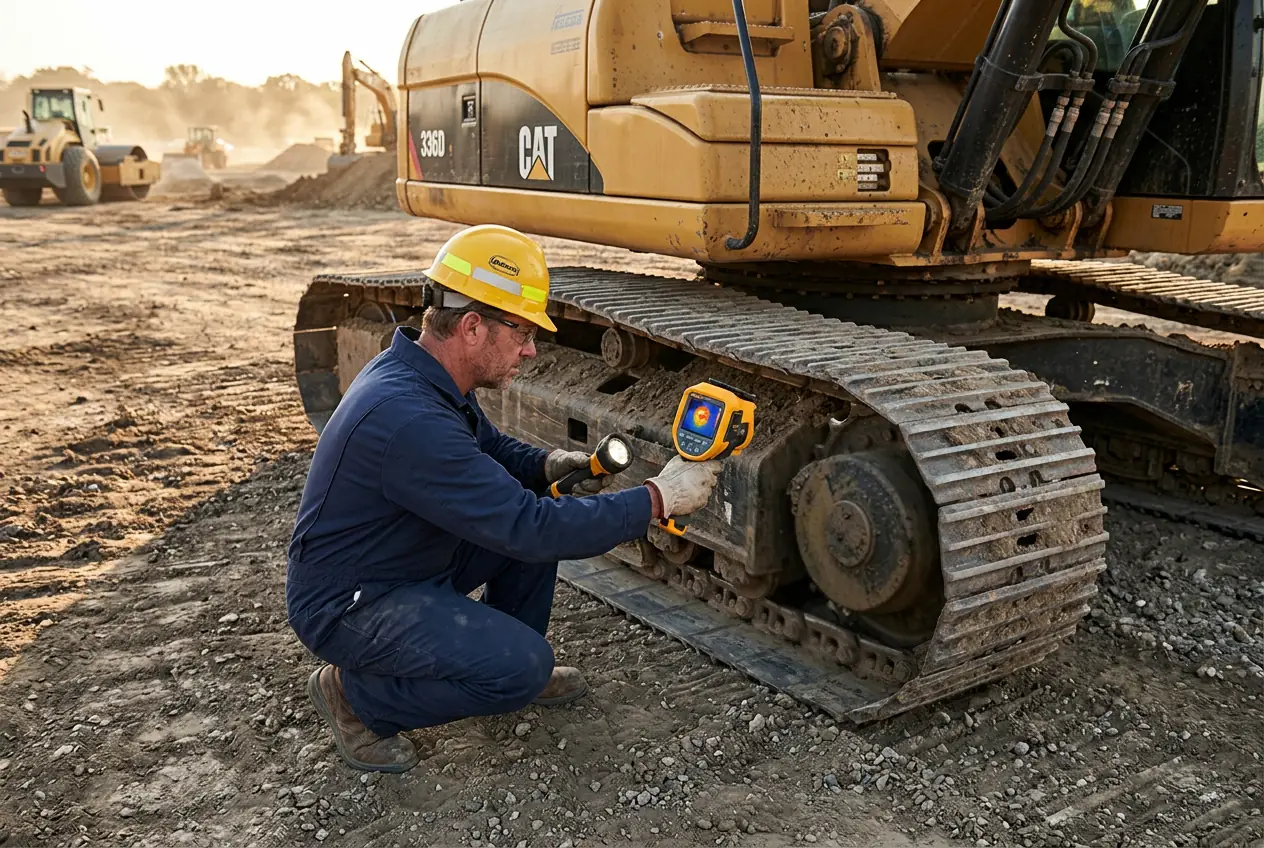
Portable vibration analyzers and infrared thermal cameras have become standard diagnostic tools for forward-thinking equipment managers in 2026. Vibration analysis identifies bearing fault frequencies with enough precision to distinguish between an outer race failure, an inner race failure, or a rolling element problem - before any audible symptom has developed. Thermal imaging reveals heat signatures in the final drive housing that indicate friction points invisible to the naked eye. Together, these non-invasive tools allow full diagnostic assessments without disassembly. Fluke Corporation offers a useful primer on integrating vibration and thermal tools into predictive maintenance programs for heavy equipment fleets.
Integrated Telematics and AI-Assisted Monitoring
Fleet telematics platforms now incorporate machine-learning algorithms that analyze operating patterns against historical performance baselines. These systems can flag anomalies - an uptick in travel motor current draw, a slight increase in hydraulic circuit response time - that no human operator would notice during normal operation. In 2026, integration between equipment OEM monitoring systems and third-party fleet management platforms has made it practical for even mid-sized fleets to implement continuous final drive health monitoring across their entire equipment inventory. Komatsu's KOMTRAX telematics system is a leading example of how OEM-integrated monitoring can flag drive system anomalies well ahead of mechanical failure.
Sourcing the Right Parts and Taking Action Fast
Detecting a problem early only delivers value if you can act on it quickly with the right replacement parts. Parts sourcing delays are one of the most common reasons a preventable final drive issue becomes a complete equipment write-off.
OEM vs. Aftermarket: Making the Right Call
The debate between OEM and aftermarket final drive parts comes down to urgency, budget, and machine criticality. OEM parts offer guaranteed fit and maintain warranty coverage, but lead times can stretch from weeks to months for certain assemblies. High-quality aftermarket parts from reputable suppliers can match or exceed OEM specifications at a significantly lower cost and with dramatically faster availability. The key is supplier reliability - working with an established industrial parts specialist ensures you receive components that meet proper tolerances and material standards.
Why Supplier Relationships Matter More Than Ever in 2026
With global supply chains still navigating volatility, having a trusted parts supplier relationship is a strategic asset for any fleet operation. MCH Parts NYC specializes in the procurement and supply of industrial equipment and spare parts, working exclusively with authorized manufacturers and suppliers to source dependable components worldwide. Their approach focuses on minimizing equipment downtime and streamlining procurement costs without compromising on quality - exactly what fleet managers need when a final drive failure threatens a project timeline. Getting a free quote and having a parts roadmap in place before a failure occurs is the kind of proactive strategy that separates high-performing fleets from reactive ones.
Building a Proactive Parts Inventory Strategy
The most resilient equipment operations in 2026 don't wait for failure to source parts. They maintain strategic stock of high-wear final drive components - seals, seal kits, bearings, and planetary gear assemblies for their most-used machines. Conducting a risk-ranked review of your fleet, identifying which machines face the highest utilization and harshest conditions, and pre-positioning critical spare parts based on that analysis is the difference between a planned, two-hour repair and an unplanned, two-week shutdown. Resources like Ritchie Bros. Equipment Insights can help fleet managers track depreciation curves and maintenance cost trends to inform smarter parts stocking decisions.
Conclusion: Don't Wait for Silence to Tell You Something Is Wrong
The final drive is one of the hardest-working, most critical components on any piece of heavy equipment - and it is also one of the most predictable in how it fails. The seven warning signs covered in this guide - abnormal noise, excessive vibration, sluggish response, oil leaks, degraded gear oil, loss of tractive effort, and diagnostic fault codes - are the final drive's way of communicating before it reaches the point of no repair. In 2026, with advanced oil analysis, vibration diagnostics, thermal imaging, and AI-assisted telematics all accessible to fleets of every size, there is simply no reason to be surprised by a final drive failure.
Act on the early signals. Use the diagnostic tools available to you. Partner with a reliable, authorized supplier like MCH Parts NYC to ensure parts are available when and where you need them. The cost of a proactive repair is a fraction of the cost of complete drive replacement - and nowhere near the cost of project delays, idle crews, and missed deadlines. Your equipment is trying to tell you something. Make sure you're listening.
Frequently Asked Questions
Q1: How often should I check my final drive gear oil? Most manufacturers recommend inspecting gear oil every 500 operating hours and performing a full oil change every 1,000 hours under normal conditions. In harsh environments - extreme temperatures, heavy contamination exposure, water crossings - intervals should be shortened significantly. Additionally, pulling a small sample for oil analysis at each inspection adds a diagnostic layer that interval-based checks alone cannot provide.
Q2: Can I continue operating equipment if I notice a final drive oil leak? Operating with an active oil leak is a high-risk decision. As oil escapes the housing, internal lubrication drops, friction between gears and bearings increases rapidly, and the timeline to catastrophic failure shortens dramatically. If a leak is detected, the safest course is to halt operation, assess the severity of the leak, and address the seal failure before returning the machine to service. Continuing to operate risks turning a seal replacement into a complete final drive assembly replacement.
Q3: What is the difference between final drive problems and hydraulic motor problems? They are closely related but distinct failure modes. The final drive encompasses the planetary gear reduction assembly and the housing, while the hydraulic travel motor is the power source that drives the final drive. Symptoms like loss of tractive effort and sluggish response can originate from either component. Diagnostic pressure testing of the hydraulic circuit combined with physical inspection of the gear assembly is typically needed to isolate which component is the primary failure source.
Q4: How do I know if aftermarket final drive parts are safe to use? Quality aftermarket parts from reputable suppliers are manufactured to meet or exceed OEM specifications and are entirely safe for use when sourced correctly. The critical factors are supplier authorization, parts traceability, and material certification. Suppliers who work exclusively with authorized manufacturers - like MCH Parts NYC - provide the documentation and quality assurance that confirms parts meet the tolerances your equipment requires. Always request specs and certifications, and avoid unverified, low-cost sources with no traceable supply chain.
Read More

Engine Air Filter vs. Cabin Filter 2026: EPA Guide

Radiator and Cooling System Parts: NYC Summer 2026
Bucket Teeth Selection 2026: Right Teeth for NYC Soil

Construction Equipment Filters 2026: Complete Replacement Schedule Updated
Track Replacement Guide 2026: How Long Do Undercarriage Parts Really Last?
Final Drive Troubleshooting 2026: 7 Warning Signs Before Complete Failure

Excavator Hydraulic Pump Replacement 2026: OEM vs Aftermarket Complete Guide

Weekend Equipment Breakdown: NYC After-Hours Parts Sourcing Guide 2026

Equipment Down in 2026? Get These 15 Critical Parts in NYC Within 2 Hours

NYC Port Modernization 2026: Heavy Equipment Parts for Hudson River Terminal Upgrades
Queens Is Being Built Right Now - Is Your Equipment Ready?

NYC High-Rise Construction Boom 2026: Parts for Record Number of Tower Projects

Brooklyn Navy Yard Construction: Specialized Parts for Historic Site Work

NYC DOB Construction Equipment Requirements 2026: Updated Parts & Modifications

Equipment Down in 2026? Get These 15 Critical Parts in NYC Within 2 Hours

NYC Winter 2026 Construction: Critical Parts That Fail Below 20°F : Prevention Guide
Prevent Crane Downtime with a Proactive Parts Roadmap
How to Prevent Downtime in Multi-Brand Earthmoving Fleets

How to Source OEM Undercarriage Parts Without Project Delays
Motor Grader Predictive Diagnostics: Prevent Hydraulic Failures & Reduce Downtime

Pesticide Sprayer Calibration: Essential Safety Compliance Guide & Protection

Seeder Bearing Parts Sourcing Guide: Critical Components & Strategy
Downtime Prevention Through Smart Inventory for Grain Dryers

Combine Harvester Breakdown Prevention Guide: Predictive Analytics for Zero Downtime

Master Global Agricultural Parts Delivery | Mid-Season MRO Guide

Fixing Haul Truck Downtime Issues: Remote Parts Strategy Guide 2025
Blasting Equipment Safety Compliance: Must-Know Audit Requirements for 2025

The Step-by-Step Guide to Global Drill Rig Consumables Sourcing

Mining Conveyor Maintenance Guide: Detecting Hidden Risks in Underground Systems

Best Practices for Certified Pipeline Valve Selection: From Specs to Installation

Optimizing Oil Rig PPE Delivery: Proven Strategies That Saved $2M Annually

FPSO Smart Parts Planning: Proven Methods to Cut Downtime

How FPSO Inspection Prevents Million-Dollar Shutdown Losses

Fix It Before It Breaks: A Farmer's Guide to Combine and Harvester Maintenance

Why Fast Tractor Parts Delivery is Changing Modern Farming [2025 Guide]

The Critical Farm Equipment Replacement Parts You Need Before Harvest 2025
.webp)
How to Double Your Farm Efficiency: Expert Guide to Smart Scaling

Cut Costs by 30%: Pre-Season Spare Parts Audit Checklist

Proven Success Factors for Agricultural Equipment Manufacturers in 2025

13 Overlooked Farm Spare Parts That Halt Operations — Pt. 2

13 Overlooked Farm Spare Parts That Halt Operations — Pt. 1

Top Hydraulic Components for Agricultural Equipment in 2025: Complete Guide
The Essential Farm Equipment Parts You Can't Afford to Run Out Of

How to Service Farm Equipment: A Farmer's Guide to Zero Harvest Downtime

Construction Machinery Parts Suppliers: Expert Selection Guide

How to Apply Machine Safety Rules: From Selection to Installation

Smart Diagnostics Cut Heavy Equipment Failures by 73%

5 Ways to Assess the Environmental Impact of Heavy Construction Machinery

10 Smart Ways to Pick Construction Machinery for 2025 Projects

Rent vs Purchase Equipment: What Heavy Industry Experts Hide

How to Implement a Construction Inventory Management System for Equipment Efficiency
How to Extend Equipment Life Expectancy with Regular Maintenance

Advanced Heavy Equipment Diagnostic Tools: Ensuring Construction Machinery Quality

Essential Features Your Construction Equipment Inventory System Needs
29 Quick Tips for Choosing Construction Equipment for Remote Locations

How to Select Construction Machinery with Optimal Equipment Maintenance in Mind
Top 25 Tips for Selecting Bulldozers for Construction Sites
Which Construction Loader is Best for Your Project Needs?

4 Key Steps to Form a Construction Machinery QC Team

15 Essential Tips for Selecting the Perfect Crane for Construction

Maximize Savings: Multi-Purpose Construction Machinery for Lower Costs

Affordable Heavy Equipment Parts: A Sourcing Guide

Choosing the Right Road Construction Equipment: A Complete Guide

Motor Graders: Key Elements to Consider for Optimal Selection

A Detailed Guide to Choosing Excavators for Construction Work

Top Tips for Choosing Cranes for Construction Projects
5 Top-Rated Demolition Machines for Construction Professionals

Expert Tips on Choosing Earthmoving Equipment for Large Projects
Top Functional Criteria for Selecting Heavy Construction Equipment

Construction Machinery: Detailed Guide to Equipment Specifications

Heavy Machinery Prices: Key Factors in Cost and Quality Balance
Best Construction Heavy Equipment Brands: Pros and Cons

Construction Site Equipment: How to Determine Your Requirements

Maximizing Safety: Risk Management for Construction Projects

Innovations in Construction: Transforming Machinery and Equipment

Heavy Equipment Safety: Beyond the Basics in Construction Compliance

The Essential Handbook for Construction Equipment Repair and Maintenance

How to Efficiently Source Oil and Gas Machinery Parts in NYC

Essential Guide to Sourcing Agriculture Equipment Parts

How to Source Mining Machinery Parts: Tips and Strategies