Bucket Teeth Selection 2026: Right Teeth for NYC Soil
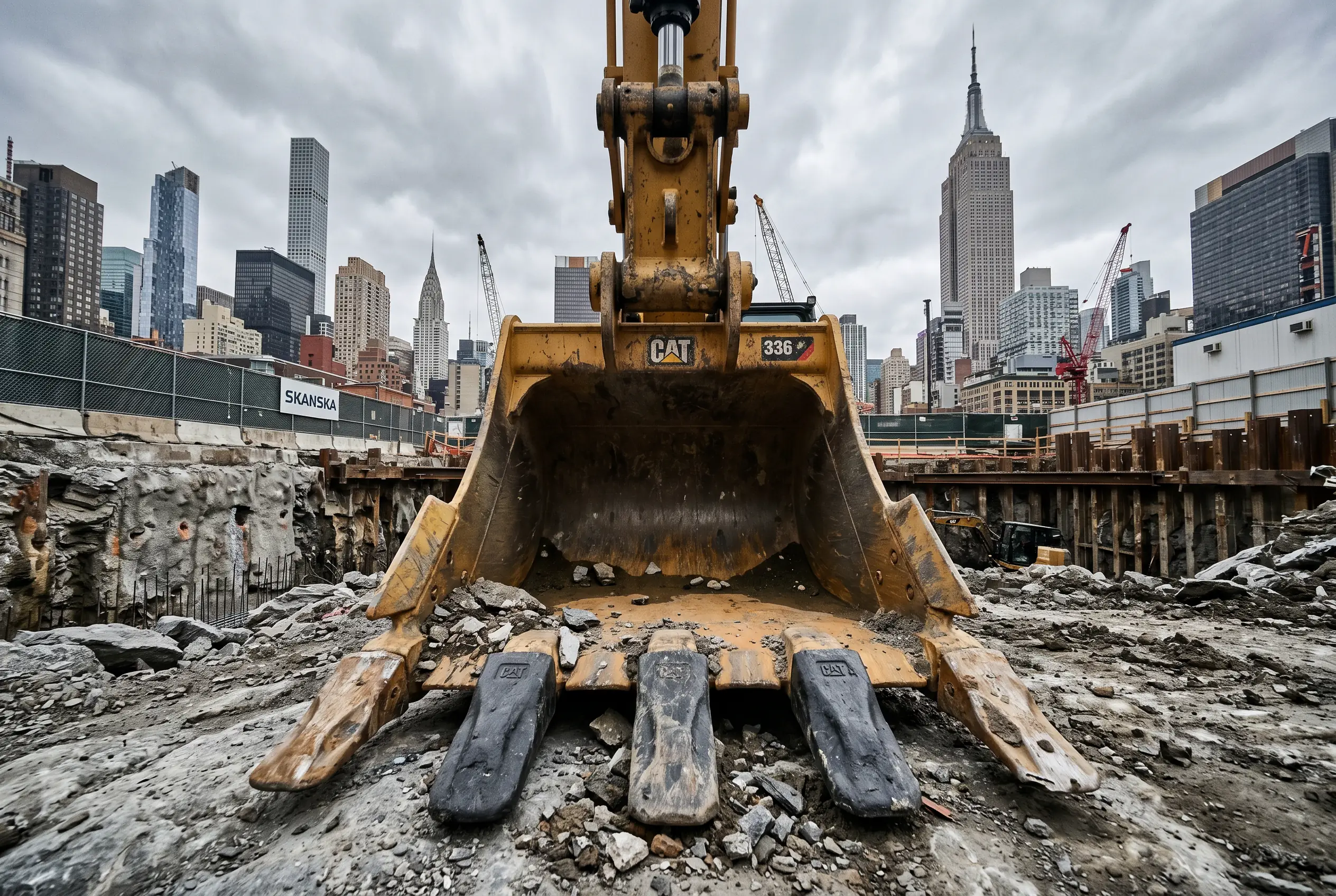
The wrong bucket teeth don’t just slow your machine down. In New York City, they wreck cutting edges, blow through adapters ahead of schedule, and turn a routine dig into a parts emergency. A crew working through Manhattan schist with general purpose teeth will lose hours on a project that the right rock tooth profile would have handled efficiently. A contractor running heavy rock teeth through Brooklyn clay on a utility trench will watch points mushroom and bend instead of penetrating - adding unnecessary force loads to bucket hardware and final drives that weren’t designed to compensate for the wrong attachment.
Bucket tooth selection is a precision decision in 2026, and NYC soil conditions make it more consequential than it would be on a typical open-terrain job site. The city’s subsurface environment is among the most variable in the country: hard metamorphic rock at shallow depths in Midtown and upper Manhattan, decades of mixed urban fill across large sections of Brooklyn and Queens, heavy marine clay near the waterfront, and layers of old foundation material, utility infrastructure, and undocumented debris throughout the five boroughs. No single tooth profile performs optimally across all of it.
This guide covers the bucket tooth types available in 2026, how to match them to the soil conditions you’ll actually encounter on NYC job sites, and how to manage wear and replacement on a compressed urban schedule where downtime is expensive and delivery windows are tight.
If you need bucket teeth or adapters now, MCH Parts stocks a full range of excavator teeth, adapters, and retention hardware for all major machine brands with same-day availability across the NYC metro area. Contact us before your next job starts and we’ll confirm you have the right profile for the conditions.
Understanding NYC Soil Conditions and What They Demand from Bucket Teeth
Manhattan Schist and Hard Rock Formations
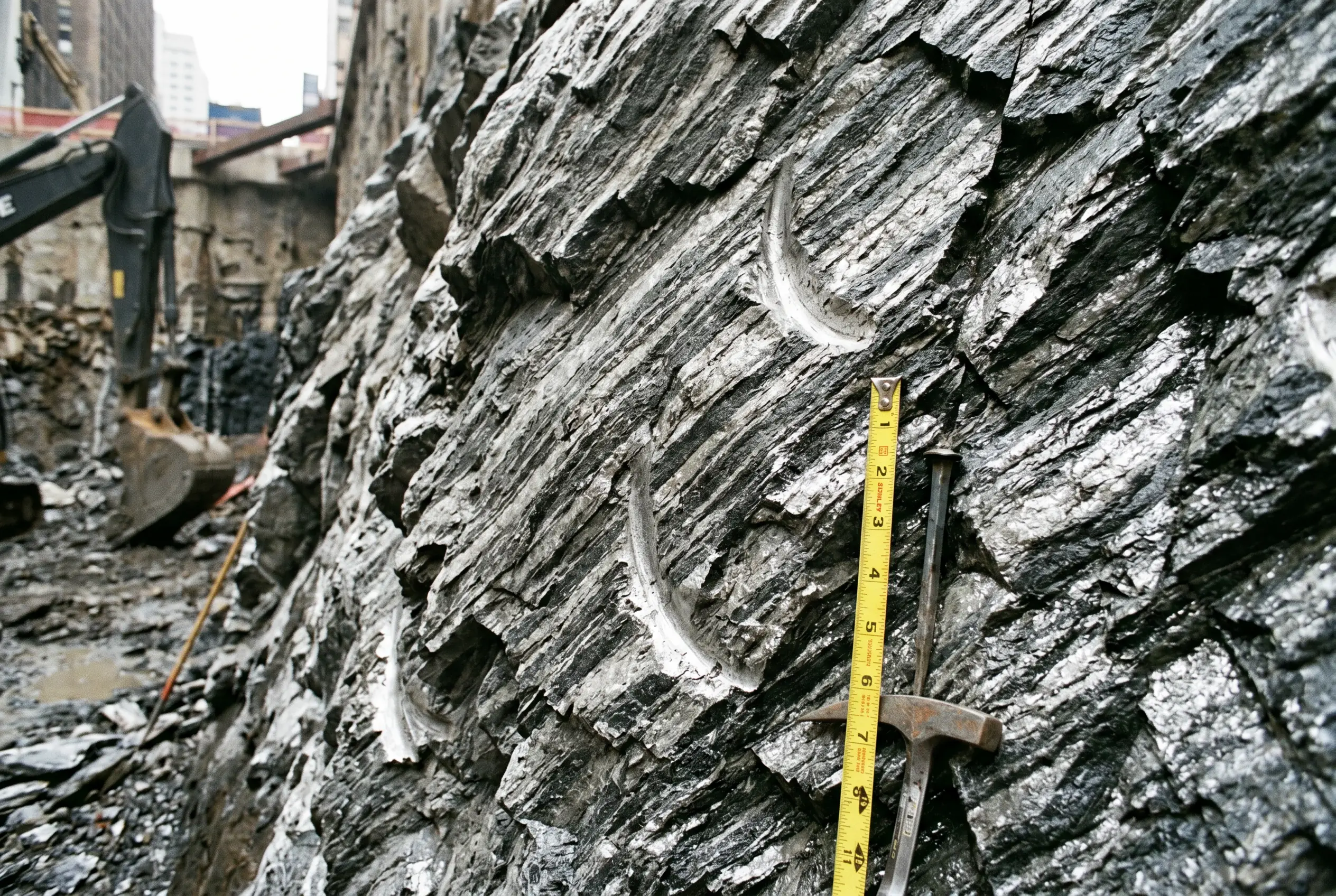
Manhattan schist is the metamorphic bedrock that underlies most of Manhattan, and it surfaces at remarkably shallow depths in several neighborhoods - as close as two to four feet below grade in parts of Midtown and the Upper West Side. Any excavation for foundation work, utility installation, or below-grade structure in these areas will encounter this material, and it is genuinely hard. Manhattan schist is dense, often foliated in irregular planes, and will destroy a standard general purpose bucket tooth at a rate that should concern any site manager who hasn’t planned for it.
The Bronx and upper Manhattan share similar geology, with rock formations appearing at varying depths depending on site history and terrain. Rocky formations in these areas often require hydraulic breaker work before the bucket can be productive, but the transition between broken rock and intact material means the bucket teeth need to handle both abrasive fractured stone and the impact of striking harder layers.
Understanding your specific site’s geological profile before mobilizing equipment is essential for getting tooth selection right. NYC DOB permit applications often include geotechnical boring data, and reviewing that data to understand what’s in the ground below the first few feet saves money on incorrect tooth specifications and unexpected wear.
Mixed Urban Fill and Demolition Debris
Across significant portions of Brooklyn, Queens, and lower Manhattan, the first ten to twenty feet of subsurface material is not natural soil at all. It’s urban fill - material deposited over the course of decades or centuries of development, demolition, and grading. This fill is unpredictable in composition. Contractors working through it encounter broken concrete, old brick, timber, miscellaneous metal, ash deposits, and occasionally older foundation elements from structures that predate current records.
Mixed fill is particularly hard on bucket teeth because it combines abrasive aggregate material with sudden impact loads from buried obstructions. A tooth profile optimized for soft ground penetration will catch on buried concrete fragments and generate lateral stress loads that fatigue the adapter system. A tooth profile too blunt for effective penetration will force the operator to crowd the bucket harder, putting excessive stress on the stick and boom cylinders. The right choice for urban fill is a profile that balances penetration capability with impact resistance.
Caterpillar and Komatsu both publish detailed guidance on tooth selection for mixed ground conditions in their attachment specifications - reviewing their recommendations for your specific machine’s bucket system provides a useful baseline for starting point selection.
Clay and Soft Ground in Outer Boroughs
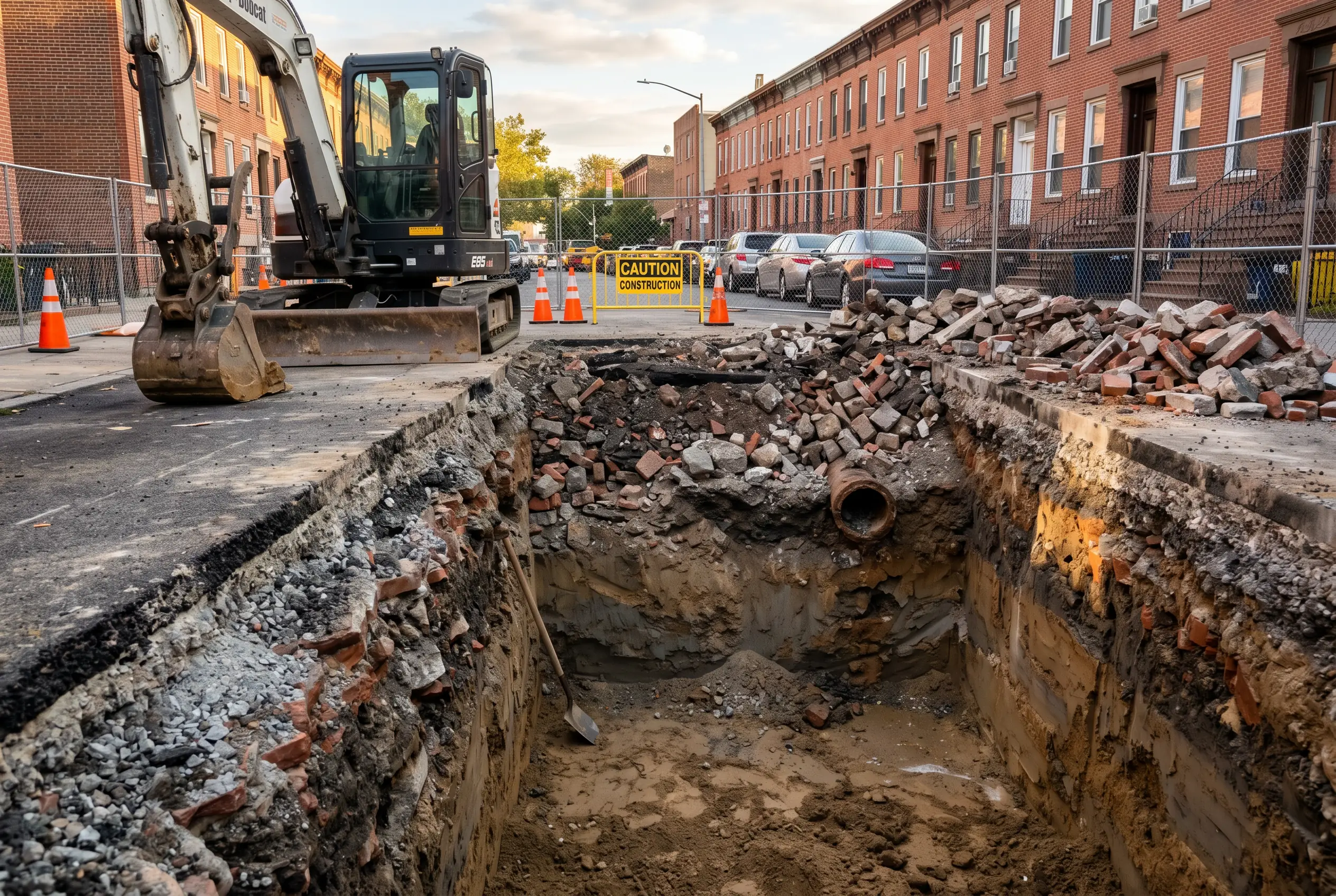
Parts of Queens, Brooklyn near marine margins, and sections of Staten Island have substantial clay content in their subsurface. Clay presents a different problem from hard rock or urban fill. The challenge isn’t abrasion resistance or impact - it’s penetration and release. Clay is cohesive and sticky. A tooth profile with a wide, blunt cross-section will push clay aside rather than slicing through it, increasing digging resistance and forcing the machine to work harder than the soil actually requires.
In clay-dominant conditions, thin penetration tooth profiles dramatically reduce digging resistance and cycle time compared to standard teeth. The narrower cross-section parts the material rather than displacing it, and the pointed geometry allows clean bucket fill without the clay packing and adhesion that wider teeth tend to cause. Clay also loads up in the bucket corners and along the cutting edge - something that affects not just tooth selection but cutting edge profile selection for the bucket itself.
Waterfront and Marine Conditions
NYC’s extensive waterfront - the Hudson River, East River, Newtown Creek, Jamaica Bay, and the harbor margins - involves excavation and dredge-adjacent work in conditions that combine abrasion, moisture, and saltwater exposure. Salt accelerates corrosion in the adapter and retention pin systems and degrades the retention hardware faster than it would in standard ground conditions. Material near the waterfront often includes sand, silt, shell, and varying amounts of contaminated fill from industrial site history.
For waterfront work, salt and moisture protection for the adapter hardware should factor into your procurement plan alongside tooth profile selection. Retention pin systems that allow quick changes are especially valuable in these environments because tooth replacement intervals will be shorter than on dry inland sites. MCH Parts carries bucket teeth and adapter hardware for waterfront and marine construction applications - visit mchpartsnyc.com for the right components before you mobilize to a waterfront site.
Bucket Teeth Types and Their Applications in 2026
Standard General Purpose Teeth
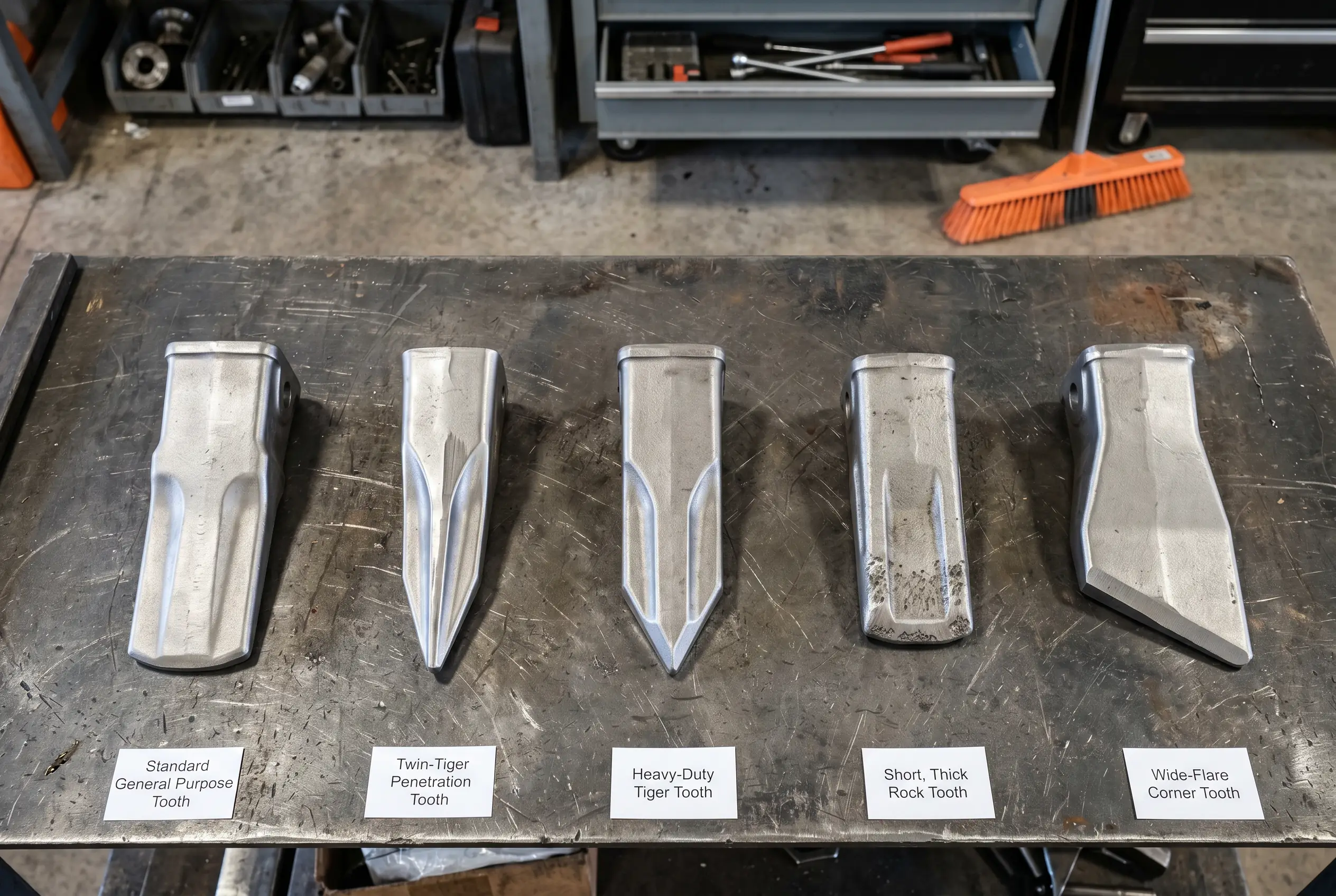
Standard general purpose teeth are the default configuration for most excavator buckets and they are appropriate for moderate soil conditions: sandy loam, light clay, topsoil, and soft-to-medium ground without significant rock or debris content. On NYC sites, that description matches a limited portion of the actual work - utility trenching in outer-borough residential areas, landscaping excavation, and some fill material in areas of Queens and Staten Island where the subsurface is relatively clean.
The error most operators make with general purpose teeth is using them beyond their appropriate application range. On any site where rock, old concrete, or heavy fill is expected - and in NYC, some amount of buried debris is nearly universal - standard teeth will wear at the point faster than the application justifies and may sustain tip damage from impact that a harder geometry would have deflected. Know your site before you commit to a general purpose configuration.
Tiger and Penetration Teeth for Hard Ground
Tiger teeth, also referred to as twin tiger or penetration tooth profiles depending on the manufacturer, are designed for hard-packed, dense, and cemented soil conditions. Their narrower, more tapered geometry concentrates the cutting force at the tip rather than distributing it across a wider profile, making them significantly more effective at entering hard ground than standard teeth. On NYC sites with clay, compacted fill, or material in the transition zone above weathered rock, penetration-profile teeth reduce cycle time and operator fatigue compared to forcing a standard tooth through resistant material.
Hitachi Construction Machinery and Volvo Construction Equipment both offer penetration tooth variants for their excavator bucket systems, and their attachment specifications detail the soil resistance ratings each profile is designed for. Matching the tooth geometry to the specific density and composition of what’s in the ground is more productive than defaulting to a harder tooth “just in case” - oversized or overly aggressive profiles in soft conditions generate unnecessary wear on the adapter and retention system.
Rock Teeth for Ledge and Blasted Material
Rock teeth are the appropriate configuration for excavation in fractured or blasted rock, hard ledge, and the kind of dense urban debris that includes large concrete fragments, old masonry, and similar hard-impact material. Rock tooth profiles are thicker and blunter than standard or penetration teeth, prioritizing durability over cutting sharpness. They are designed to handle the impact energy and abrasion of hard material contact repeatedly without chipping or rapid wear at the tip.
In 2026, rock tooth metallurgy has continued to improve, with higher-grade wear steels in use across most major brands that extend service life in high-abrasion applications. For Manhattan excavation that reaches into schist, for Bronx foundation work in rocky terrain, or for any job involving blasted rock handling, rock teeth are the correct starting specification. Running penetration or standard teeth in these conditions is expensive - tip replacement and potential adapter damage from improper tooth geometry in hard-impact applications adds up quickly.
Understanding when to switch profiles mid-project is also important. Many NYC excavations pass through layers of fill, clay, and then rock as depth increases. Having both a penetration or general purpose tooth set and a rock tooth set available on-site and being prepared to switch configurations as the geology changes is standard practice for experienced NYC contractors. MCH Parts can supply both tooth sets for your machine with same-day delivery - reach out at mchpartsnyc.com and we’ll make sure you’re stocked for both phases of the dig.
Adapters and Retention Systems
The adapter is the interface between the tooth point and the bucket cutting edge, and it is as important to tooth system performance as the tooth itself. Adapters wear in concert with the teeth they hold, and using a worn adapter with a new tooth generates accelerated wear on both components and introduces lateral movement that reduces cutting accuracy and increases operator-perceived vibration.
In 2026, quick-change retention systems have become the standard for any operation that changes tooth profiles regularly. Pin and retainer systems that allow tool-free tooth changes reduce the labor cost of planned tooth swaps and make unscheduled field replacements faster. For NYC operations where teeth may need to be changed to match subsurface conditions encountered mid-dig, a quick-change system pays for itself rapidly in reduced downtime. When evaluating tooth procurement, always confirm that the retention system on your bucket is compatible with the tooth and adapter specification you’re ordering.
Matching Tooth Selection to Your NYC Project Type
Foundation and Demolition Work
Foundation excavation for new construction in Manhattan and the other boroughs is among the most demanding bucket teeth applications in the country. Foundation digs in Midtown regularly hit schist within a few feet of grade. Demolition work generates large-diameter concrete fragments, rebar, and mixed debris. For foundation and demolition applications, the starting specification is a rock tooth or heavy-duty penetration tooth, with rock teeth appropriate for any job where the excavation is expected to reach intact or near-intact rock.
Foundation work also puts significant demands on the adapter attachment hardware because the loading pattern includes both vertical penetration forces and lateral sweep forces as the operator grabs and breaks material. Inspect adapters and retention pins at every shift change during foundation excavation - these are not components to track on a mileage schedule during high-impact work.
Equipment World has covered the impact of improved rock tooth steels on foundation dig efficiency in dense urban environments - the improvements in 2025 and 2026 model-year teeth from major manufacturers are measurable, and crews still running older tooth inventory are leaving performance on the table.
Utility Trenching in the Five Boroughs
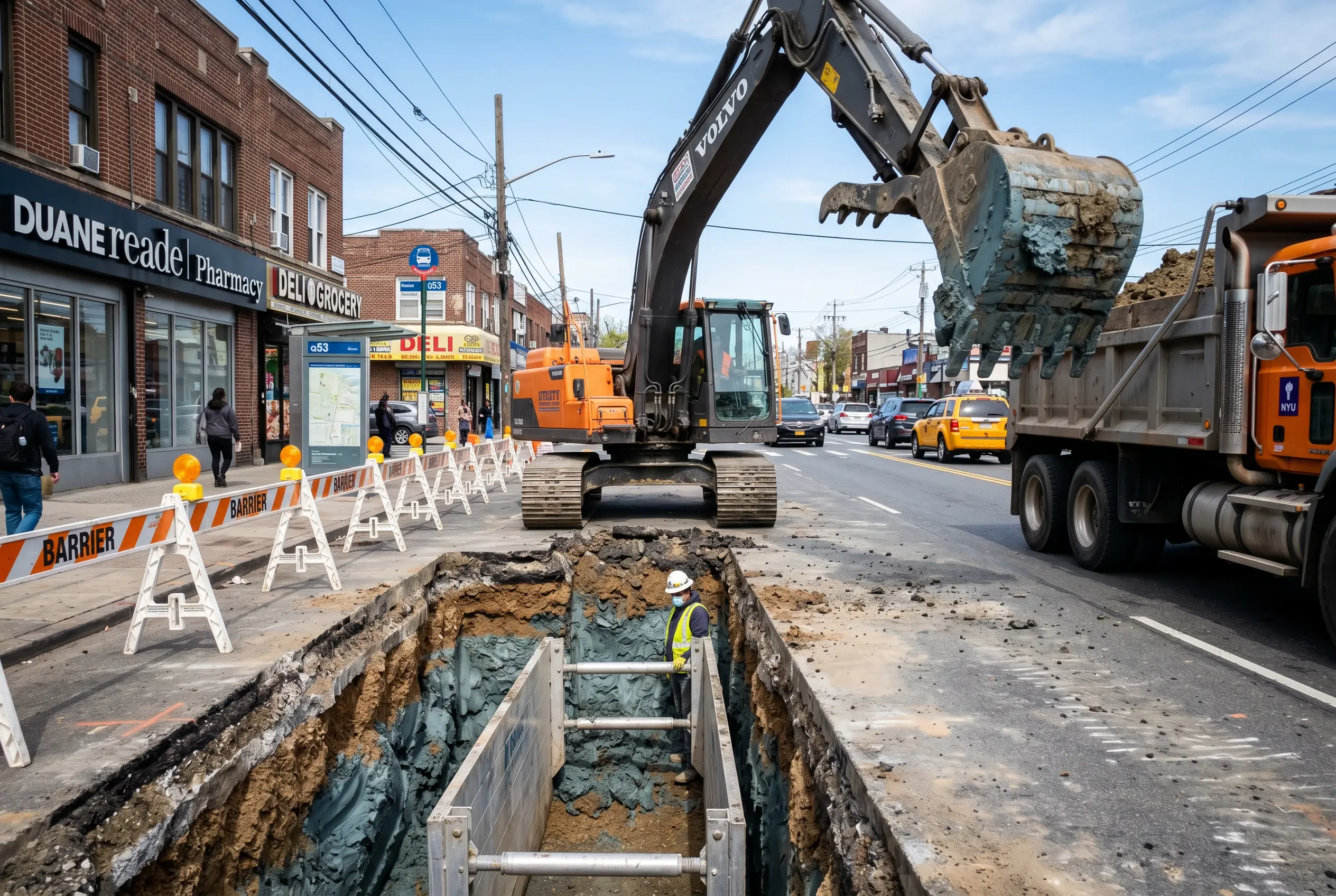
Utility work - water main, sewer, gas, electrical conduit, telecommunications - accounts for a massive share of excavation activity in NYC at any given time. The subsurface environment for utility trenching is highly variable by borough and neighborhood. In much of Manhattan, utility trenches pass through layers of asphalt, old concrete encasement around legacy utilities, mixed fill, and then native soil or rock depending on depth. In outer boroughs, the fill layer is often thicker and the rock encounter depth varies.
The practical tooth selection for utility trenching in NYC leans toward a penetration tooth profile as the default, with the understanding that rock teeth may be needed at depth in Manhattan and Bronx work. Utility contractors who do volume NYC work often keep both profiles on the truck and change configurations based on what the bore logs and their experience in a given area indicate. A general purpose tooth as the default for utility trenching in this city almost always costs more in wear and productivity than a penetration tooth would - the ground is rarely soft enough to justify it.
The Associated General Contractors of America notes that productivity optimization for urban utility excavation is one of the highest-return areas for equipment specification improvements in public-sector infrastructure contracts. Getting tooth selection right is one of the simplest and highest-impact levers available.
Waterfront and Port Projects
NYC’s $500 million port modernization and the ongoing infrastructure development along the Hudson and East River waterfronts create a specific category of excavation work where tooth selection intersects with corrosion resistance and rapid replacement capability. Waterfront excavation often involves dredge-adjacent work, piled substrate, and material that combines silt, sand, shell, and contaminated fill in unpredictable layers.
For waterfront applications, tooth selection priorities shift somewhat relative to inland work. Penetration profile teeth generally perform well in the sand and silt material common in waterfront excavation. More important for these sites is attention to the adapter retention hardware - saltwater and moisture accelerate corrosion in retention pin systems, and a corroded or seized pin turns a planned ten-minute tooth change into a multi-hour extraction problem. Using stainless or coated retention hardware and inspecting it regularly is as important as the tooth profile choice on waterfront jobs. MCH Parts stocks bucket teeth, adapters, and retention hardware appropriate for waterfront construction - contact us at mchpartsnyc.com for the right specifications before your waterfront project starts.
Managing Bucket Tooth Wear and Replacement on Active Job Sites
Reading Wear Patterns Before Failure
Worn bucket teeth communicate information about whether the current tooth selection is appropriate for the conditions. A tooth worn uniformly from tip to mid-body indicates correct profile selection in abrasive conditions - the wear is predictable and the tooth is working as intended. A tooth worn disproportionately on one side or showing lateral deformation suggests the profile is encountering impacts at angles it wasn’t designed for, often a sign that a harder or differently shaped profile would perform better.
A tooth that wears extremely rapidly at the tip without meaningful wear further back indicates a soil condition harder than the tooth metallurgy is rated for - in NYC terms, this is the sign that standard or penetration teeth are encountering material that requires rock teeth. Conversely, a rock tooth used in soft ground will show slow wear but may be costing productivity through reduced penetration efficiency. Neither overshooting nor undershooting the correct hardness profile is free.
The adapter surface behind the tooth is the secondary read: if you see wear on the adapter face that suggests the adapter is being exposed to the digging material, the tooth is worn past the point where it’s still protecting the adapter. At that stage, you’re spending money on a consumable component that protects an expensive one, while failing to actually protect it. OSHA’s construction equipment maintenance standards address wear monitoring as a core component of equipment maintenance programs - tracking tooth wear is both a productivity practice and a compliance-relevant maintenance habit.
Replacement Intervals in High-Abrasion Environments
Standard bucket tooth replacement intervals are highly variable depending on application, soil type, and operating technique. In NYC conditions, the ranges that apply to moderate construction environments don’t reflect what urban excavation actually demands.
In hard rock or high-abrasion mixed fill conditions - the majority of Manhattan and Bronx foundation and utility work - tooth replacement may be warranted every 100 to 200 hours of actual digging time. In moderate fill or clay conditions typical of much outer-borough work, 300 to 500 hours is a more realistic range. These are guides, not guarantees; wear observation at every shift is more reliable than hour-based scheduling for an environment as variable as NYC’s subsurface.
The cost discipline principle here is the same as with filters and other consumables: a set of bucket teeth is a fraction of the cost of a damaged adapter, a cracked cutting edge, or an overstressed final drive from running an undersized tooth too long. Replace on observation, not on schedule, and inspect at every shift. Reach out to MCH Parts at mchpartsnyc.com to set up a standing procurement relationship that keeps your tooth inventory stocked for your specific fleet and application mix.
Procurement Strategy for NYC Operations
The logistics of running bucket teeth on NYC job sites have their own set of constraints. Space on or near active job sites is limited, meaning large on-site inventory isn’t always practical. At the same time, waiting for a parts delivery when a machine is down costs money at a rate that scales with your crew size and project timeline.
The practical approach for most NYC contractors is to maintain a minimum one-cycle inventory per machine at a central location - typically the yard or warehouse - while relying on same-day delivery capability for unscheduled replacements or configuration changes needed in the field. For operations running multiple machines on multiple active sites across the five boroughs, a supplier relationship with a locally-stocked NYC parts operation that knows your fleet is more valuable than a lower-per-unit price from a supplier who needs three days to ship.
Confirm that any tooth procurement includes a review of adapter compatibility and retention system specification - this is the step that most frequently causes problems when procurement is handled without attention to the specific bucket hardware on each machine. Make, model, and bucket serial number are the inputs you need to get a correct tooth specification. MCH Parts can build a tooth and adapter specification list for your entire fleet - contact us at mchpartsnyc.com and we’ll make sure every machine on your sites has the right configuration available before your next dig starts.
Conclusion
Bucket tooth selection in 2026 is not a one-size-fits-all decision, and on NYC job sites it never was. The city’s subsurface conditions - Manhattan schist at shallow depth, decades of unpredictable urban fill, heavy clay in outer boroughs, and waterfront marine conditions - demand a more deliberate matching of tooth profile to actual ground conditions than you’d need on a predictable open-terrain site.
The practical discipline is straightforward: know your site geology before you spec the teeth, inspect wear patterns at every shift to confirm the current profile is appropriate, and have both a working inventory and a reliable local supplier who can cover unscheduled replacements the same day. Running the wrong tooth costs money through accelerated wear, lost productivity, and unnecessary stress on bucket hardware. Running the right tooth in the right conditions is one of the lower-cost, higher-return decisions a site manager can make.
For NYC operations in 2026, the increased demand from ongoing transit expansion, port modernization, high-rise construction, and utility infrastructure projects means more digging under tighter schedules and less margin for equipment downtime from something as avoidable as an incorrect or worn bucket tooth specification.
MCH Parts stocks bucket teeth, adapters, and retention hardware for all major excavator brands with same-day delivery across NYC and the surrounding metro area. Visit mchpartsnyc.com to confirm the right tooth specification for your machines or to set up a standing inventory arrangement for your fleet.
FAQ
What bucket tooth profile works best for Manhattan excavation that will hit rock?
For any Manhattan excavation expected to reach Manhattan schist or fractured rock, start with a rock tooth profile as your working specification. Rock teeth are designed for the impact loading and abrasion that hard metamorphic rock generates. Running standard or penetration teeth into intact schist will wear tips extremely quickly and risks adapter damage from impact at a geometry the component wasn’t rated for. If your bore logs show the rock transition at a predictable depth, consider starting with penetration teeth for the fill layer and switching configurations when rock is reached. MCH Parts stocks rock teeth and penetration profiles for all major excavator brands - visit mchpartsnyc.com and we’ll confirm the right spec for your machine.
How do I know when a bucket tooth needs to be replaced before it damages the adapter?
The primary indicator is tip wear - when the tooth tip has worn back to the point where the adapter nose is beginning to be exposed to the digging material, the tooth is past its effective working life. At that stage the adapter is absorbing wear and impact it shouldn’t be handling. A secondary indicator is lateral deformation or chipping at the tip, which suggests the tooth has encountered material harder than its rated application. Inspect teeth at every shift change during hard-ground excavation, and replace on observation rather than waiting for a scheduled interval. Adapter replacement costs several times what a tooth costs - protecting the adapter is the whole point of the tooth.
Can I run aftermarket bucket teeth on a Cat or Komatsu bucket without voiding the warranty?
Aftermarket teeth are widely used across the construction industry and are appropriate when the replacement profile matches the OEM specification for adapter compatibility and tooth geometry. The key requirement is that the aftermarket tooth fits the adapter system correctly and uses retention hardware rated for the same load capacity as the OEM design. A physically compatible aftermarket tooth that uses a substandard retention pin or a lower-grade steel than the OEM specification can fail in ways that damage the adapter or create a safety hazard on the job site. MCH Parts carries verified aftermarket tooth options with confirmed adapter compatibility for Cat, Komatsu, Hitachi, Volvo, and other major brands - contact us at mchpartsnyc.com to confirm fitment before you order.
Why do bucket teeth wear faster on NYC job sites than the manufacturer intervals suggest?
Manufacturer wear intervals are calibrated to moderate, relatively predictable soil conditions - generally open-terrain earthmoving in natural soil without significant rock or debris content. NYC conditions deviate from that baseline in almost every direction: harder rock at shallow depth than most construction environments, mixed urban fill with buried concrete and masonry that generates high-impact loads, and concentrated abrasive dust from demolition and concrete work that accelerates surface wear on exposed steel. The practical result is that NYC tooth intervals run 30–50% shorter than manufacturer baselines for most urban applications. Track your actual replacement intervals per machine and use that data to build your procurement plan rather than relying on published intervals.
What’s the lead time for bucket teeth from MCH Parts for an active NYC job site?
Standard bucket tooth profiles for Cat, Komatsu, Hitachi, Volvo, and most other major brands are available same-day for delivery across the NYC metro area. For less common machine brands or specialized tooth profiles outside the standard range, lead time may be one to two business days. For active job sites where a tooth change could be needed mid-shift, the best practice is to keep at least one full set of teeth and a spare adapter on the truck or at the site staging area, and use MCH Parts for rapid replenishment rather than as the primary supply point. Reach out at mchpartsnyc.com to confirm stock availability for your specific machine models and we’ll make sure your inventory stays ahead of your digging schedule.
Read More

Engine Air Filter vs. Cabin Filter 2026: EPA Guide

Radiator and Cooling System Parts: NYC Summer 2026
Bucket Teeth Selection 2026: Right Teeth for NYC Soil

Construction Equipment Filters 2026: Complete Replacement Schedule Updated
Track Replacement Guide 2026: How Long Do Undercarriage Parts Really Last?
Final Drive Troubleshooting 2026: 7 Warning Signs Before Complete Failure
Excavator Hydraulic Pump Replacement 2026: OEM vs Aftermarket Complete Guide

Weekend Equipment Breakdown: NYC After-Hours Parts Sourcing Guide 2026

Equipment Down in 2026? Get These 15 Critical Parts in NYC Within 2 Hours

NYC Port Modernization 2026: Heavy Equipment Parts for Hudson River Terminal Upgrades
Queens Is Being Built Right Now - Is Your Equipment Ready?

NYC High-Rise Construction Boom 2026: Parts for Record Number of Tower Projects

Brooklyn Navy Yard Construction: Specialized Parts for Historic Site Work
NYC DOB Construction Equipment Requirements 2026: Updated Parts & Modifications
Equipment Down in 2026? Get These 15 Critical Parts in NYC Within 2 Hours
NYC Winter 2026 Construction: Critical Parts That Fail Below 20°F : Prevention Guide
Prevent Crane Downtime with a Proactive Parts Roadmap
How to Prevent Downtime in Multi-Brand Earthmoving Fleets

How to Source OEM Undercarriage Parts Without Project Delays
Motor Grader Predictive Diagnostics: Prevent Hydraulic Failures & Reduce Downtime
Pesticide Sprayer Calibration: Essential Safety Compliance Guide & Protection

Seeder Bearing Parts Sourcing Guide: Critical Components & Strategy
Downtime Prevention Through Smart Inventory for Grain Dryers
Combine Harvester Breakdown Prevention Guide: Predictive Analytics for Zero Downtime
Master Global Agricultural Parts Delivery | Mid-Season MRO Guide

Fixing Haul Truck Downtime Issues: Remote Parts Strategy Guide 2025
Blasting Equipment Safety Compliance: Must-Know Audit Requirements for 2025
The Step-by-Step Guide to Global Drill Rig Consumables Sourcing
Mining Conveyor Maintenance Guide: Detecting Hidden Risks in Underground Systems
Best Practices for Certified Pipeline Valve Selection: From Specs to Installation

Optimizing Oil Rig PPE Delivery: Proven Strategies That Saved $2M Annually
FPSO Smart Parts Planning: Proven Methods to Cut Downtime
How FPSO Inspection Prevents Million-Dollar Shutdown Losses
Fix It Before It Breaks: A Farmer's Guide to Combine and Harvester Maintenance

Why Fast Tractor Parts Delivery is Changing Modern Farming [2025 Guide]

The Critical Farm Equipment Replacement Parts You Need Before Harvest 2025
.webp)
How to Double Your Farm Efficiency: Expert Guide to Smart Scaling

Cut Costs by 30%: Pre-Season Spare Parts Audit Checklist

Proven Success Factors for Agricultural Equipment Manufacturers in 2025

13 Overlooked Farm Spare Parts That Halt Operations — Pt. 2

13 Overlooked Farm Spare Parts That Halt Operations — Pt. 1

Top Hydraulic Components for Agricultural Equipment in 2025: Complete Guide
The Essential Farm Equipment Parts You Can't Afford to Run Out Of
How to Service Farm Equipment: A Farmer's Guide to Zero Harvest Downtime
Construction Machinery Parts Suppliers: Expert Selection Guide
How to Apply Machine Safety Rules: From Selection to Installation

Smart Diagnostics Cut Heavy Equipment Failures by 73%

5 Ways to Assess the Environmental Impact of Heavy Construction Machinery
10 Smart Ways to Pick Construction Machinery for 2025 Projects
Rent vs Purchase Equipment: What Heavy Industry Experts Hide

How to Implement a Construction Inventory Management System for Equipment Efficiency
How to Extend Equipment Life Expectancy with Regular Maintenance
Advanced Heavy Equipment Diagnostic Tools: Ensuring Construction Machinery Quality

Essential Features Your Construction Equipment Inventory System Needs
29 Quick Tips for Choosing Construction Equipment for Remote Locations

How to Select Construction Machinery with Optimal Equipment Maintenance in Mind
Top 25 Tips for Selecting Bulldozers for Construction Sites
Which Construction Loader is Best for Your Project Needs?

4 Key Steps to Form a Construction Machinery QC Team

15 Essential Tips for Selecting the Perfect Crane for Construction

Maximize Savings: Multi-Purpose Construction Machinery for Lower Costs

Affordable Heavy Equipment Parts: A Sourcing Guide
Choosing the Right Road Construction Equipment: A Complete Guide

Motor Graders: Key Elements to Consider for Optimal Selection
A Detailed Guide to Choosing Excavators for Construction Work
Top Tips for Choosing Cranes for Construction Projects
5 Top-Rated Demolition Machines for Construction Professionals

Expert Tips on Choosing Earthmoving Equipment for Large Projects
Top Functional Criteria for Selecting Heavy Construction Equipment

Construction Machinery: Detailed Guide to Equipment Specifications
Heavy Machinery Prices: Key Factors in Cost and Quality Balance

Best Construction Heavy Equipment Brands: Pros and Cons

Construction Site Equipment: How to Determine Your Requirements
Maximizing Safety: Risk Management for Construction Projects

Innovations in Construction: Transforming Machinery and Equipment
Heavy Equipment Safety: Beyond the Basics in Construction Compliance

The Essential Handbook for Construction Equipment Repair and Maintenance

How to Efficiently Source Oil and Gas Machinery Parts in NYC

Essential Guide to Sourcing Agriculture Equipment Parts

How to Source Mining Machinery Parts: Tips and Strategies