Engine Air Filter vs. Cabin Filter 2026: EPA Guide

Construction equipment operators and fleet managers in New York City are facing a more demanding regulatory environment in 2026 than they have at any point in recent years. The EPA’s tightened air quality standards are reshaping the way equipment must be maintained – and two of the most misunderstood components on any machine are sitting right at the center of that conversation: the engine air filter and the cabin air filter. They sound similar, they are both called “air filters,” and they are replaced on completely different schedules for completely different reasons. Confusing one for the other, or neglecting either, has real consequences for equipment performance, operator health, and regulatory compliance.
This guide explains what each filter actually does, what the updated EPA standards require, how NYC’s operating environment changes the maintenance math, and where to get quality replacement filters for your fleet without downtime delays. At MCH Parts NYC, we supply engine air filters, cabin air filters, and full filter kits for all major construction equipment brands operating across the five boroughs and the surrounding metro area.
Understanding the Two Filter Types and Their Different Jobs
Engine Air Filters – What They Protect and How They Work
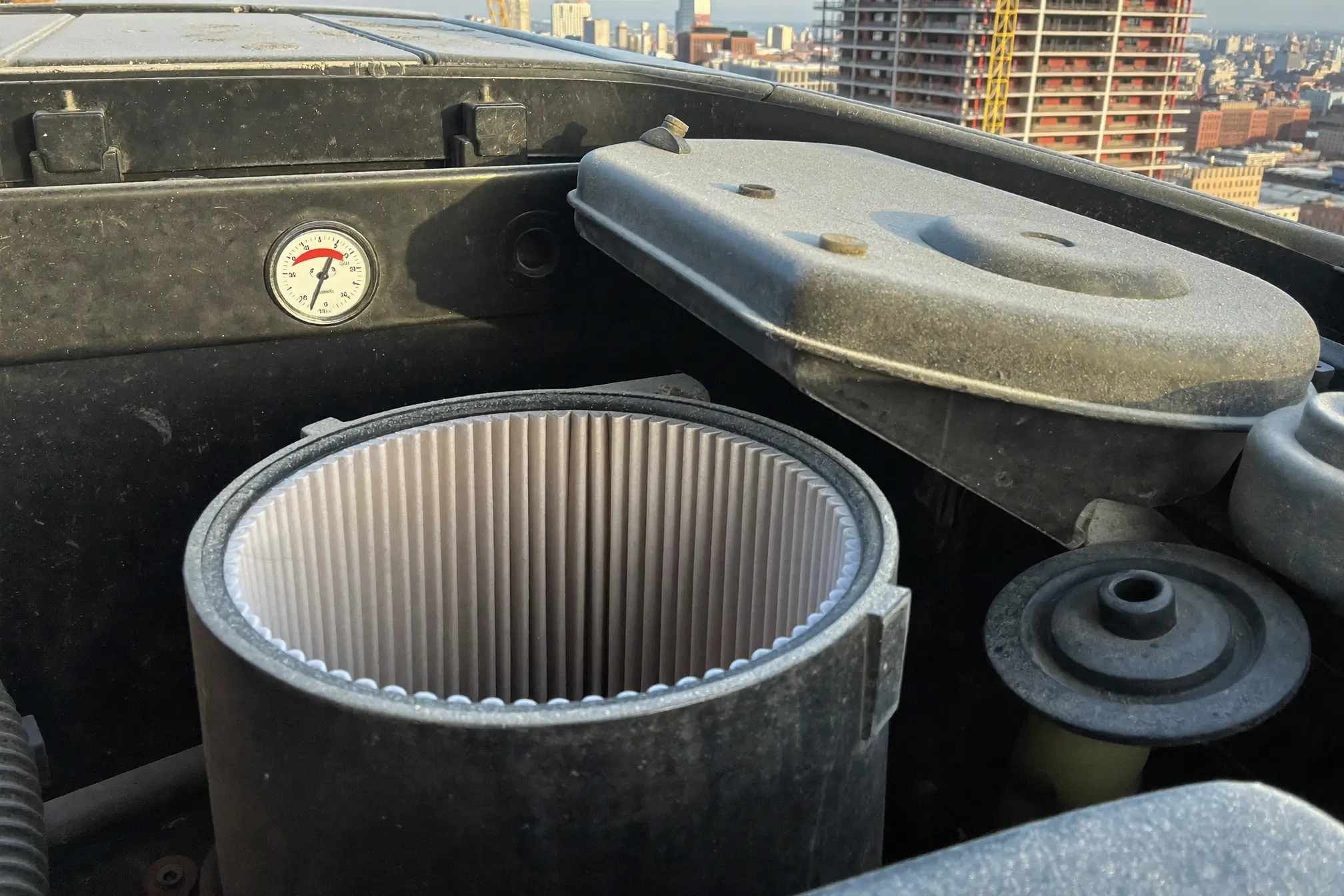
The engine air filter sits at the intake of the engine and serves one primary purpose: keeping particulate contamination out of the combustion chamber. Every internal combustion engine requires clean air to mix with fuel for combustion, and any dirt, dust, or debris that bypasses the filter enters the engine’s intake system, passes through the valves, and causes accelerated wear on cylinder walls, piston rings, and valve seats. The damage is cumulative and largely invisible until the wear has progressed to the point of measurable performance loss or, eventually, a major engine repair.
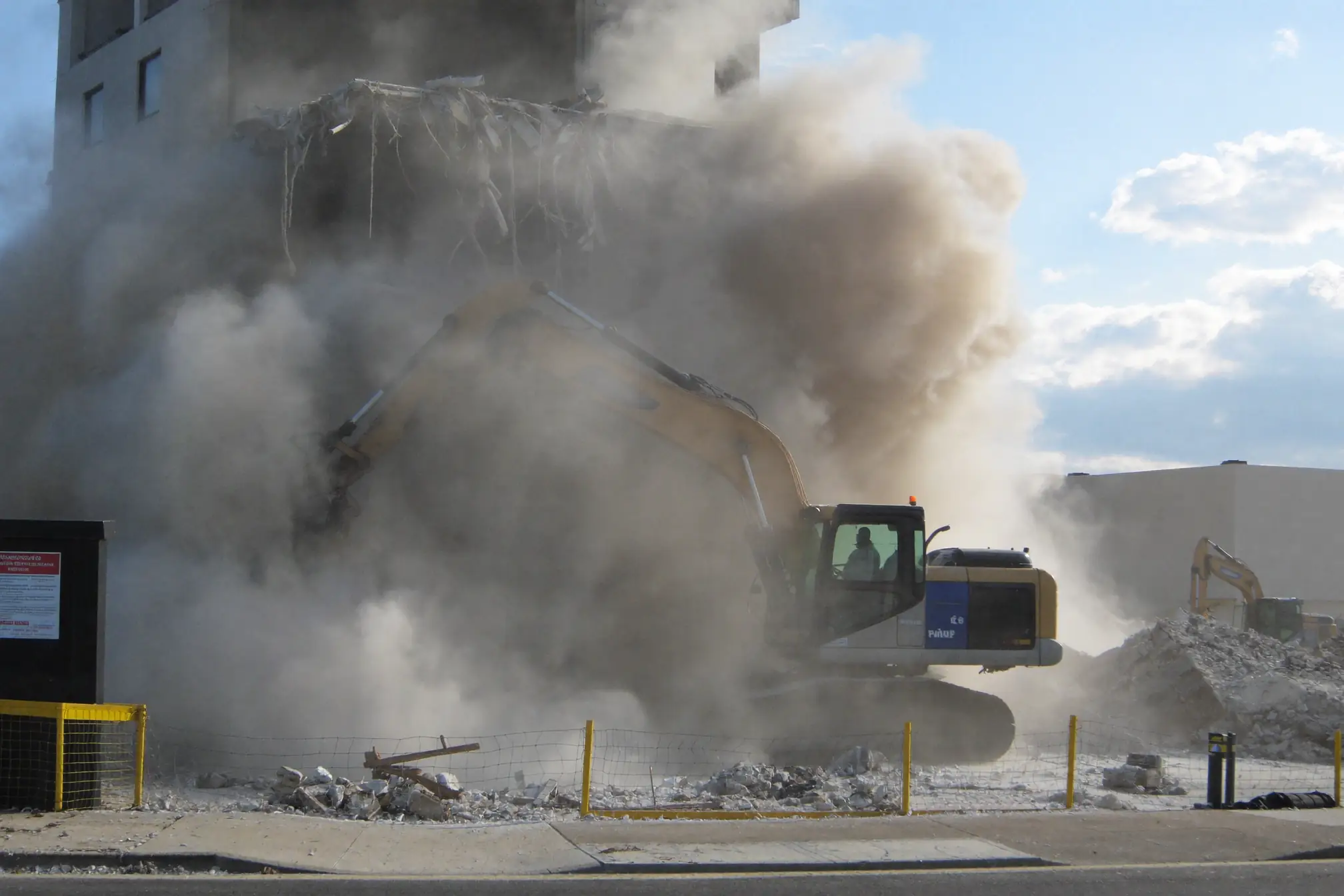
On heavy construction equipment, the engine air filter works under conditions that most automotive filters never see. A CAT 320 excavator or Komatsu PC210 working in a demolition site, a roadbed construction zone, or a concrete cutting operation is ingesting air that may carry fine silica dust, concrete particulate, and construction debris at concentrations far above what any standard-use application involves. Caterpillar’s maintenance documentation for Cat construction equipment specifies filter inspection protocols and restriction indicator monitoring precisely because the consequences of a clogged or failed engine air filter in heavy-duty applications are so significant. Engine damage from dust ingestion is not a warranty claim situation – it is a preventable maintenance failure.
The engine air filter is a high-stakes component that protects thousands of dollars of internal engine hardware. Replacing it on schedule is one of the most cost-effective maintenance decisions available. If you need engine air filters for Cat, Komatsu, Hitachi, Volvo, or other brands, MCH Parts NYC has them in stock for same-day pickup or delivery.
Cabin Air Filters – Why They Matter More Than Ever in 2026
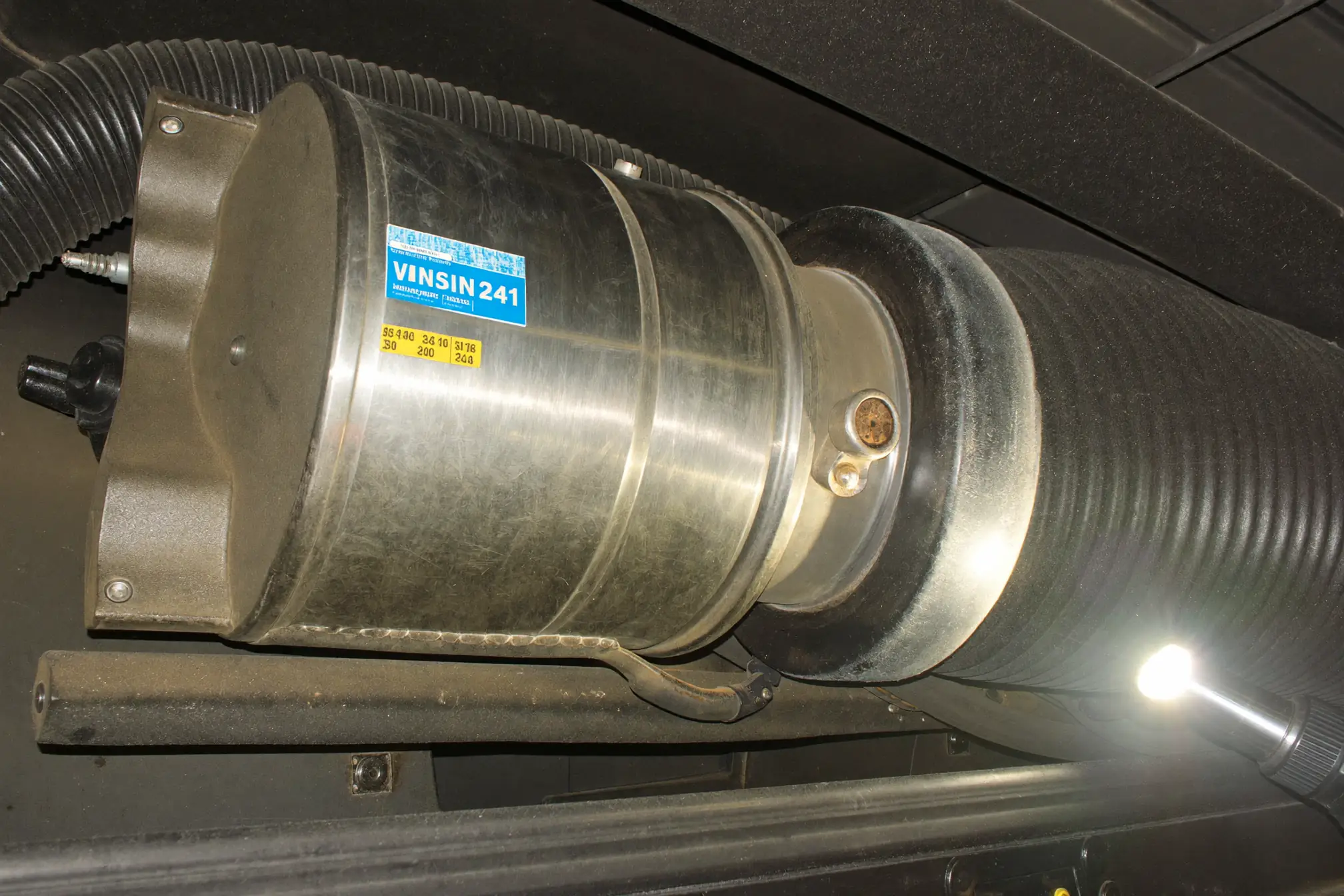
The cabin air filter is entirely separate from the engine air filter and serves a completely different function. It is installed in the HVAC system of the operator cab and filters the air that the machine operator breathes during the workday. On most modern excavators, wheel loaders, and other heavy equipment, the cab is a pressurized or sealed environment specifically designed to protect the operator from construction site air – which routinely contains silica dust, diesel particulate, chemical vapors, and other hazardous substances that OSHA classifies as serious health risks.
The cabin air filter is what makes that sealed cab actually work. A cabin filter that is loaded with particulate no longer passes air efficiently, reducing HVAC performance and cab pressure. More critically, a degraded cabin filter allows fine particulate – including respirable crystalline silica, which the EPA and OSHA have placed under increasingly strict exposure limits – to bypass the filtration media and enter the operator’s breathing air. OSHA’s construction silica exposure standards establish permissible exposure limits that employers are legally obligated to meet. Maintaining functional cab pressurization and cabin filtration is a core part of that compliance picture on sites where earthmoving, demolition, or any dust-generating activity is taking place.
In NYC’s construction environment – where sites are dense, neighboring structures restrict airflow, and diesel equipment often operates in close proximity to each other – cabin air quality is not an abstract concern. Contact MCH Parts NYC to confirm you have the right cabin filter specification for your equipment models.
Why These Two Filters Are Frequently Mixed Up
The confusion between engine air filters and cabin air filters is understandable because both components are described as “air filters,” both are replaced periodically, and on some equipment they can look superficially similar. The critical difference is in what they protect. The engine air filter protects the machine. The cabin air filter protects the operator. Neglecting the engine air filter leads to equipment damage. Neglecting the cabin air filter leads to operator health risk and potential OSHA compliance exposure.
They also have different replacement intervals, different symptoms when failing, and different consequences for skipping a replacement cycle. Neither one is a substitute for the other, and checking only one of the two during a maintenance inspection is an incomplete inspection. On equipment models where the cabin filter is less accessible or located in an inconvenient position, it is the one that tends to be overlooked – which is precisely why the new EPA standards and revised OSHA guidance are increasing focus on documentation of cabin filter maintenance.
New EPA Standards 2026 and What They Mean for Equipment Filters
Updated Tier 4 Final and Non-Road Emission Requirements
The EPA’s non-road engine emission standards under Tier 4 Final have been in effect for several years, but 2026 brings updated guidance, increased inspection activity, and in several states including New York, enhanced state-level requirements that build on the federal baseline. The engine air filter is directly relevant to Tier 4 compliance because the diesel particulate filter (DPF) and selective catalytic reduction (SCR) systems required under Tier 4 are both sensitive to intake air quality. An engine air filter that is clogged or damaged can alter combustion conditions in ways that increase soot loading on the DPF, leading to more frequent active regeneration cycles, accelerated DPF wear, and potential emission spikes during regen events.
Equipment World’s coverage of Tier 4 field issues has consistently noted that DPF problems on compliant machines often trace back to air intake system issues – including damaged, incorrectly installed, or overloaded engine air filters – rather than the DPF itself. Maintaining the engine air filter correctly is not just about protecting the engine. It is about keeping the entire emission control system functioning as designed, which matters both for regulatory compliance and for avoiding expensive DPF repairs that run several thousand dollars per service event.
NYC-Specific Air Quality Regulations for Construction Sites
New York City layers state and local requirements on top of federal EPA standards in ways that affect every piece of diesel equipment operating at a permitted construction site. New York State’s Environmental Conservation Law and the NYC Department of Environmental Protection both have provisions addressing diesel emissions at construction sites, idling restrictions, and the use of ultra-low sulfur diesel. The AGC’s contractor compliance resources provide guidance on navigating the overlapping state and local requirements that apply to construction operations across the region.
From a practical maintenance standpoint, the message from the combined federal, state, and city regulatory framework is the same: equipment that is generating excess visible emissions or failing emission compliance checks is increasingly likely to draw DOB or DEP attention on an active NYC site. An engine that is ingesting contaminated air due to a failed engine air filter burns less efficiently, produces more visible exhaust, and runs at higher thermal stress – all factors that can show up on a visual or instrument-based emissions check. Keeping air filtration current is part of staying on the right side of the regulatory picture in 2026.
How New Standards Are Changing Filter Replacement Intervals
The practical effect of stricter air quality standards on filter replacement intervals is that the old rule-of-thumb schedules are increasingly inadequate for high-use equipment in dense urban environments. Many operators have historically replaced engine air filters based on calendar time – once a year, or at a defined annual service. The updated guidance from most major manufacturers, and the direction of current EPA and NYDEC compliance monitoring, points toward restriction indicator-based replacement as the more appropriate standard for high-intensity applications.
A restriction indicator – a simple vacuum gauge typically mounted on the air cleaner housing – shows the actual pressure drop across the filter element. When the indicator reads in the red zone, the filter needs replacement regardless of when it was last changed. On a NYC demolition site or a rock-cutting operation, that can happen in weeks rather than months. Komatsu’s maintenance guidelines for Komatsu equipment specifically recommend using restriction indicators as the primary replacement trigger for engine air filters on machines in heavy-duty applications. For cabin filters, the equivalent guidance is inspection-based – checking filter condition at each oil service interval and replacing on condition rather than on a fixed calendar schedule.
Symptoms of Filter Failure and the Real Performance Impact
Engine Air Filter Failure Symptoms
A loaded or damaged engine air filter produces a recognizable set of performance changes that operators can detect before the problem becomes severe. The most common early indicator is a slight reduction in power – the machine feels less responsive under load, acceleration from idle is sluggish, and the engine may strain on grades or in heavy digging conditions that it previously handled without issue. This happens because restricted air intake reduces the amount of oxygen available for combustion, which the engine management system compensates for by reducing fuel delivery to maintain combustion quality, resulting in lower power output.
Fuel consumption tends to increase at the same time because the engine is working harder to accomplish less work per cycle. Black or dark gray exhaust smoke, particularly under load, is another indicator that the air-to-fuel ratio has shifted toward a rich condition as a result of restricted air intake. On Tier 4 machines, increased DPF regeneration frequency – the active cleaning cycle that burns accumulated soot – can indicate that the engine is producing more particulate than normal, which a restricted air filter can cause by altering combustion conditions.
Restriction indicators turning red is the definitive signal, but operators who pay attention to power feel, fuel consumption, and exhaust color will often notice the developing problem earlier. Need a replacement engine air filter for your machine? MCH Parts NYC has filter elements and complete air cleaner assemblies in stock for same-day service.
Cabin Air Filter Failure Symptoms
The symptoms of a failing cabin air filter are different from engine filter symptoms because the impact is on operator comfort and health rather than machine performance. Reduced HVAC airflow is typically the first thing an operator notices – the air conditioning or heating takes longer to bring the cab to temperature, or the maximum airflow from the vents is noticeably reduced compared to normal. This happens because a loaded cabin filter increases the resistance the HVAC blower has to overcome, reducing effective airflow at the vents.
Odors from outside the cab entering the operator environment – diesel exhaust smell, dust, or chemical odors from nearby work – are a strong indicator that cabin filter media has either reached capacity or has been compromised. A functional, properly seated cabin filter combined with cab pressurization should prevent outside air from entering the cab through the HVAC system. When outside odors are present inside the cab during normal operation, something in the cab filtration or pressurization system is not working as designed. Visible dust accumulation on the inside of cab windows, on the instrument panel, or on the operator seat over the course of a shift is another indicator that fine particulate is bypassing filtration.
Given OSHA’s silica exposure limits and the health implications of cumulative diesel particulate exposure, symptoms of cabin filter failure are worth taking seriously beyond the inconvenience level. Replacing a cabin filter takes minutes and costs a fraction of what any health or compliance issue costs. Reach out to MCH Parts NYC to get the right cabin filter for your specific equipment model.
The Cost of Running Restricted Filters
The financial case for staying current on both filter types is straightforward. A clogged engine air filter that runs unchecked for an extended period causes accelerated wear on cylinder walls, pistons, and valve train components. Engine rebuilds on heavy construction equipment run anywhere from several thousand to tens of thousands of dollars depending on the extent of damage and the machine model. The engine air filter it would have taken to prevent that damage costs a fraction of that amount and takes under an hour to replace.
On the cabin filter side, the cost calculation involves a different type of exposure. OSHA silica compliance violations carry significant per-instance penalties and can trigger site shutdowns that cost far more than any individual fine. The AGC’s guidance on OSHA compliance emphasizes that maintaining documented evidence of air quality control measures – including cab filtration maintenance records – is part of demonstrating a good-faith compliance program. A cabin filter that gets skipped is not just a health risk to the operator. It is a gap in a compliance paper trail that can become consequential during an inspection. Running restricted filters is a false economy in both cases.
Sourcing and Replacing Filters for Your NYC Fleet in 2026
OEM vs Aftermarket Filter Quality in 2026
For both engine air filters and cabin air filters, the OEM-versus-aftermarket choice is one that can be made confidently in favor of quality aftermarket alternatives when sourcing from an established supplier. OEM filters from manufacturers like Caterpillar, Komatsu, Hitachi, and Volvo are engineered to exact specifications and are the correct choice for machines under manufacturer warranty where original parts are required. For machines outside the warranty period, aftermarket filters from reputable manufacturers meet or exceed OEM filtration efficiency ratings – often at 20 to 40 percent lower cost per element.
The critical factor is filtration media quality. Engine air filters are rated by efficiency and restriction – how much particulate they capture and how much airflow they allow. A filter that passes the restriction spec but has lower filtration efficiency than OEM allows more particulate to reach the engine. For cabin air filters, the equivalent concern is whether the media meets HEPA-equivalent or MERV-rated performance levels specified by the equipment manufacturer – particularly on machines where cab pressurization depends on the filter meeting a specific airflow resistance profile. Volvo CE’s technical documentation for Volvo construction equipment provides filter specification details that apply whether you are using OEM or aftermarket elements.
MCH Parts NYC carries engine air filters and cabin air filters vetted for quality across all major brands – Cat, Komatsu, Hitachi, Volvo CE, John Deere, and others – with same-day availability across New York City and the metro area.
Filter Replacement Intervals for NYC Operating Conditions
Standard manufacturer service intervals for both filter types are based on average-use assumptions that do not match the operating environment of most NYC construction sites. Replacement intervals for engine air filters on heavy equipment in normal conditions might be quoted at 500 or 1,000 operating hours, or annually. In an active demolition site, a rock crushing operation, or a subway tunnel excavation, restrictor indicators can trip in 100 hours or less. Any operation involving significant concrete grinding, rock cutting, or earthmoving in dry conditions requires shortening the inspection interval dramatically rather than relying on calendar scheduling.
Cabin air filters in NYC operating conditions face similar demands. Fine silica and concrete dust are the primary concern, followed by diesel particulate from equipment operating in close proximity. On sites where dust suppression measures are limited or where the operator cab is exposed to heavy ambient particulate during the workday, cabin filter inspections at every oil service interval – rather than every other oil service – is the appropriate practice. Hitachi CM’s maintenance guidance for Hitachi excavators reflects this kind of condition-based interval recommendation for high-dust applications.
The best practice for any fleet operating in NYC in 2026 is to use restriction indicators for engine air filters and to build cabin filter inspection into every scheduled oil service regardless of the filter’s stated interval. The filters that get changed too soon cost a small amount of money. The ones that are left in too long cost significantly more.
Same-Day Filter Availability in NYC
For fleet managers running multiple machines across one or more NYC job sites, the logistics of filter inventory matter as much as the maintenance schedule. Having the right filters on hand when an inspection finds a restricted element is the difference between a 20-minute part swap and a machine that sits idle while a part is ordered and shipped. The range of filter part numbers across a mixed fleet running different brands and models can make inventory planning complex – which is where a reliable local supplier relationship pays consistent dividends.
MCH Parts NYC maintains in-stock inventory of engine air filters and cabin air filters for the high-demand equipment models operating across the NYC metro area. Whether you are running Cat 320s on a Manhattan high-rise site, Komatsu PC360s in a Queens utility project, or a mixed fleet spread across multiple boroughs, we can confirm parts availability and get filters delivered same-day. Contact us with your machine models and serial numbers and we will put together a filter kit that covers your entire fleet’s maintenance needs.
Conclusion
Engine air filters and cabin air filters are not the same component, do not serve the same function, and do not have the same consequences when neglected – but both have become more important in 2026 than they have been at any previous point, given the direction of EPA standards, OSHA silica enforcement, and NYC’s own regulatory environment. Understanding the difference between them, knowing the symptoms of failure, and maintaining both on intervals appropriate to NYC operating conditions are the fundamentals of filter management done correctly.
The updated EPA Tier 4 requirements, combined with OSHA’s silica exposure enforcement and NYC site regulations, mean that construction fleets operating in New York City cannot afford to treat filtration as a low-priority line item. An engine protected by a clean, properly rated air filter runs more efficiently, produces fewer emissions, and avoids the kind of accelerated wear that leads to major repair costs. An operator protected by a functional cabin filter is working in conditions that meet current health and compliance standards rather than accumulating exposure that has documented long-term consequences.
MCH Parts NYC stocks engine air filters and cabin air filters for all major construction equipment brands operating in the NYC metro area. Same-day availability, experienced parts staff, and the brand coverage to serve mixed fleets are what we bring to every filter order – whether it is a planned maintenance purchase or a same-day replacement on an active job site.
FAQ
What is the difference between an engine air filter and a cabin air filter on a construction excavator?
An engine air filter is installed in the engine’s intake system and prevents particulate from entering the combustion chamber, protecting pistons, cylinders, and valve train components from abrasive wear. A cabin air filter is part of the HVAC system in the operator cab and filters the air the machine operator breathes during the workday, blocking dust, silica particulate, diesel exhaust, and other airborne contaminants from the cab environment. They are completely separate components with separate replacement intervals, and neglecting either one has different but significant consequences – equipment damage in the case of the engine filter, operator health and OSHA compliance exposure in the case of the cabin filter. MCH Parts NYC supplies both types for all major equipment brands.
How do the new EPA standards in 2026 affect engine air filter maintenance on Tier 4 equipment?
Tier 4 Final diesel engines include diesel particulate filters (DPFs) and selective catalytic reduction (SCR) systems that are sensitive to intake air quality. A restricted or damaged engine air filter can alter combustion conditions in ways that increase soot production and DPF loading, leading to more frequent regeneration cycles and accelerated DPF wear. The updated 2026 EPA guidance and increased non-road emission compliance activity in New York State reinforce the importance of restriction indicator-based filter replacement rather than calendar-based replacement, particularly for equipment in high-dust applications. Keeping the engine air filter current is part of keeping the entire emission control system functioning as intended.
How often should cabin air filters be replaced on construction equipment operating in NYC?
The standard manufacturer replacement intervals for cabin air filters are based on average-use conditions that do not reflect the heavy dust concentrations typical of NYC construction environments. For equipment operating in demolition, earthmoving, concrete cutting, or other high-dust applications, cabin filters should be inspected at every oil service interval rather than on a fixed annual or hourly schedule. Replacement on condition – when the filter shows visible loading or HVAC airflow is noticeably reduced – is appropriate for most NYC applications, with many operators finding intervals considerably shorter than the manufacturer baseline. Contact MCH Parts NYC for filter specifications and availability for your equipment models.
Can I use aftermarket engine air filters on Tier 4 equipment without affecting EPA compliance?
Yes, provided the aftermarket filter meets the same filtration efficiency and dimensional specifications as the OEM element. The key factors are filtration efficiency – how effectively the media captures particulate – and the fit at the sealing surfaces, which must be airtight to prevent unfiltered air from bypassing the filter element entirely. Aftermarket filters from reputable manufacturers are engineered to meet or exceed OEM specifications and are appropriate for Tier 4 equipment outside of the manufacturer warranty period. Using an undersized or low-quality filter that allows particulate bypass will affect engine performance and emission output regardless of the Tier 4 hardware installed. MCH Parts NYC carries quality-vetted aftermarket filters for Cat, Komatsu, Hitachi, Volvo, and other major brands.
What are the OSHA requirements for cabin air filtration on construction equipment in NYC in 2026?
OSHA’s silica standard for construction – under 29 CFR 1926.1153 – establishes a permissible exposure limit for respirable crystalline silica that employers are legally required to meet for all employees, including equipment operators. Maintaining functional cab pressurization and current cabin air filtration is recognized as an engineering control that contributes to silica exposure reduction for operators of enclosed-cab equipment. OSHA’s construction silica compliance resources describe the full range of required and recommended controls. NYC’s building and environmental enforcement environment in 2026 makes documented compliance with silica and air quality standards more important than in previous years. Keeping cabin filters current and maintaining records of cabin filter service is a straightforward step that is part of a compliant equipment maintenance program.
Read More
Engine Air Filter vs. Cabin Filter 2026: EPA Guide

Radiator and Cooling System Parts: NYC Summer 2026
Bucket Teeth Selection 2026: Right Teeth for NYC Soil

Construction Equipment Filters 2026: Complete Replacement Schedule Updated
Track Replacement Guide 2026: How Long Do Undercarriage Parts Really Last?
Final Drive Troubleshooting 2026: 7 Warning Signs Before Complete Failure
Excavator Hydraulic Pump Replacement 2026: OEM vs Aftermarket Complete Guide

Weekend Equipment Breakdown: NYC After-Hours Parts Sourcing Guide 2026

Equipment Down in 2026? Get These 15 Critical Parts in NYC Within 2 Hours

NYC Port Modernization 2026: Heavy Equipment Parts for Hudson River Terminal Upgrades
Queens Is Being Built Right Now - Is Your Equipment Ready?

NYC High-Rise Construction Boom 2026: Parts for Record Number of Tower Projects

Brooklyn Navy Yard Construction: Specialized Parts for Historic Site Work

NYC DOB Construction Equipment Requirements 2026: Updated Parts & Modifications

Equipment Down in 2026? Get These 15 Critical Parts in NYC Within 2 Hours
NYC Winter 2026 Construction: Critical Parts That Fail Below 20°F : Prevention Guide
Prevent Crane Downtime with a Proactive Parts Roadmap
How to Prevent Downtime in Multi-Brand Earthmoving Fleets

How to Source OEM Undercarriage Parts Without Project Delays
Motor Grader Predictive Diagnostics: Prevent Hydraulic Failures & Reduce Downtime

Pesticide Sprayer Calibration: Essential Safety Compliance Guide & Protection

Seeder Bearing Parts Sourcing Guide: Critical Components & Strategy
Downtime Prevention Through Smart Inventory for Grain Dryers

Combine Harvester Breakdown Prevention Guide: Predictive Analytics for Zero Downtime

Master Global Agricultural Parts Delivery | Mid-Season MRO Guide

Fixing Haul Truck Downtime Issues: Remote Parts Strategy Guide 2025
Blasting Equipment Safety Compliance: Must-Know Audit Requirements for 2025

The Step-by-Step Guide to Global Drill Rig Consumables Sourcing
Mining Conveyor Maintenance Guide: Detecting Hidden Risks in Underground Systems
Best Practices for Certified Pipeline Valve Selection: From Specs to Installation

Optimizing Oil Rig PPE Delivery: Proven Strategies That Saved $2M Annually

FPSO Smart Parts Planning: Proven Methods to Cut Downtime

How FPSO Inspection Prevents Million-Dollar Shutdown Losses

Fix It Before It Breaks: A Farmer's Guide to Combine and Harvester Maintenance

Why Fast Tractor Parts Delivery is Changing Modern Farming [2025 Guide]

The Critical Farm Equipment Replacement Parts You Need Before Harvest 2025
.webp)
How to Double Your Farm Efficiency: Expert Guide to Smart Scaling

Cut Costs by 30%: Pre-Season Spare Parts Audit Checklist

Proven Success Factors for Agricultural Equipment Manufacturers in 2025

13 Overlooked Farm Spare Parts That Halt Operations — Pt. 2

13 Overlooked Farm Spare Parts That Halt Operations — Pt. 1

Top Hydraulic Components for Agricultural Equipment in 2025: Complete Guide
The Essential Farm Equipment Parts You Can't Afford to Run Out Of

How to Service Farm Equipment: A Farmer's Guide to Zero Harvest Downtime

Construction Machinery Parts Suppliers: Expert Selection Guide
How to Apply Machine Safety Rules: From Selection to Installation

Smart Diagnostics Cut Heavy Equipment Failures by 73%

5 Ways to Assess the Environmental Impact of Heavy Construction Machinery

10 Smart Ways to Pick Construction Machinery for 2025 Projects
Rent vs Purchase Equipment: What Heavy Industry Experts Hide

How to Implement a Construction Inventory Management System for Equipment Efficiency

How to Extend Equipment Life Expectancy with Regular Maintenance
Advanced Heavy Equipment Diagnostic Tools: Ensuring Construction Machinery Quality

Essential Features Your Construction Equipment Inventory System Needs
29 Quick Tips for Choosing Construction Equipment for Remote Locations

How to Select Construction Machinery with Optimal Equipment Maintenance in Mind
Top 25 Tips for Selecting Bulldozers for Construction Sites
Which Construction Loader is Best for Your Project Needs?

4 Key Steps to Form a Construction Machinery QC Team

15 Essential Tips for Selecting the Perfect Crane for Construction

Maximize Savings: Multi-Purpose Construction Machinery for Lower Costs

Affordable Heavy Equipment Parts: A Sourcing Guide

Choosing the Right Road Construction Equipment: A Complete Guide

Motor Graders: Key Elements to Consider for Optimal Selection

A Detailed Guide to Choosing Excavators for Construction Work

Top Tips for Choosing Cranes for Construction Projects
5 Top-Rated Demolition Machines for Construction Professionals

Expert Tips on Choosing Earthmoving Equipment for Large Projects
Top Functional Criteria for Selecting Heavy Construction Equipment

Construction Machinery: Detailed Guide to Equipment Specifications
Heavy Machinery Prices: Key Factors in Cost and Quality Balance
Best Construction Heavy Equipment Brands: Pros and Cons

Construction Site Equipment: How to Determine Your Requirements

Maximizing Safety: Risk Management for Construction Projects

Innovations in Construction: Transforming Machinery and Equipment

Heavy Equipment Safety: Beyond the Basics in Construction Compliance

The Essential Handbook for Construction Equipment Repair and Maintenance

How to Efficiently Source Oil and Gas Machinery Parts in NYC

Essential Guide to Sourcing Agriculture Equipment Parts

How to Source Mining Machinery Parts: Tips and Strategies